Gadkari: Cabinet clears ₹1,491 cr postal estates scheme
Synopsis
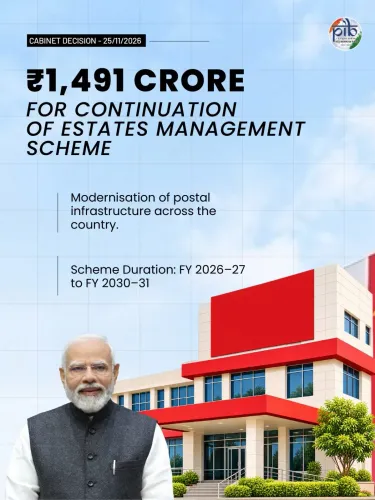
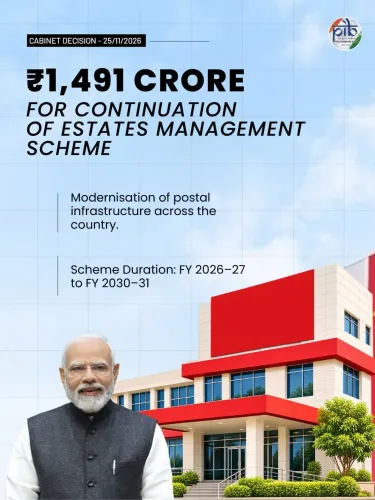
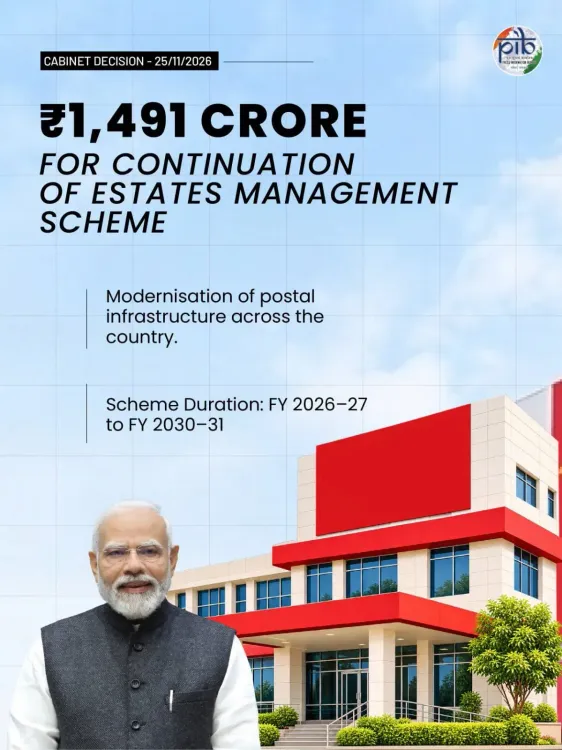
The Union Cabinet, chaired by PM Narendra Modi, has approved ₹1,491 crore to continue the Department of Posts’ Estates Management scheme through FY 2030–31, Nitin Gadkari said. Funds will cover construction, renovation, branding and heritage preservation.
Key Takeaways
The Union Cabinet, chaired by Prime Minister Narendra Modi , approved continuation of the Department of Posts’ Estates Management scheme.
Total outlay is ₹1,491 crore over five years, from FY 2026–27 to FY 2030–31 (16th Finance Commission cycle).
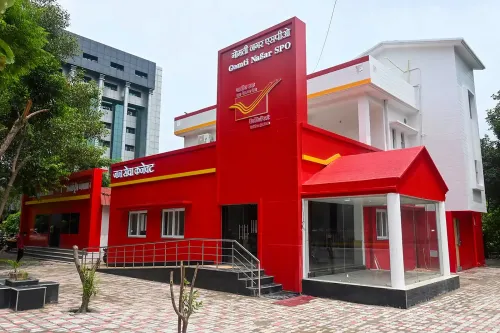
Works cover construction, reconstruction and renovation of post offices and residential colonies.
The scheme also funds standardised branding and preservation of heritage postal buildings.
Union Road Transport and Highways Minister Nitin Gadkari announced the decision on 25 November 2026 .
Stated aims are stronger postal infrastructure, operational efficiency and citizen-centric service delivery.
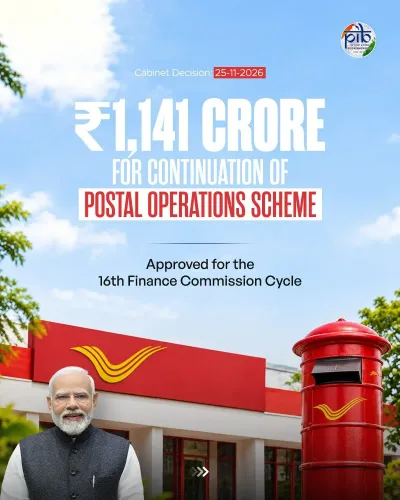
Union Road Transport and Highways Minister Nitin Gadkari on Wednesday, 25 November 2026 announced that the Union Cabinet, chaired by Prime Minister Narendra Modi, has cleared ₹1,491 crore to rebuild India’s postal estate over five years. The money continues the Department of Posts’ Central Sector Scheme ‘Estates Management’ through the 16th Finance Commission cycle, from FY 2026–27 to FY 2030–31.
₹1,491 crore through FY 2030–31
Gadkari said the scheme will modernise the Department of Posts’ estate infrastructure through the construction, reconstruction and renovation of post offices and residential colonies, standardised branding, and preservation of India’s heritage postal buildings. He wrote that the initiative will ‘strengthen postal infrastructure, improve operational efficiency and enhance citizen-centric service delivery across the country.’
This is a fully Union-funded Central Sector Scheme. Parking the outlay inside a Finance Commission cycle, rather than a one-year budget line, is how New Delhi typically locks in multi-year capital works on departmental buildings.
Post offices, staff colonies, heritage facades
The work list is specific. New and rebuilt post offices. Renovation of existing counters. Residential colonies for postal staff. A common look — standardised branding — so a branch in a district town reads as part of one national network. And a conservation track for heritage postal buildings still in daily use.
For citizens, that is meant to mean better-kept last-mile facilities. For employees, workplaces and housing that have often lagged the department’s digital push. Both sit at the core of a network that still reaches places private logistics does not.
Tenders, not just the Cabinet note
Successive governments have periodically renewed funding for departmental estate upkeep. Modernisation of legacy public buildings, including standardisation and heritage preservation, has been a recurring administrative priority. The envelope now runs to FY 2030–31.
What matters next is phased project sanctions and tendering for renovations between 2026 and 2031. A ₹1,491-crore stamp on brick-and-mortar India Post will count only when those works actually start on the ground.
Point of View
And this Cabinet note treats buildings as part of service delivery rather than leftover stock. Tying ₹1,491 crore to the 16th Finance Commission cycle is a classic way to protect capital maintenance from the annual squeeze. The dual brief — standardised branding plus heritage preservation — will be the hard part: one network look without flattening buildings that carry civic memory. The signal is administrative continuity; the test is whether tenders and works land in district towns before FY 2030–31.
NationPress
25 Nov 2026
Frequently Asked Questions
What did the Union Cabinet approve for the Department of Posts?
The Union Cabinet approved continuation of the Central Sector Scheme Estates Management with an outlay of ₹1,491 crore over five years. Union minister Nitin Gadkari said the Cabinet, chaired by Prime Minister Narendra Modi, cleared it for the 16th Finance Commission cycle from FY 2026–27 to FY 2030–31.
What is the Estates Management scheme?
It is a Department of Posts Central Sector Scheme to modernise postal estate infrastructure. The work covers construction, reconstruction and renovation of post offices and residential colonies, standardised branding, and preservation of heritage postal buildings.
What is the period of the 16th Finance Commission cycle for this scheme?
The approved cycle runs from FY 2026–27 to FY 2030–31. The total outlay for those five years is ₹1,491 crore.
Will heritage post office buildings be covered?
Yes. Gadkari said the scheme includes preservation of India’s heritage postal buildings along with construction and renovation of post offices and staff colonies.
Who announced the Cabinet decision on Estates Management?
Union Road Transport and Highways Minister Nitin Gadkari announced it on 25 November 2026. He said the Union Cabinet chaired by Prime Minister Narendra Modi had approved continuation of the scheme.