Cabinet Clears ₹62,370 Cr Fertiliser Subsidy for Rabi 2026-27
Synopsis
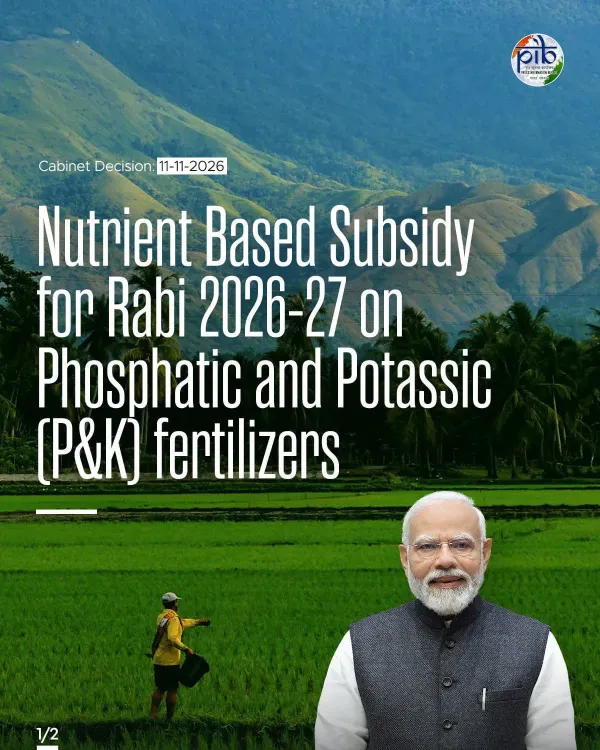
The Union Cabinet approved ₹62,370.02 crore in Nutrient Based Subsidy for P&K fertilisers for Rabi 2026-27 — a ₹24,417.73 crore jump over the previous Rabi season — to shield farmers from rising global fertiliser prices ahead of the winter sowing cycle.
Key Takeaways
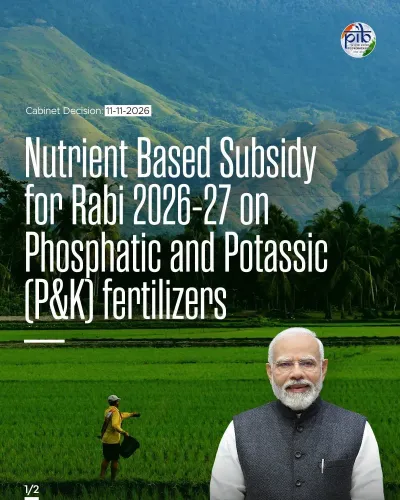
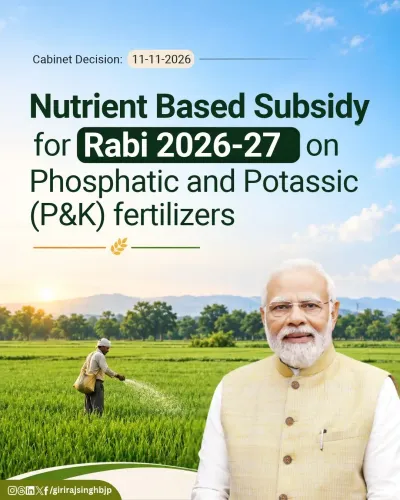
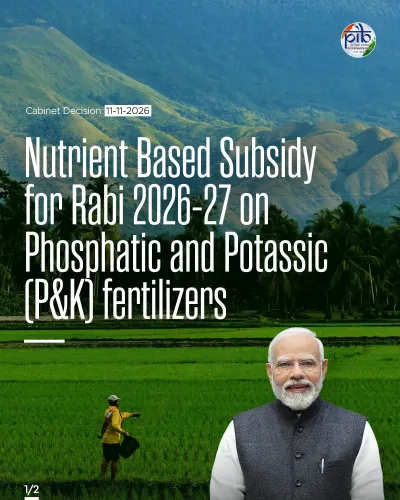
The Union Cabinet, chaired by PM Narendra Modi , approved NBS rates for P&K fertilisers for Rabi Season 2026–27 on November 11, 2026 .
Total budgetary allocation approved: ₹62,370.02 crore .
This is an increase of ₹24,417.73 crore (approximately 64%) over the ₹37,952.29 crore allocated for Rabi 2025–26.
The NBS framework, introduced in April 2010 , provides a fixed per-kg subsidy on phosphorus and potassium nutrients rather than controlling retail prices directly.
The revision is aimed at maintaining affordable fertiliser prices for farmers amid elevated global P&K commodity prices.
The Department of Fertilisers is yet to notify the exact per-nutrient subsidy rates for the season.
A ₹62,370.02 crore commitment to India's farmers — that is what the Union Cabinet, chaired by Prime Minister Narendra Modi, approved on Wednesday, November 11, 2026, fixing Nutrient Based Subsidy (NBS) rates for Phosphatic and Potassic (P&K) fertilisers for the Rabi Season 2026–27. Union Road Transport and Highways Minister Nitin Gadkari shared the Cabinet decision on X, flagging the sharp jump in outlay as a signal of the government's intent to hold fertiliser prices steady for the winter crop cycle.
A ₹24,000-crore step up from last Rabi season
The approved allocation represents an increase of approximately ₹24,417.73 crore over the ₹37,952.29 crore earmarked for Rabi Season 2025–26 — a rise of roughly 64 per cent year-on-year. The government says the revision is calibrated to 'recent trends in international fertiliser and input prices,' suggesting that rising global commodity costs are being absorbed by the exchequer rather than passed on at the farm gate. For a farmer buying a bag of DAP or MOP ahead of the wheat or mustard sowing window, the promise is straightforward: subsidised, affordable, and reasonable prices through the season.
How NBS works — and why P&K rates matter
The Nutrient Based Subsidy framework, in place since April 2010, provides a fixed per-kilogram subsidy on key nutrients — phosphorus (P) and potassium (K) — rather than capping the retail price of a specific product. Manufacturers receive the subsidy directly and are expected to price their fertilisers at or near the market-linked 'indicative' level. The system was designed to encourage balanced soil nutrition while giving the government a lever to adjust fiscal outgo each season without upending the entire pricing architecture. The Cabinet resets these per-nutrient rates every Rabi and Kharif cycle, partly in response to global price signals in benchmarks such as DAP and Muriate of Potash (MOP).
Global price pressures behind the budget surge
The outsized jump in the subsidy bill is not incidental. International markets for phosphatic and potassic fertilisers have remained elevated through 2025–26, driven by supply-chain disruptions, geopolitical pressures on major exporters, and energy-cost pass-throughs by producers. India, which imports a large share of its P&K fertilisers, is acutely exposed to these swings. By absorbing the differential through a larger NBS envelope, the Cabinet is effectively insulating the farm sector from price volatility — a fiscal choice with direct consequences for the upcoming wheat, mustard, and chickpea sowing that defines the Rabi calendar. The Department of Fertilisers is expected to notify the exact per-nutrient subsidy rates; any mid-season global price spike could trigger a review.
India's fertiliser subsidy architecture has long walked a tightrope between fiscal prudence and food-security imperatives. A 64 per cent year-on-year surge in the NBS outlay is a clear signal of which side the government is leaning on — at least for this Rabi season.
Point of View
Now in its sixteenth year, has repeatedly been tested by global price volatility, and each seasonal reset is as much a fiscal statement as an agrarian one. A ₹62,370 crore commitment also signals that fertiliser rationalisation — often discussed as a long-term goal — remains subordinate to price stability at the farm gate for now. Watchers will track whether the per-nutrient rates notified by the Department of Fertilisers are sufficient to prevent retail prices from creeping up mid-season.
NationPress
11 Nov 2026
Frequently Asked Questions
What is the NBS fertiliser subsidy approved for Rabi 2026-27?
The Union Cabinet approved a Nutrient Based Subsidy (NBS) allocation of ₹62,370.02 crore for Phosphatic and Potassic (P&K) fertilisers for the Rabi Season 2026–27, to keep prices affordable for farmers.
How much has the fertiliser subsidy increased compared to last year?
The allocation has increased by approximately ₹24,417.73 crore over the ₹37,952.29 crore allocated for Rabi Season 2025–26, representing a rise of roughly 64 per cent year-on-year.
What is the Nutrient Based Subsidy (NBS) scheme?
The NBS scheme, introduced in April 2010 , provides a fixed per-kilogram subsidy on key nutrients like phosphorus and potassium in fertilisers. Manufacturers receive the subsidy directly and are expected to sell at market-linked indicative prices, promoting balanced soil nutrition.
Why did the government increase the fertiliser subsidy so sharply?
The government cited 'recent trends in international fertiliser and input prices' as the reason. Global P&K fertiliser prices have remained elevated due to supply-chain disruptions and energy costs, and the higher NBS outlay is designed to shield Indian farmers from these global price increases.
Which crops does the Rabi season fertiliser subsidy affect?
The Rabi season is India's winter crop cycle, covering key crops such as wheat, mustard, and chickpea. Affordable P&K fertiliser prices directly support input costs for farmers sowing these crops.