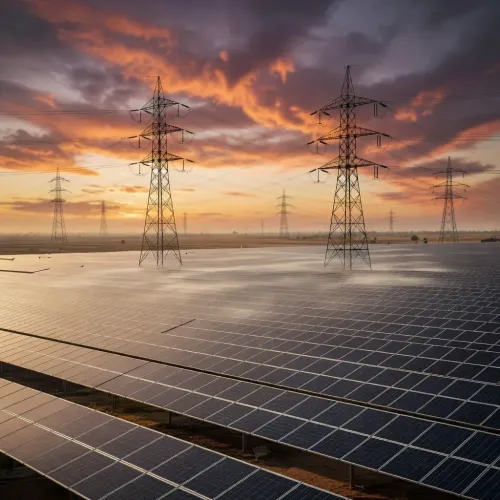
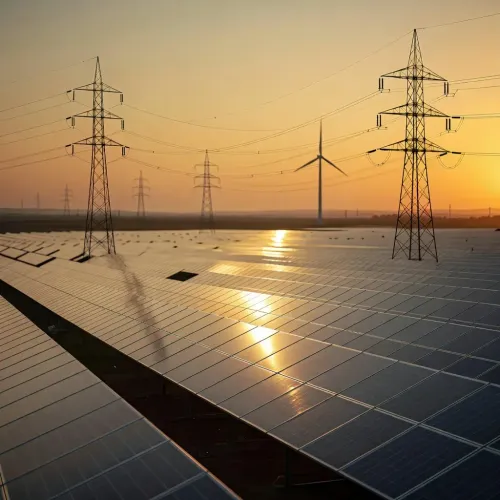
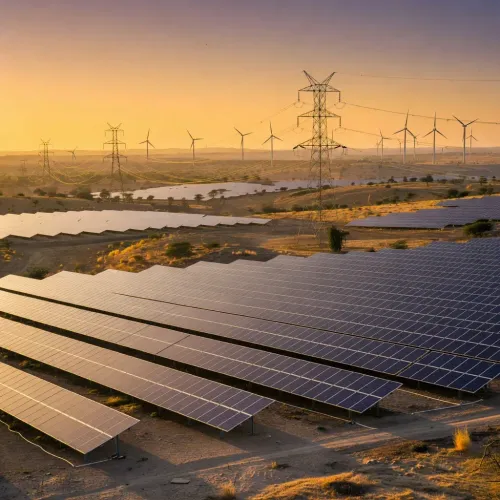
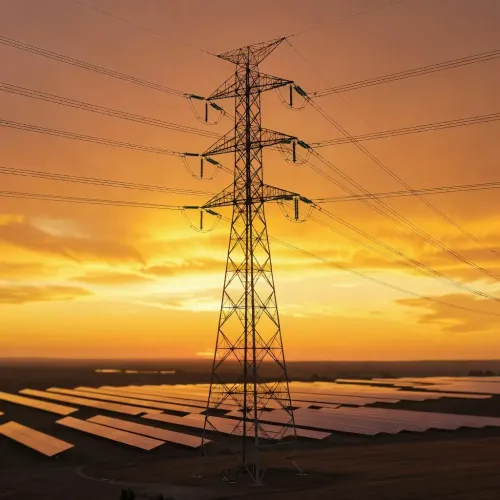
Cabinet Clears Green Energy Corridor Phase-III for Grid Storage Push
Synopsis
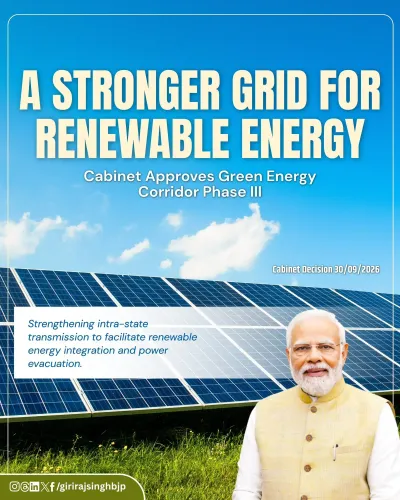
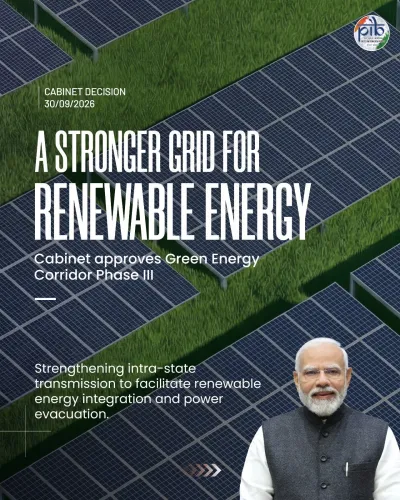
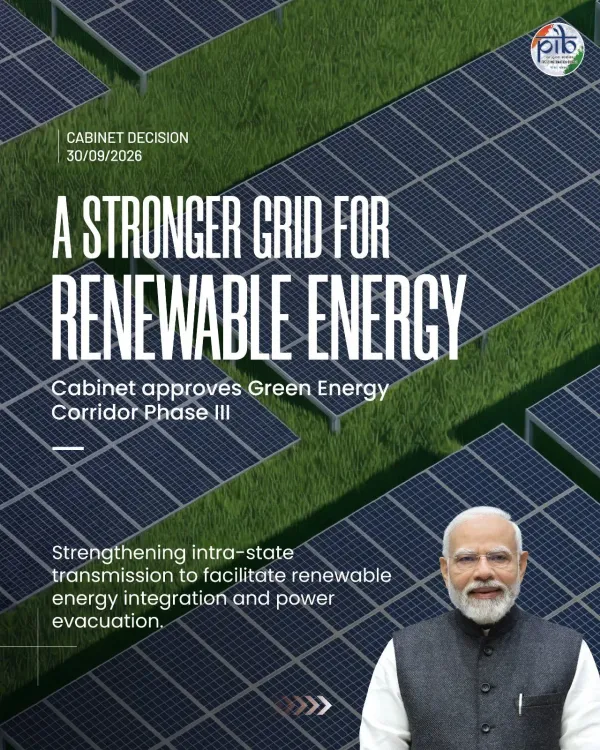
The Union Cabinet on September 30, 2026 approved Green Energy Corridor Phase-III, combining intra-state transmission infrastructure with battery storage systems to support India's target of 900 GW installed non-fossil capacity by 2035.
Key Takeaways
The Union Cabinet, chaired by PM Narendra Modi , approved Green Energy Corridor Phase-III on September 30, 2026 .
The scheme focuses on intra-state transmission systems integrated with Battery Energy Storage Systems .
The stated goal is achieving 900 GW of installed non-fossil capacity by 2035 .
Earlier Green Energy Corridor phases built inter-state and intra-state transmission lines for renewable evacuation.
Battery storage integration addresses solar and wind intermittency at the state grid level.
State-level project sanctions, fund disbursals, and commissioning timelines are the next critical milestones to watch.
India's renewable energy grid just got a major structural upgrade on paper. The Union Cabinet, chaired by Prime Minister Narendra Modi, on Wednesday, September 30, 2026, approved the Green Energy Corridor Phase-III scheme — a plan to develop intra-state transmission systems integrated with Battery Energy Storage Systems (BESS), targeting a 900 GW installed non-fossil capacity by 2035.
What Phase-III actually adds to India's grid
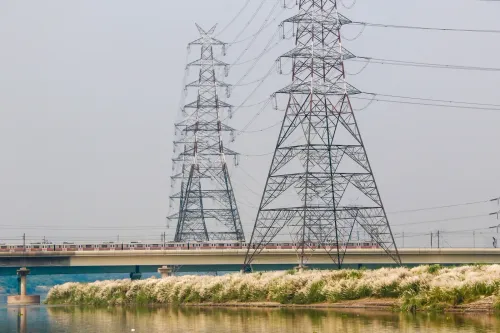
The Green Energy Corridor programme was always designed to solve a specific, stubborn problem: India's renewable generation is racing ahead, but the transmission lines needed to carry that power — especially at the state level — have struggled to keep pace. Phases I and II laid inter-state and intra-state transmission infrastructure to evacuate solar and wind power from high-resource states. Phase-III goes a step further by baking in battery storage directly into the intra-state architecture.
That integration matters enormously. Solar peaks at noon; demand peaks at dusk. Without storage sitting inside the grid, utilities either curtail renewable generation or scramble for fossil backup. Battery systems co-located with transmission infrastructure smooth that curve at the source — before the power even reaches consumers. It is a shift from simply building more wires to building a smarter, more resilient network.
The 900 GW target and the distance India still has to cover
Minister Sarbananda Sonowal anchored the Cabinet decision to an ambitious headline number: 900 GW of installed non-fossil capacity by 2035. For context, India committed at COP26 in 2021 to reach 500 GW of non-fossil fuel capacity by 2030. The 900 GW figure for 2035 signals that New Delhi is now planning well beyond that initial pledge — extending the trajectory through the next decade.
Achieving either target depends on a chain of enablers: project finance, land acquisition, equipment supply chains, and critically, the grid infrastructure to move power from where it is generated to where it is consumed. Green Energy Corridor Phase-III directly addresses the last link in that chain at the state level, where transmission bottlenecks have historically been the sharpest.
State utilities and developers now watch for sanctions and timelines
State transmission utilities and renewable energy developers are the immediate stakeholders. For developers sitting on commissioned or pipeline solar and wind assets, evacuation constraints translate directly into lost revenue — power generated but not sold. A Cabinet-level sanction for Phase-III unlocks the policy and financing framework; the real test now shifts to how quickly individual state-level projects get sanctioned, funds disbursed, and construction commenced.
India has a track record of ambitious grid announcements that take time to translate into energised transmission lines on the ground. The speed of state adoption, equipment procurement — particularly for battery storage systems, where supply chains remain globally tight — and inter-agency coordination will determine whether Phase-III becomes a genuine inflection point or another long-horizon programme.
One Cabinet approval. Hundreds of gigawatts of clean power hinging on what happens next at the state level — that is the real countdown that begins today.
Point of View
Projecting continuity regardless of electoral cycles. The real analytical question is execution velocity: India's grid expansion record shows a consistent gap between Cabinet-level approvals and commissioned infrastructure, and battery storage supply chains remain globally constrained. Whether Phase-III closes that gap or widens it will be the definitive test of this policy generation.
NationPress
30 Sept 2026
Frequently Asked Questions
What is Green Energy Corridor Phase-III?
Green Energy Corridor Phase-III is a Union Cabinet-approved scheme to develop intra-state power transmission systems integrated with Battery Energy Storage Systems, designed to help evacuate and balance renewable energy at the state grid level.
What is India's non-fossil energy target under this scheme?
The scheme aims to support achieving 900 GW of installed non-fossil capacity by 2035 , extending India's clean energy ambition beyond the earlier 500 GW by 2030 target announced at COP26.
How is Phase-III different from earlier Green Energy Corridor phases?
Earlier phases focused on building inter-state and intra-state transmission lines for renewable evacuation. Phase-III specifically integrates Battery Energy Storage Systems into the intra-state network, addressing power intermittency more directly.
Why is battery storage important for India's renewable grid?
Solar and wind generation peaks at different times from peak demand. Battery storage systems hold surplus power and release it when needed, reducing renewable curtailment and dependence on fossil fuel backup, especially at the state grid level.
Who are the main beneficiaries of Green Energy Corridor Phase-III?
State transmission utilities and renewable energy developers are the primary beneficiaries, as the scheme addresses the transmission bottlenecks and intermittency challenges that limit how much clean power can be reliably fed into state grids.