Cabinet Clears NSAP Extension: ₹53,428 Cr for 3.2 Cr Beneficiaries
Synopsis
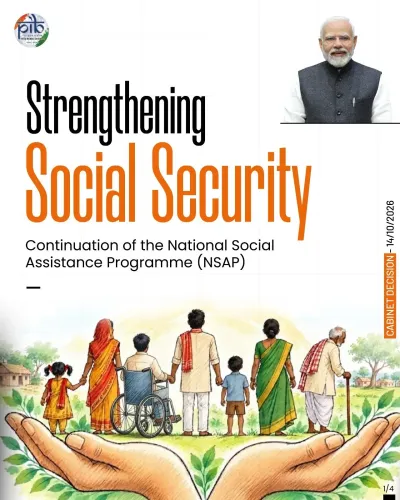
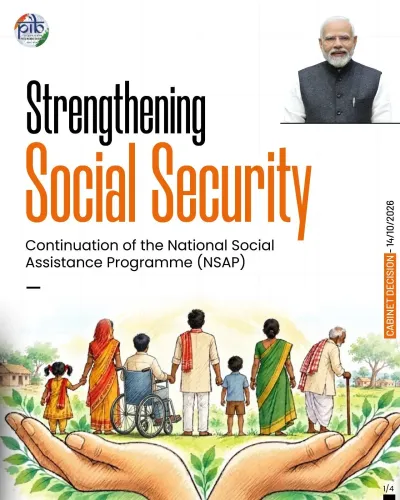
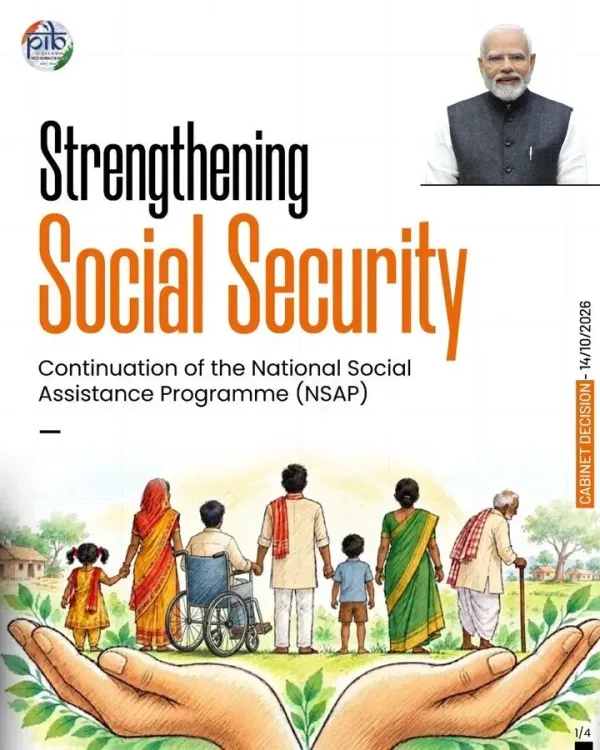
The Union Cabinet has approved the NSAP's continuation from 2026-27 to 2030-31 with a ₹53,428 crore outlay, renamed it Pradhan Mantri Samajik Sahayata Yojana, halved the disability threshold for Divyangjan pensions to 40%, and retained coverage for 3.20 crore beneficiaries across all 36 States and UTs.
Key Takeaways
The Union Cabinet approved continuation of NSAP for five years — 2026-27 to 2030-31 — with a total outlay of ₹53,428 crore .
The scheme is renamed Pradhan Mantri Samajik Sahayata Yojana , placing it within the PM-branded flagship programme umbrella.
The Divyangjan Pension disability threshold is reduced from 80% to 40% , significantly broadening eligibility for persons with disabilities.
Disability pension eligibility has been extended from birth , covering those with congenital or early-onset conditions.
Existing old-age pension , widow pension , and family benefit schemes will continue without disruption.
The programme covers 3.20 crore beneficiaries across all 36 States and Union Territories .
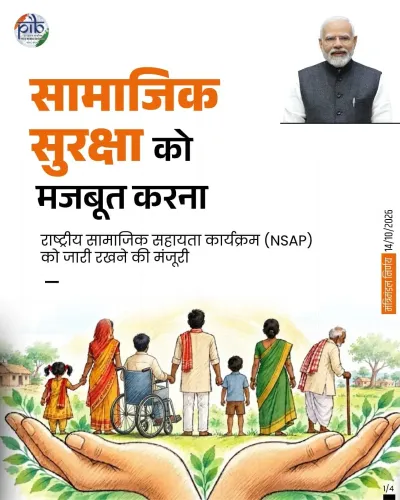
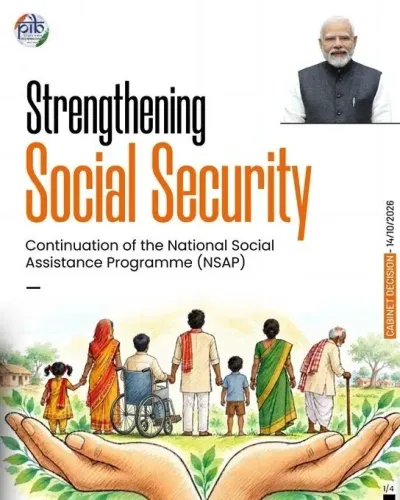
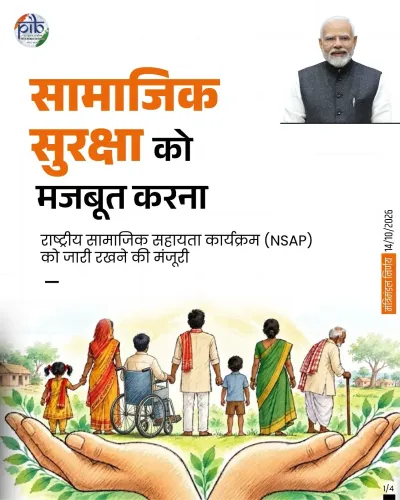
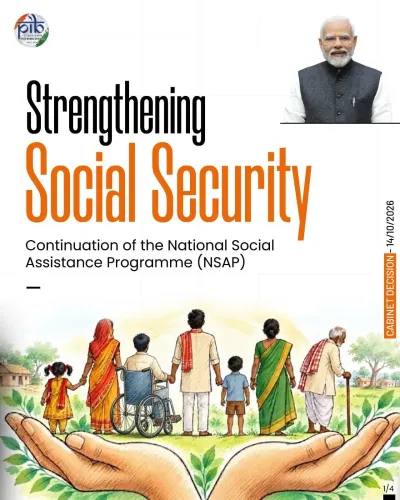
A five-year social safety net — covering elderly citizens, widows, and persons with disabilities across every corner of India — just got a significant upgrade. The Union Cabinet, chaired by Prime Minister Narendra Modi, on Wednesday, October 14, 2026, approved the continuation of the National Social Assistance Programme (NSAP) for the period 2026-27 to 2030-31, committing a total outlay of ₹53,428 crore to protect 3.20 crore beneficiaries across all 36 States and Union Territories. Union Coal and Mines Minister G. Kishan Reddy shared the Cabinet decision on X, flagging the key reforms embedded in the renewal.
From NSAP to Pradhan Mantri Samajik Sahayata Yojana
The scheme that has anchored India's basic social-protection architecture since its launch in 1995 will now carry a new name: Pradhan Mantri Samajik Sahayata Yojana. The rebranding signals more than a cosmetic change — it places the scheme squarely within the broader 'PM-branded' umbrella of centrally sponsored flagship programmes, raising its political and administrative visibility. The core pillars — old-age pensions, widow pensions, and the family benefit scheme for households that lose their primary earner — will continue uninterrupted.
Divyangjan Disability Threshold Cut in Half
The most consequential eligibility reform in this cycle targets India's disabled population. The benchmark disability threshold for the Divyangjan Pension component has been slashed from 80% to 40% — effectively doubling the pool of persons with disabilities who can qualify. Equally significant: eligibility has been extended from birth, closing a gap that previously left out those with congenital or early-onset disabilities. For millions of families navigating life with a disabled member, this is a direct and immediate change in household income support.
What ₹53,428 Crore Buys Over Five Years
The approved outlay of ₹53,428 crore over five years averages roughly ₹10,685 crore per year across the programme. The Cabinet decision also references 'enhanced assistance' for beneficiaries, though exact revised pension amounts and the transition timeline will emerge through implementation notifications and coordination with state governments, which co-administer the scheme. The five-year fixed-cycle approach — a standard practice for centrally sponsored schemes — provides states with the planning certainty needed to update beneficiary lists and disburse funds without gaps.
Thirty-one years after NSAP was born as a modest safety net, its latest avatar promises wider reach, a lower barrier to disability support, and a renewed five-year mandate. Whether the enhanced assistance figures and the 40% disability threshold translate into timely on-ground disbursement across 36 States and UTs will be the real test — and the one India's 3.20 crore enrolled households are already waiting to see answered.
Point of View
Raising salience without dismantling what works. The disability threshold reduction from 80% to 40% is the most structurally significant change — it could substantially expand the Divyangjan pension rolls and represents a genuine widening of the social floor. The five-year, fixed-outlay model continues the Centre's preference for planning certainty over annual budget volatility in social protection. The key unresolved question — how much individual pension amounts will actually rise — will determine whether the 'enhanced assistance' promise translates into real purchasing-power gains for India's most vulnerable households.
NationPress
14 Oct 2026
Frequently Asked Questions
What is the new name for NSAP after the Cabinet decision?
The National Social Assistance Programme (NSAP) has been renamed Pradhan Mantri Samajik Sahayata Yojana following the Union Cabinet's approval on October 14, 2026.
What is the total budget approved for NSAP continuation 2026 to 2031?
The Union Cabinet approved a total outlay of ₹53,428 crore for the continuation of NSAP — now Pradhan Mantri Samajik Sahayata Yojana — covering the five-year period from 2026-27 to 2030-31 .
What changed in the Divyangjan Pension under the new NSAP?
The disability benchmark threshold for the Divyangjan Pension has been reduced from 80% to 40% , and eligibility has been extended from birth , making it accessible to a significantly larger number of persons with disabilities including those with congenital conditions.
How many people benefit from NSAP in India?
NSAP currently covers 3.20 crore beneficiaries across all 36 States and Union Territories of India, including elderly citizens, widows, persons with disabilities, and bereaved households.
Will the old-age pension and widow pension continue under the renamed scheme?
Yes. The Cabinet decision explicitly provides for continuity — existing old-age pension , widow pension , and family benefit schemes under NSAP will all continue under the renamed Pradhan Mantri Samajik Sahayata Yojana.