Cabinet Clears P&K Fertiliser Subsidy Rates for Rabi 2026-27
Synopsis
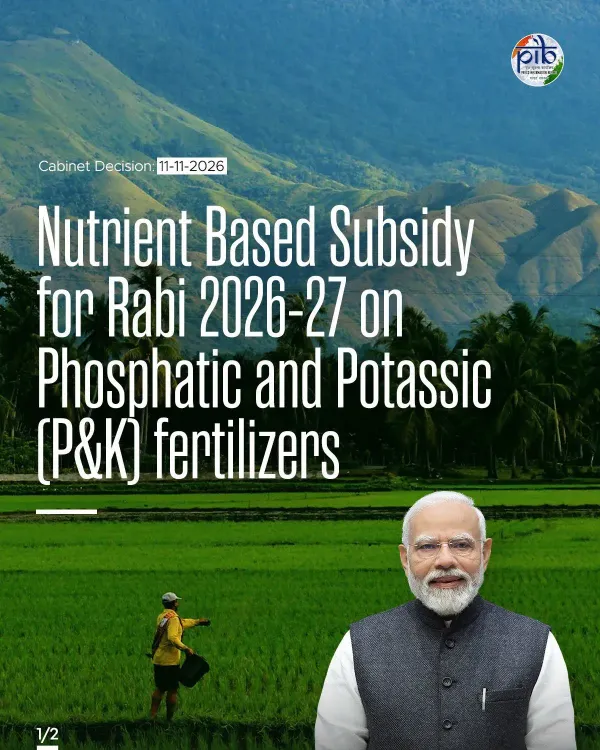
The Union Cabinet has approved Nutrient Based Subsidy rates for phosphatic and potassic fertilisers — including DAP and NPKS grades — for the Rabi season 2026-27, covering 1 October 2026 to 31 March 2027, to keep farm input costs affordable, Union Minister Hardeep Singh Puri announced.
Key Takeaways
The Union Cabinet approved NBS rates for P&K fertilisers for Rabi 2026-27 .
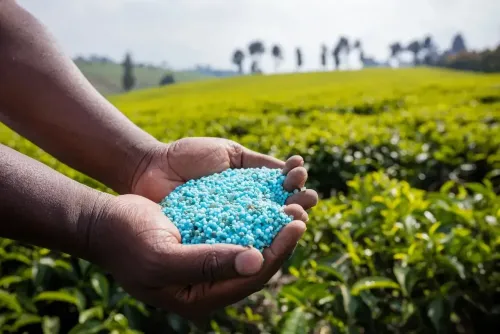
The subsidy covers DAP and NPKS category fertilisers — the most critical P&K inputs for rabi crops.
Rates are effective from 1 October 2026 to 31 March 2027 .
The NBS scheme has been operational since 2010 , linking government support to nutrient content rather than a flat per-bag rate.
The decision aims to shield farmers from global fertiliser price volatility during the peak rabi input-purchase window.
Announcement was made by Union Petroleum Minister Hardeep Singh Puri on 11 November 2026 .
Ahead of the rabi sowing season, the Union Cabinet has approved fresh Nutrient Based Subsidy (NBS) rates for phosphatic and potassic fertilisers — keeping DAP and NPKS category products affordable for Indian farmers through 31 March 2027. Union Petroleum Minister Hardeep Singh Puri announced the decision on Wednesday, 11 November 2026, calling it a reaffirmation of the Modi government's commitment to India's farming community.
Posting in Hindi on X, Puri stated that the Cabinet had approved NBS rates for P&K fertilisers for the Rabi season 2026-27, effective from 1 October 2026 to 31 March 2027. The decision, he wrote, reflects the government's pledge to protect the interests of annadata (providers of food), strengthen the agriculture sector, and ensure the prosperity of farmers.
What NBS Means for a DAP Bag at the Farm Gate
The Nutrient Based Subsidy scheme has been the backbone of India's P&K fertiliser pricing since its introduction in 2010. Unlike a flat per-bag subsidy, NBS ties government support to the actual nutrient content — nitrogen (N), phosphorus (P), potassium (K), and sulphur (S) — in each fertiliser grade. When global prices of raw materials spike, the scheme acts as a buffer, allowing retail prices to stay within reach of smallholder farmers even as import costs surge.
DAP (Di-ammonium Phosphate) is the single most widely used fertiliser after urea in India, critical for the wheat and mustard crops that define the rabi season across the Indo-Gangetic plain. NPKS complex fertilisers serve a range of soil profiles and are essential in states where multi-nutrient deficiency is acute. Keeping both affordable through the peak procurement window — October to March — directly determines input costs for millions of farming households.
A Seasonal Ritual With High Economic Stakes
The Cabinet's periodic revision of NBS rates is not a formality. India is a large importer of phosphatic and potassic raw materials, and global fertiliser markets have remained volatile in recent years due to supply chain disruptions, currency shifts, and geopolitical pressures on key exporting nations. Each seasonal NBS notification is essentially the government deciding how much of that global price volatility it will absorb on behalf of farmers — and how much will pass through.
The subsidy burden on P&K fertilisers runs into tens of thousands of crores annually in the Union Budget, making NBS rate decisions consequential not just for agriculture policy but for fiscal management. The rabi approval, covering the six-month window from October 2026 through March 2027, sets the financial framework for one of the two most critical cropping seasons in India's food calendar.
Modi Government's Farmer-Welfare Framing
The announcement arrives under the hashtag #CabinetDecisions, part of a steady government communication pattern of amplifying Cabinet approvals through ministers' social media handles. Puri's post frames the subsidy decision squarely in welfare terms — using the word annadata (literally 'one who gives food'), a term Prime Minister Narendra Modi has used repeatedly to elevate the political and moral standing of the farming community in public discourse.
With rabi sowing already under way in several states, the timing of the announcement signals that subsidy-backed fertiliser supply chains should remain uninterrupted through the season's critical input-purchase phase.
The rabi harvest of 2027 will be the first measurable test of whether these rates kept the promise of the farm gate.
Point of View
Especially in an electorally sensitive sector. What makes each iteration consequential is the quantum of subsidy rates set — not yet disclosed in this announcement — which will determine the actual fiscal outgo and retailer behaviour on the ground. Puri's framing of the decision through the lens of 'annadata' welfare aligns with the BJP's broader political architecture around farmer identity, particularly significant as state election cycles continue across India. Watch whether the rates prove sufficient to prevent informal price creep at district-level retailers once the season peaks.
NationPress
11 Nov 2026
Frequently Asked Questions
What is the Nutrient Based Subsidy (NBS) scheme for fertilisers?
The NBS scheme, introduced in 2010, provides government subsidies on phosphatic and potassic (P&K) fertilisers based on their nutrient content — nitrogen, phosphorus, potassium, and sulphur — rather than a fixed per-bag amount. This keeps retail prices affordable for farmers while allowing the government to manage fiscal outgo based on global prices.
Which fertilisers are covered under the Rabi 2026-27 NBS approval?
The Cabinet has approved NBS rates for DAP (Di-ammonium Phosphate) and NPKS complex fertilisers, which fall under the phosphatic and potassic (P&K) category. These are among the most widely used inputs for rabi crops like wheat and mustard.
From when are the new NBS subsidy rates applicable?
The approved NBS rates are effective from 1 October 2026 to 31 March 2027, covering the full Rabi cropping season 2026-27.
Why does India subsidise P&K fertilisers?
India imports significant quantities of phosphatic and potassic raw materials, making domestic prices vulnerable to global market swings. The NBS subsidy regime insulates farmers from sharp price spikes, ensuring consistent access to critical inputs and supporting agricultural productivity and food security.
Who announced the Cabinet approval for NBS rates for Rabi 2026-27?
Union Minister Hardeep Singh Puri announced the Cabinet decision on X on 11 November 2026, noting that the approval reflects the Modi government's commitment to farmer welfare and strengthening the agriculture sector.