Cabinet Clears Revamped Khelo India With ₹36,441 Cr Outlay

Synopsis
The Modi Cabinet has approved a revamped Khelo India Scheme with a ₹36,441 crore outlay spanning FY 2026–27 to FY 2030–31, alongside a strengthened ANSF Scheme — marking India's largest single sports-sector financial commitment in recent memory.
Key Takeaways
The Union Cabinet approved the revamped Khelo India Scheme on July 31, 2026 .
Total outlay stands at ₹36,441 crore for the five-year period FY 2026–27 to FY 2030–31 .
The Assistance to National Sports Federations (ANSF) Scheme was simultaneously strengthened for the same period.
Khelo India was originally launched in 2017 to develop grassroots sports infrastructure and talent identification.
The five-year window covers two full Olympic cycles , providing a continuous funding guarantee for athlete development.
National Sports Federations governing individual disciplines will receive more predictable central grants under the reinforced ANSF framework.
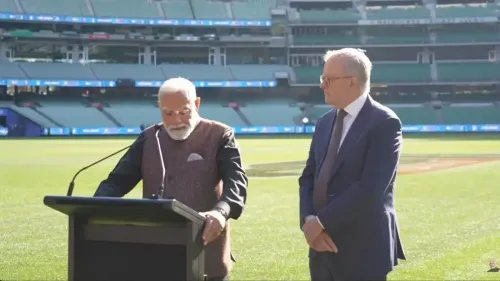
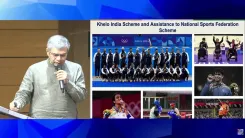
India's biggest grassroots sports bet just got a massive upgrade. The Union Cabinet, chaired by Prime Minister Narendra Modi, on Friday, July 31, 2026, approved a sweeping revamp of the Khelo India Scheme — committing ₹36,441 crore over five years, from FY 2026–27 to FY 2030–31, in what stands as one of the largest single sports-sector outlays in the country's history. Union Science and Technology Minister Dr. Jitendra Singh announced the decision on X, also flagging the simultaneous approval of the strengthened Assistance to National Sports Federations (ANSF) Scheme for the same five-year window.
What the ₹36,441 Crore Mandate Covers
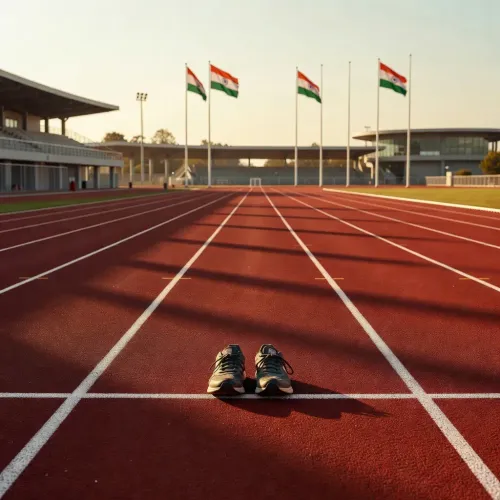
The revamped Khelo India is not a fresh idea — it is a hardened one. First launched in 2017, the programme was designed to do three things at once: build sports infrastructure across states, identify raw talent at the grassroots level, and funnel the best of that talent toward elite competition. The new five-year approval dramatically scales the financial muscle behind all three pillars, giving states, districts, and academies a longer planning horizon and a larger resource pool to draw from.
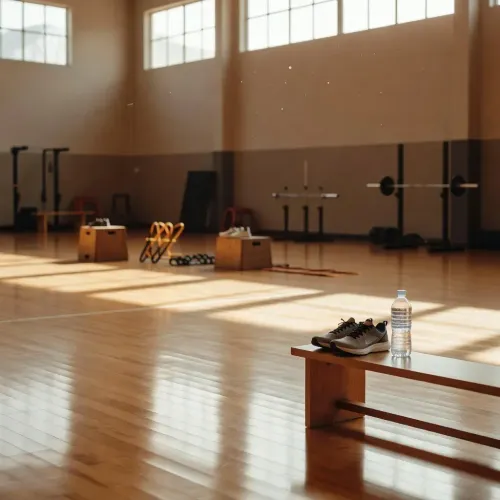
Young athletes — the ones training on patchy tracks and in under-equipped gymnasiums across Tier-2 and Tier-3 cities — are the intended primary beneficiaries. The extended timeline through FY 2030–31 is significant: it brackets two full Olympic cycles, meaning the pipeline from discovery to podium has, at least on paper, a continuous funding guarantee.
ANSF Strengthening: Federations Get a Longer Runway
Running parallel to Khelo India's expansion is the reinforced ANSF Scheme, which channels central government grants directly to National Sports Federations — the recognised bodies that govern individual sports disciplines and organise domestic and international competition. Stronger, more predictable federation funding addresses a long-standing structural gap: world-class individual athletes often emerge, only to find their governing bodies under-resourced for coaching, equipment procurement, and international exposure.
By locking in ANSF support through FY 2026–31, the Cabinet is signalling that elite development and mass participation are being treated as complementary tracks, not competing budget lines.
A Decade-Long Arc Toward the Medal Table
The approval fits a pattern that has defined central sports policy since the early 2010s: successive governments have steadily raised the stakes on both participation programmes and elite support, with an eye firmly on India's performance at multi-sport events. The ₹36,441 crore figure, spread across five years, represents the most ambitious single commitment within that arc.
The real test begins in FY 2026–27, when rollout mechanics — state-level implementation, infrastructure timelines, federation accountability frameworks — will determine whether the outlay translates into medals or merely into well-funded intent.
Point of View
441 crore commitment is the clearest signal yet that the Modi government views sports investment as strategic, not ceremonial — bracketing two Olympic cycles with a single, uninterrupted funding guarantee is a deliberate structural choice. Running the ANSF strengthening in parallel suggests a two-track doctrine: build the base wide with Khelo India, then sharpen the tip through better-resourced federations. The political calculus is also transparent — a stronger medal tally at the 2028 Los Angeles and 2032 Brisbane Olympics would arrive just as the BJP seeks to consolidate its legacy on soft-power metrics. Whether the outlay survives budget revisions and translates into on-ground infrastructure will be the defining accountability test of this announcement.
NationPress
31 Jul 2026
Frequently Asked Questions
What is the Khelo India Scheme?
Khelo India is a national sports development programme launched in 2017 by the Government of India to promote grassroots participation, build sports infrastructure across states, and identify and nurture talent for elite competition.
How much money has been approved for the revamped Khelo India Scheme?
The Union Cabinet has approved a total outlay of ₹36,441 crore for the revamped Khelo India Scheme, covering the period from FY 2026–27 to FY 2030–31 .
What is the ANSF Scheme and who does it benefit?
The Assistance to National Sports Federations (ANSF) Scheme channels central government grants to the recognised bodies that govern individual sports in India, funding coaching, equipment, and international competition exposure for elite athletes.
When does the revamped Khelo India Scheme come into effect?
The scheme is set to roll out from FY 2026–27 and will run through FY 2030–31 , providing a five-year funding horizon for states, districts, and sports academies.
Who announced the Cabinet approval of the Khelo India revamp?
Union Minister Dr. Jitendra Singh announced the Cabinet decision on July 31, 2026 , noting that both the revamped Khelo India Scheme and the strengthened ANSF Scheme had been cleared.