CM Samrat Choudhary Hails ₹36,441 Cr Khelo India Renewal
Synopsis
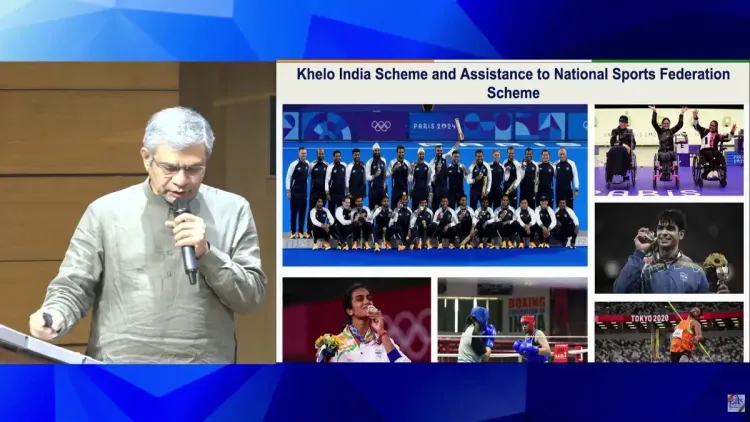
The Union Cabinet has approved a renewed Khelo India scheme with a ₹36,441 crore budget for 2026–31. Bihar Chief Minister Samrat Choudhary hailed the decision as historic, saying it will strengthen sports culture, empower National Sports Federations, and accelerate India's journey toward becoming a global sporting power under PM Modi's leadership.
Key Takeaways
The Union Cabinet approved a renewed Khelo India scheme with a ₹36,441 crore budget spanning 2026–27 to 2030–31 .
Bihar Chief Minister Samrat Choudhary described the decision as historic for building a national sports culture.
The Cabinet simultaneously approved enhanced support for National Sports Federations (NSFs) to improve training and international performance.
The original Khelo India programme dates to 2017 , making this renewal a continuation and scaling of a near-decade-old policy architecture.
CM Choudhary attributed the initiative to Prime Minister Narendra Modi's sustained commitment to youth and sports development.
Scheme guidelines, fund disbursement mechanisms, and performance benchmarks for the 2026–27 cycle are yet to be published.
A five-year, ₹36,441 crore commitment to Indian sport just cleared the highest table in the land. Bihar Chief Minister Samrat Choudhary on Friday, July 31, 2026 welcomed the Union Cabinet's approval of a revamped Khelo India scheme covering financial years 2026–27 through 2030–31, calling it a historic decision in building a genuine sports culture across the country.
Posting on X, CM Choudhary wrote: 'Yuva shakti ko nayi udaan, khelon ko nayi pehchaan' — 'New flight for youth power, new identity for sport' — framing the Cabinet nod not as routine budgetary business but as a generational signal. He credited Prime Minister Narendra Modi for sustaining a commitment to nurturing sporting talent and creating world-class opportunities for athletes.
From Grassroots to Global: What the Renewed Scheme Targets
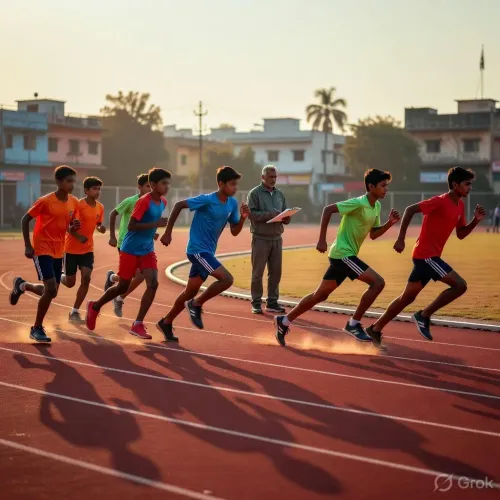
The original Khelo India programme was launched in 2017 with a mandate to identify talent at the grassroots, build sports infrastructure, and bridge the gap between local potential and elite performance. The renewed scheme extends that architecture with a significantly larger budgetary envelope, signalling that the Centre intends to scale — not just sustain — its sports investment.
CM Choudhary also highlighted a parallel Cabinet decision to strengthen support for National Sports Federations (NSFs) — the recognised bodies that govern individual disciplines, run training programmes and manage India's international participation. Better-resourced federations mean more structured pathways from district-level discovery to Olympic podiums.
Bihar's Stake in a National Sports Push
For a state like Bihar, where sporting infrastructure has historically lagged behind more urbanised states, a programme explicitly designed to reach beyond metropolitan centres carries particular weight. Successive iterations of Khelo India have focused on expanding participation in tier-2 and tier-3 cities and rural districts — precisely the geography where much of Bihar's youth population sits.
The broader policy pattern here is deliberate: link sports investment to youth development, hold federations accountable for results, and use international performance benchmarks to drive domestic reform. The ₹36,441 crore outlay — spread across five years — gives administrators a planning horizon long enough to build facilities, run multi-year talent pipelines, and measure outcomes.
The real test arrives when scheme guidelines, fund disbursement timelines and performance benchmarks are published for the 2026–27 cycle. India's ambitions on the global sports stage are only as durable as the institutional plumbing that channels this money to the right athletes, at the right age, in the right disciplines.
Point of View
₹36,441 crore renewal of Khelo India is the clearest signal yet that sports investment has moved from a peripheral welfare item to a sustained strategic priority in Indian governance. By pairing the scheme extension with enhanced NSF support, the Centre is attempting to close the long-standing gap between grassroots discovery and elite-level performance. CM Choudhary's endorsement reflects the BJP's broader effort to frame youth-oriented policy wins as a federal dividend — shared credit between the Centre and state leadership. The real accountability moment will come when disbursement data and performance benchmarks are made public, turning a political announcement into a measurable commitment.
NationPress
14 Sept 2026
Frequently Asked Questions
What is the new Khelo India scheme budget approved by the Cabinet?
The Union Cabinet approved a renewed Khelo India scheme with a budget of ₹36,441 crore, covering financial years 2026–27 to 2030–31.
What did Bihar CM Samrat Choudhary say about the Khelo India Cabinet decision?
CM Samrat Choudhary called it a historic decision to strengthen sports culture in India, crediting PM Narendra Modi's leadership for consistently promoting sporting talent and world-class opportunities.
When was the original Khelo India programme launched?
The Khelo India programme was originally launched in 2017 to promote grassroots sports, identify talent, and develop sports infrastructure across India.
How will National Sports Federations benefit from the new Cabinet decision?
The Cabinet also approved stronger support for National Sports Federations, which is expected to improve athlete training pathways, raise international performance standards, and professionalise sports governance.
How does Khelo India affect states like Bihar?
Khelo India specifically targets talent identification and infrastructure development beyond major cities, which benefits states like Bihar where rural and semi-urban youth represent a large, underserved sporting population.