Cabinet Clears 'Samudra Manthan' Offshore Exploration Scheme Worth ₹84,084 Cr

Synopsis
The Union Cabinet has approved 'Samudra Manthan', India's National Offshore Exploration Scheme, with an outlay of ₹84,084 crore through FY 2030–31. The scheme aims to tap offshore hydrocarbon reserves and cut India's chronic dependence on crude oil imports, which historically exceeds 80 percent.
Key Takeaways
The Union Cabinet chaired by PM Narendra Modi approved 'Samudra Manthan' , the National Offshore Exploration Scheme, on July 31, 2026 .
The scheme carries an approved outlay of ₹84,084 crore for implementation through FY 2030–31 .
The scheme's stated objective is to unlock India's offshore energy potential and strengthen national energy security.
India historically imports more than 80 percent of its crude oil, making domestic offshore exploration a strategic priority.
The approval follows earlier reforms including HELP (2016) and OALP (2017) , which opened exploration to private and foreign players alongside public-sector firms like ONGC .
Key watch-points include new block awards and bidding rounds under the scheme before 2030–31 .
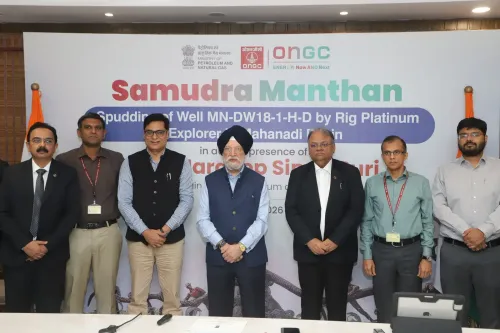
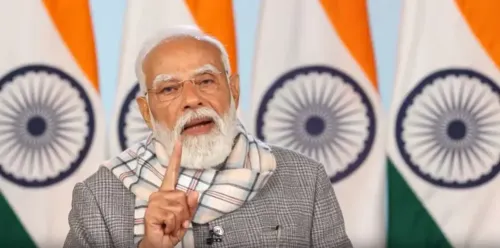
India's offshore energy frontier just got a massive push. The Union Cabinet, chaired by Prime Minister Narendra Modi, has approved 'Samudra Manthan' — the National Offshore Exploration Scheme — with a staggering outlay of ₹84,084 crore, to be implemented through FY 2030–31. Union Science and Technology Minister Dr. Jitendra Singh announced the decision on Friday, July 31, 2026, framing it as a decisive step toward unlocking India's vast subsea energy reserves.
What 'Samudra Manthan' Sets Out to Do
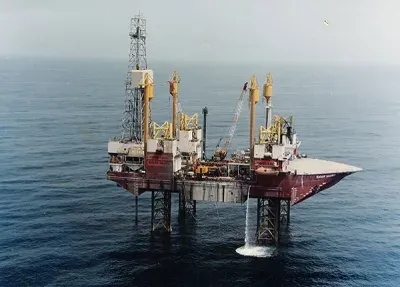
The name itself is evocative — drawn from the ancient myth of the churning of the ocean to extract hidden treasures. That is precisely the ambition here: systematically exploring India's offshore basins, many of which remain underexplored despite holding significant hydrocarbon potential. The scheme's approved outlay of ₹84,084 crore signals a long-horizon commitment, stretching across five financial years to FY 2030–31.
The scheme's stated goal is to 'unlock India's vast offshore energy potential and strengthen the nation's energy security' — a phrase that carries real urgency for a country that has historically imported more than 80 percent of its crude oil requirements. Every barrel discovered domestically is one less dollar spent abroad.
The Policy Lineage Behind the Push
This approval does not arrive in a vacuum. Since 2016, the Modi government has progressively restructured India's exploration architecture — first through the Hydrocarbon Exploration and Licensing Policy (HELP), which replaced the older licensing regime with a uniform framework, and then through the Open Acreage Licensing Policy (OALP) launched in 2017, which allowed companies to propose exploration blocks on a rolling basis rather than waiting for discrete bidding rounds.
Together, those reforms opened the door to greater private and foreign participation alongside public-sector giants such as ONGC. 'Samudra Manthan' appears to be the next structural layer — shifting focus specifically to the offshore and deepwater frontier where the geological prize is potentially the largest and the exploration the most capital-intensive.
What Comes Next for India's Offshore Basins
The immediate watch-points are practical: will new bidding rounds and block awards follow quickly, and how efficiently will the ₹84,084 crore outlay be deployed across the scheme's five-year window? Coastal states and exploration companies — both public and private — stand to be the primary stakeholders as the scheme moves from Cabinet approval to field-level implementation.
India's energy security calculus is already being rewritten on multiple fronts — renewables, strategic petroleum reserves, and now a dedicated offshore push. 'Samudra Manthan' bets that the answer to India's import dependence may lie not on land, but beneath the sea.
Point of View
Moving beyond the licensing reforms of 2016–17 toward a dedicated, heavily-funded offshore push. With import dependence stubbornly above 80 percent, the Cabinet is betting that deepwater and offshore blocks can meaningfully shift the balance — a long-term wager that will be judged by block awards and actual exploration activity, not just the outlay figure. The scheme also reinforces the Modi government's pattern of branding large infrastructure and resource programmes with culturally resonant names to build public salience. Whether the ₹84,084 crore translates into barrels in the ground by 2031 is the only metric that will matter.
NationPress
31 Jul 2026
Frequently Asked Questions
What is the Samudra Manthan scheme approved by the Cabinet?
'Samudra Manthan' is the National Offshore Exploration Scheme approved by the Union Cabinet under PM Narendra Modi, with an outlay of ₹84,084 crore for implementation through FY 2030–31, aimed at exploring India's offshore hydrocarbon potential and strengthening energy security.
How much money has been approved for Samudra Manthan?
The Cabinet has approved an outlay of ₹84,084 crore for the Samudra Manthan scheme, to be utilised over the period up to FY 2030–31.
Why is India launching an offshore oil and gas exploration scheme?
India imports more than 80 percent of its crude oil requirements, making energy security a strategic priority. Offshore and deepwater basins hold significant untapped hydrocarbon potential, and dedicated schemes like Samudra Manthan aim to reduce this import dependence through domestic exploration.
Who announced the Samudra Manthan Cabinet approval?
Union Minister of Science and Technology and Earth Sciences Dr. Jitendra Singh announced the Cabinet approval of the Samudra Manthan scheme on July 31, 2026.
How does Samudra Manthan relate to earlier oil exploration policies like HELP and OALP?
The Hydrocarbon Exploration and Licensing Policy (HELP, 2016) and Open Acreage Licensing Policy (OALP, 2017) restructured India's onshore and offshore licensing framework. Samudra Manthan builds on this foundation by providing a dedicated, large-scale financial commitment specifically for offshore exploration.