CM Samrat Choudhary Backs Cabinet's 2-Year Agniveer Extension
Synopsis
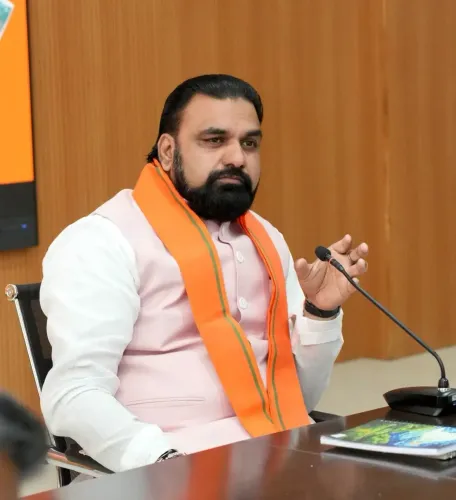
The Union Cabinet has approved a two-year service extension for Agniveers who complete their initial four-year stint but are not selected for regular military absorption. Bihar CM Samrat Choudhary endorsed the move, calling it a step toward better utilising the experience and discipline of the 75 percent non-retained cohort.
Key Takeaways
The Union Cabinet approved an additional 2-year service extension for Agniveers completing their initial 4-year Agnipath tenure.
The extension applies to the 75 percent of Agniveers who are not selected for regular armed forces absorption.
The existing 25 percent regular-absorption pathway under the Agnipath scheme remains unchanged.
Bihar Chief Minister Samrat Choudhary publicly backed the Cabinet decision, attributing it to PM Narendra Modi 's leadership.
The Agnipath scheme was originally launched in June 2022 , drawing protests over post-service career uncertainty for the majority cohort.
Implementation details — pay structure, eligibility criteria, and transition frameworks — are yet to be publicly announced.
A quiet but consequential shift in India's defence recruitment architecture arrived on Wednesday, November 4, 2026, when the Union Cabinet approved a two-year service extension for Agniveers who complete their initial four-year tenure — and Bihar Chief Minister Samrat Choudhary was swift to applaud it as a landmark step in channelling military discipline toward national purpose.
What the Cabinet Actually Decided
Under the original Agnipath scheme, launched in June 2022, soldiers recruited as Agniveers served a fixed four-year contract. Only 25 percent of each cohort were eligible for absorption into the regular armed forces; the remaining 75 percent exited the military at the end of their tenure. The new Cabinet decision changes the calculus for that larger group: Agniveers who are not selected for regular service will now have the option to serve for an additional two years, extending their active contribution from four years to six.
The 25 percent regular-absorption pathway remains intact and unchanged. CM Choudhary, writing in Hindi, described the decision as 'abhinavdaniy' — 'commendable' — and credited it to Prime Minister Narendra Modi's 'visionary leadership.'
Why the 75 Percent Gap Always Mattered
Since Agnipath's launch, the loudest criticism was never about the soldiers who stayed — it was about the ones who left. Critics argued that trained, disciplined young men and women being released at age 21 or 22 without a guaranteed civilian pathway was a policy gap the government needed to close. Protests erupted across several states in 2022 when the scheme was first announced, reflecting just how charged the question of post-service futures had become.
The two-year extension does not resolve every concern — it does not offer a pension, nor does it guarantee permanent absorption — but it does address one specific pressure point: the abrupt severance of service at the four-year mark for the majority of recruits. For the Indian Armed Forces, the benefit runs in the other direction: a more experienced cohort, with two additional years of operational exposure, before they re-enter civilian life or the paramilitary pipeline.
Bihar's Political Stake in the Agnipath Debate
Bihar has historically been among the states that contribute the highest number of recruits to the Indian Army. The Agnipath scheme, and any refinement to it, carries particular weight in a state where military service is both an economic anchor and a source of community pride. CM Choudhary's prompt endorsement is not merely a party-line statement — it speaks directly to a constituency that has watched the Agnipath debate with acute personal interest since 2022.
The broader political arc matters here too. The BJP, which has faced sustained opposition pressure on Agnipath since its inception, now has a concrete policy adjustment it can point to — not a rollback, but an evolution. That framing is deliberate, and Choudhary's post amplifies it at the state level.
What Comes Next for Agniveers and the Forces
Implementation guidelines — covering eligibility criteria, pay structure for the extended two years, and transition pathways at the end of six years — will determine how meaningful this change actually is on the ground. State governments, paramilitary forces, and central police organisations, which have separately offered reservation quotas for exiting Agniveers, will now need to recalibrate their own frameworks to account for a cohort that exits two years later than previously planned.
The Union Cabinet's decision marks an inflection point for a scheme that has rarely left the political spotlight since its birth. Whether the extension becomes a durable fix or a temporary palliative will depend entirely on what follows in the fine print.
Point of View
It offers a defensible political narrative: the government listened, iterated, and acted. Bihar CM Choudhary's endorsement is strategically timed given Bihar's outsized share of military recruits and the state's historically charged response to Agnipath. The real test, however, lies in the implementation guidelines — particularly whether the extended service comes with meaningful pay parity and credible civilian-transition support, or simply delays the same debate by two years.
NationPress
4 Nov 2026
Frequently Asked Questions
What is the new Agniveer 2-year service extension?
The Union Cabinet has approved an option for Agniveers who complete their initial 4-year Agnipath tenure to serve for an additional 2 years, taking their total service to 6 years. This applies specifically to the 75 percent of Agniveers who are not selected for regular military absorption.
Does the Cabinet decision change the 25 percent regular absorption rule?
No. The 25 percent regular-absorption pathway for Agniveers who meet the prescribed criteria remains unchanged. Only the post-tenure option for the remaining 75 percent has been modified.
What is the Agnipath scheme and when was it launched?
The Agnipath scheme was launched by the central government in June 2022. It recruits soldiers, sailors, and airmen on a four-year contractual basis. At the end of the tenure, 25 percent are absorbed into regular service while the remaining 75 percent exit with a severance package.
Why did Bihar CM Samrat Choudhary comment on the Agniveer extension?
Bihar is one of India's largest contributors of military recruits, making Agnipath policy directly relevant to the state's youth. CM Choudhary praised the Cabinet decision as an important step toward better utilising the experience and discipline of Agniveers in national service.
What happens to Agniveers after the extended 6-year service ends?
Implementation guidelines for the extended tenure have not yet been publicly detailed. Existing provisions — including reservation quotas in paramilitary forces and central police organisations — are expected to continue, but state and central agencies will need to update their frameworks to account for the later exit date.