Calcutta HC quashes Kunal Ghosh's petition on Assembly speech rights
Synopsis
The Calcutta High Court has shut the door on TMC legislator Kunal Ghosh's bid to use judicial review to secure his right to speak in the West Bengal Assembly. The ruling exposes the depth of the TMC's internal factional war — where a minority bloc aligned with Mamata Banerjee is being outmanoeuvred on the floor of the House by a rebel majority led by expelled legislator Ritabrata Banerjee.
Key Takeaways
A single-judge bench of Justice Krishan Rao of the Calcutta High Court quashed Kunal Ghosh's petition on 7 August .
The court ruled it has no jurisdiction to intervene in the internal proceedings of the West Bengal Legislative Assembly .
Ghosh was advised to take his grievances to Assembly Speaker Rathindra Bose .
Ghosh belongs to the 'original but minority' TMC faction loyal to Mamata Banerjee and Abhishek Banerjee .
The 'rebel but majority' faction led by expelled legislator Ritabrata Banerjee controls the opposition bloc in the Assembly.
Ghosh was previously marshalled out and suspended during the last extended Budget session after a heated argument with Chief Whip Akhruzzaman .
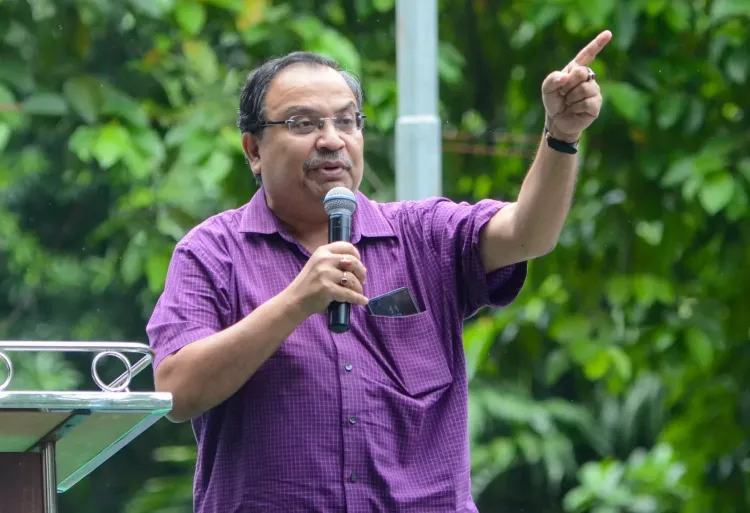
The Calcutta High Court on Friday, 7 August quashed a petition filed by All India Trinamool Congress (TMC) legislator Kunal Ghosh, who had alleged that his right to speak on the floor of the West Bengal Legislative Assembly was being systematically suppressed. A single-judge bench of Justice Krishan Rao ruled that the court had no jurisdiction to intervene in the internal proceedings of the state legislature.
Court's Ruling
Justice Rao held that the petition filed by Ghosh had no admissibility, citing the well-established constitutional principle that courts cannot regulate the internal workings of a legislature. The bench declined the request for judicial review and instead advised Ghosh to approach Assembly Speaker Rathindra Bose with his grievances. The Assembly's counsel reinforced this position, noting that Ghosh had been given an opportunity to speak on the floor of the House in June.
'There are 294 legislators. Everyone has to be given a chance to speak. How could the court regulate which MLAs could speak and which MLAs could not?' the Assembly's counsel argued.
Background: A Fractured Party
The petition stems from a deepening factional rift within the Trinamool Congress in West Bengal. Ghosh, a journalist-turned-politician, belongs to the 'original but minority' faction that continues to align with former West Bengal Chief Minister Mamata Banerjee and her nephew Abhishek Banerjee. The opposing 'rebel but majority' faction is led by expelled party legislator Ritabrata Banerjee, who currently serves as the official West Bengal Leader of the Opposition.
Assembly Altercation and Suspension
Tensions came to a head during the last extended Budget session of the Assembly, when Ghosh alleged his name was excluded from the list of speakers. He got into a heated argument with the Chief Whip of the Ritabrata-led faction, Akhruzzaman. The confrontation triggered chaos on the floor of the House, resulting in Ghosh being marshalled out and suspended for the day. He subsequently accused the Ritabrata faction of conspiring to silence him before approaching the High Court.
What Happens Next
With the court declining to intervene, Ghosh's only formal recourse now lies with Assembly Speaker Rathindra Bose. The ruling reinforces the doctrine of legislative privilege, which shields Assembly proceedings from judicial scrutiny. The verdict is unlikely to ease the factional tensions within the TMC, which have been simmering since the party's internal split and could shape the political dynamics in West Bengal ahead of future electoral cycles.
Point of View
With the minority faction unable to speak and the majority faction controlling the procedural levers. Speaker Rathindra Bose, to whom Ghosh has now been directed, is himself a product of the same political ecosystem. Whether that constitutes a meaningful avenue for redress is a question the court did not need to answer — but voters eventually will.
NationPress
22 Sept 2026
Frequently Asked Questions
Why did the Calcutta High Court quash Kunal Ghosh's petition?
The court quashed the petition because it found it had no jurisdiction to intervene in the internal proceedings of the West Bengal Legislative Assembly. Justice Krishan Rao ruled that the petition had no admissibility and declined the request for judicial review.
Who is Kunal Ghosh and which faction of TMC does he belong to?
Kunal Ghosh is a journalist-turned-politician and a sitting TMC legislator. He belongs to the 'original but minority' faction of the Trinamool Congress that remains loyal to former Chief Minister Mamata Banerjee and her nephew Abhishek Banerjee.
What is the factional split within Trinamool Congress in the West Bengal Assembly?
The TMC in the West Bengal Assembly is divided into two factions. The minority faction, which includes Ghosh, is loyal to Mamata Banerjee. The majority faction, led by expelled legislator Ritabrata Banerjee, holds the position of official Leader of the Opposition.
What can Kunal Ghosh do now after the court dismissed his petition?
The court has directed Ghosh to approach Assembly Speaker Rathindra Bose with his grievances. That is currently his only formal avenue for redress following the dismissal of his petition.
What happened to Kunal Ghosh during the West Bengal Assembly's Budget session?
During the last extended Budget session, Ghosh alleged his name was excluded from the list of speakers. He got into a heated argument with Chief Whip Akhruzzaman of the rival TMC faction, was marshalled out of the House, and was suspended for the day.