AIMIM in UP 2027: Can Owaisi replicate Bihar's Seemanchal success?
Synopsis
AIMIM won five seats in Bihar's Seemanchal twice — without an alliance — and that is exactly what worries the SP ahead of UP 2027. Owaisi doesn't need to win big; he just needs to split enough votes in enough tight seats to reshape the outcome. Whether UP's dispersed Muslim electorate gives him that lever is the defining question.
Key Takeaways
AIMIM has been rebuffed by the SP -led alliance in Uttar Pradesh ahead of the 2027 Assembly election , as it was by the Mahagathbandhan in Bihar.
The party won five seats in Bihar's Seemanchal region in both 2020 and 2025 , contesting independently both times.
Unlike Bihar's concentrated Muslim belt, UP's Muslim vote is spread across Rohilkhand , western UP , Awadh , and eastern districts — limiting AIMIM's ability to replicate the Seemanchal model.
A possible BSP-AIMIM 'Bhim-Meem' alliance is under discussion but Mayawati reportedly remains reluctant, preferring independent contests.
The SP calculates that including AIMIM would nurture a long-term rival within its core Muslim voter base, making a formal tie-up unlikely.
Even without winning seats, AIMIM could influence results in tightly contested constituencies by splitting anti-BJP votes in western UP and Nepal-Bihar border districts.
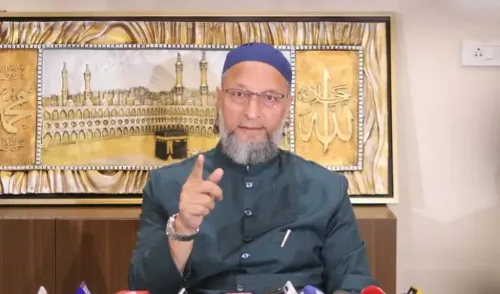
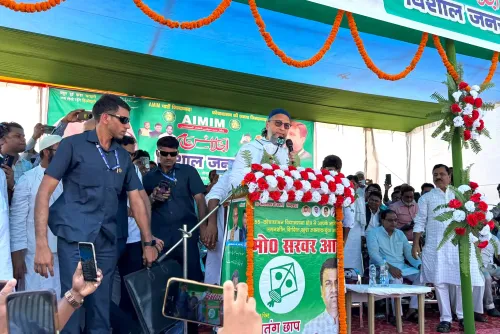
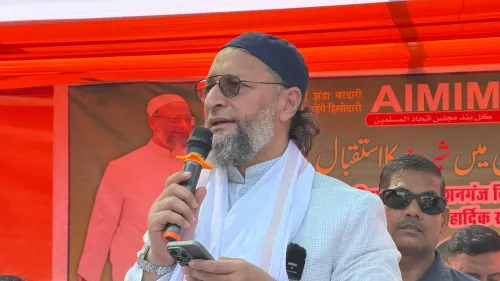
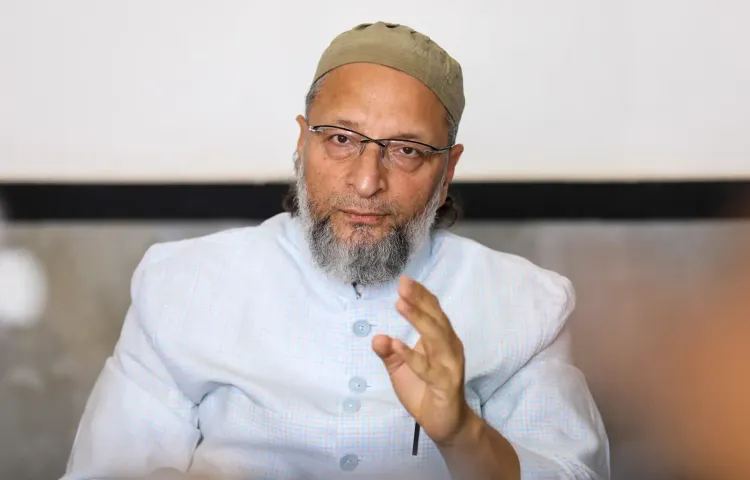
Asaduddin Owaisi's All India Majlis-e-Ittehadul Muslimeen (AIMIM) is once again finding the doors of anti-Bharatiya Janata Party (BJP) alliances firmly shut as Uttar Pradesh heads toward its 2027 Assembly election. The central question in political circles is whether the party — even without a formal alliance — can disrupt the Opposition's consolidation in enough constituencies to alter the final outcome.
The Bihar Blueprint and Its Limits
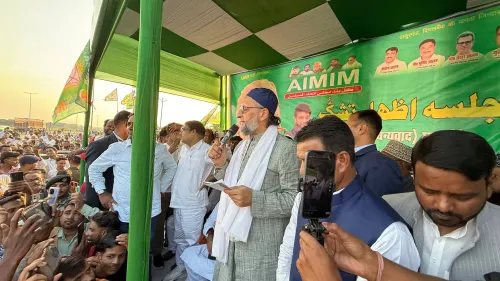
The AIMIM's Bihar experience looms large over the UP calculus. In the 2020 Bihar Assembly election, the party won five seats in the Muslim-concentrated Seemanchal region — spanning Kishanganj, Araria, Purnea, and Katihar districts — by positioning itself as an alternative voice for Muslims who felt sidelined by the Rashtriya Janata Dal (RJD)-led Mahagathbandhan. It reportedly sought a seat-sharing arrangement with the Mahagathbandhan ahead of the 2025 Bihar election but was rebuffed, yet still managed to repeat its five-seat tally in the same border areas.
Critics accused Owaisi of fragmenting Opposition votes, while the AIMIM maintained it was filling a representational vacuum. Observers noted that the party's presence reduced the Mahagathbandhan's ability to consolidate Muslim support in Seemanchal — a cautionary tale that the Samajwadi Party (SP) appears to have absorbed.
SP's Calculated Distance from AIMIM
Owaisi has reportedly expressed willingness to work with anti-BJP formations in Uttar Pradesh, but the SP-led alliance has kept him at arm's length. SP supremo Akhilesh Yadav appears unwilling to grant AIMIM any formal foothold among Muslim voters, and both the SP and the Indian National Congress (Congress) have reportedly distanced themselves from the party as it explores other partnership options.
The SP's reasoning is straightforward: since the 2022 UP Assembly election and the 2024 Lok Sabha election, the party has emerged as the principal consolidator of anti-BJP Muslim votes in the state. Bringing AIMIM into the alliance, the calculation goes, would nurture a long-term rival within the same voter base — a risk SP is unwilling to take.
Why UP's Geography Works Against AIMIM
The structural difference between Bihar's Seemanchal and Uttar Pradesh is critical. In Seemanchal, Muslims form a decisive and geographically contiguous bloc across several neighbouring constituencies — a concentration that allowed AIMIM to build a compact, winnable base. In Uttar Pradesh, the Muslim vote is dispersed across Rohilkhand, western UP, parts of Awadh, and the eastern districts. No single region offers AIMIM the same kind of concentrated launchpad.
Moreover, many Muslim voters in UP have historically prioritised electoral effectiveness over identity-based representation, which has reinforced tactical voting in favour of the SP-led alliance. Owaisi may find it difficult to convince voters that backing AIMIM translates into meaningful representation rather than simply weakening the Opposition's overall position. That said, seats in western Uttar Pradesh and districts bordering Nepal and Bihar — where Muslim populations are significant — could still see triangular contests if AIMIM fields strong local candidates.
The BSP-AIMIM 'Bhim-Meem' Possibility
Reports suggest ongoing discussions around a possible tie-up between AIMIM and Mayawati's Bahujan Samaj Party (BSP) under the so-called 'Dalit-Muslim' or 'Bhim-Meem' formula. However, Mayawati reportedly remains reluctant, with the BSP indicating it would prefer to contest independently. Even if an understanding is eventually reached, analysts argue its impact on Dalit voting could be limited: the BSP's core Jatav vote has historically shown loyalty to Mayawati personally rather than to alliance partners, and past Dalit-Muslim combination experiments have rarely produced clean vote transfers. Sections of non-Jatav Dalit groups have also shown more fluid patterns in recent cycles, with some moving toward the BJP.
What the Bihar Lesson Really Means for 2027
The Bihar experience underscores that AIMIM does not need to win a large number of seats to influence an election's outcome. A concentrated vote base in a limited geography can be enough to alter results in tightly contested constituencies. The AIMIM contested independently in both the 2017 and 2022 UP Assembly elections without making a significant dent, but the Bihar model suggests the party's impact is less about its own seat tally and more about where it places its candidates and how many votes it peels away from the principal Opposition.
With the 2027 UP Assembly election still two years away, the alliance arithmetic remains fluid — and whether AIMIM finds a partner, goes it alone, or quietly influences outcomes from the margins will be one of the more consequential subplots of the campaign.
Point of View
The margin math could turn against the alliance without a single AIMIM win. The Bihar lesson is precisely that — five seats in a small region were enough to reshape the Mahagathbandhan's consolidation story. What mainstream coverage underplays is that the BSP-AIMIM 'Bhim-Meem' conversation, however tentative, signals that both parties recognise their individual electoral floors are falling; a marriage of convenience, even a partial one, could redraw the triangular contest dynamic in ways the SP has not fully priced in.
NationPress
8 Nov 2026
Frequently Asked Questions
What is AIMIM's strategy for the 2027 Uttar Pradesh Assembly election?
AIMIM, led by Asaduddin Owaisi, has reportedly sought alliance talks with anti-BJP formations including the SP-led bloc, but has been rejected. The party is now exploring other options, including a possible tie-up with the BSP, while also considering contesting independently as it did in the 2017 and 2022 UP elections.
How did AIMIM perform in the Bihar elections?
AIMIM won five Assembly seats in Bihar's Seemanchal region — covering Kishanganj, Araria, Purnea, and Katihar districts — in the 2020 election, and reportedly repeated that five-seat tally in 2025. Both times, it contested without a formal alliance after being rebuffed by the Mahagathbandhan.
Why has the Samajwadi Party refused an alliance with AIMIM?
SP supremo Akhilesh Yadav is reportedly unwilling to give AIMIM a foothold among Muslim voters, fearing it could grow into a long-term rival within the same voter base. Since the 2022 UP Assembly election and the 2024 Lok Sabha election, the SP has positioned itself as the primary consolidator of anti-BJP Muslim votes in the state.
What is the Bhim-Meem formula and could it work in UP?
The 'Bhim-Meem' or 'Dalit-Muslim' formula refers to a proposed electoral alliance between the BSP and AIMIM. While discussions are reportedly ongoing, Mayawati's BSP has indicated a preference for contesting independently. Analysts are sceptical about its impact, noting that the BSP's core Jatav vote has historically followed Mayawati rather than alliance partners, and past Dalit-Muslim combinations have rarely produced clean vote transfers.
Can AIMIM replicate its Bihar success in Uttar Pradesh?
It faces a significantly harder structural challenge in UP. Bihar's Seemanchal offered a geographically concentrated Muslim base across contiguous constituencies, which AIMIM could target efficiently. In UP, the Muslim vote is dispersed across Rohilkhand, western UP, Awadh, and eastern districts, making a similar compact regional strategy difficult. However, AIMIM could still influence outcomes in tightly contested seats without winning them outright.