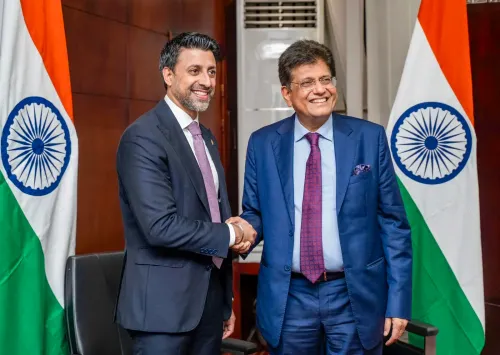
Canada's Sidhu leads 300-delegate trade mission to Mumbai, Bengaluru

Synopsis
Canada is sending its biggest trade delegation to India in over three decades — nearly 300 business delegates led by Indian-origin Trade Minister Maninder Sidhu — targeting a doubling of bilateral trade to $70 billion by 2030. With a CEPA deadline looming and US dependency a live concern in Ottawa, this mission is as much about geopolitical diversification as it is about commerce.
Key Takeaways
Minister Maninder Sidhu will lead nearly 300 Canadian business delegates to India from 12 to 17 October .
This is Canada's largest trade delegation to India in more than 30 years , with stops in Mumbai and Bengaluru .
Two-way Canada-India trade stood at $30.4 billion in 2025 ; Canada aims to more than double this to $70 billion annually by 2030 .
Sectors represented include aerospace , clean technology , ICT , life sciences , and agri-food .
The mission supports ongoing CEPA negotiations, with a target to conclude the agreement by end of 2025 .
Canada's Indo-Pacific Strategy (launched 2022 ) underpins the push to diversify trade beyond the United States.
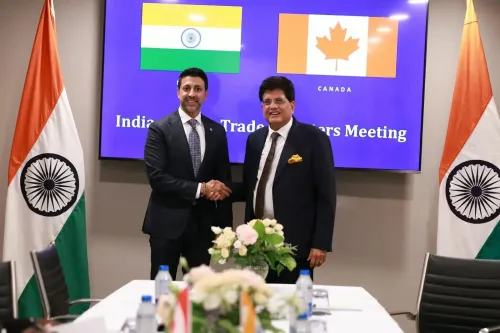
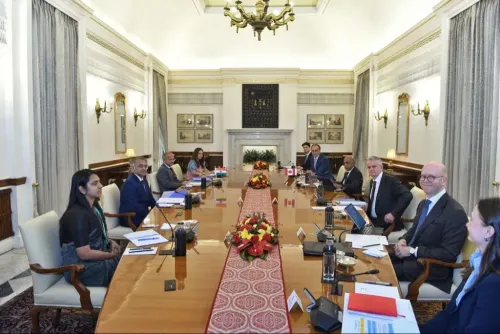
Indian-origin Canadian Minister of International Trade Maninder Sidhu is set to lead the Team Canada Trade Mission to India — the largest Canadian commercial delegation to the country in over 30 years — with scheduled stops in Mumbai and Bengaluru from 12 to 17 October. The mission brings together nearly 300 business delegates aiming to forge partnerships and expand bilateral commercial ties with one of the world's fastest-growing economies.
Scale and Scope of the Mission
The delegation represents Canada's most ambitious commercial engagement with India in recent memory, according to the office of the Minister of International Trade. Delegates span five key sectors: aerospace and space, clean technologies and energy transition, information and communication technologies, life sciences, and agri-food. The stops in Mumbai and Bengaluru — India's financial and technology hubs respectively — are designed to connect Canadian firms with Indian decision-makers, industry leaders, and prospective clients.
The $70 Billion Trade Target by 2030
The mission is anchored by an ambitious bilateral trade goal. In 2025, two-way goods and services trade between Canada and India stood at $30.4 billion, of which $11 billion was in goods. Canadian merchandise exports to India totalled $3.9 billion, led by vegetables, mineral fuels and oils, and wood pulp, while merchandise imports from India amounted to $9.7 billion, primarily comprising precious stones and metals, machinery, and pharmaceutical products. Service exports were valued at $15.1 billion, with education-related travel accounting for 6.3% of Canada's total service exports. Canada is aiming to more than double this two-way trade to $70 billion annually by 2030, as part of a broader push to diversify exports beyond the United States.
What Minister Sidhu Said
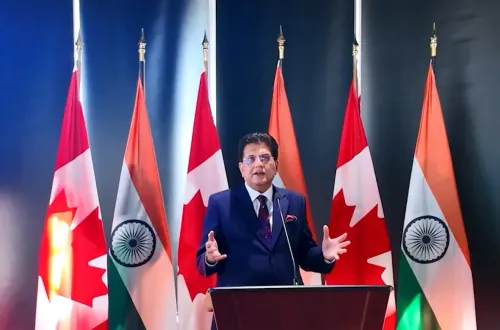
'Nearly 300 Canadian business delegates are joining the Team Canada Trade Mission I am leading to India next week to secure new opportunities for our businesses and workers in one of the world's fastest-growing markets,' Minister Sidhu said. 'By matching Canadian expertise in sectors like aerospace, agri-food and clean technology with India's growing demand, we will diversify our trade and attract new investment. This is how we will more than double our trade with India to $70 billion by 2030,' he added.
Broader Strategic Context
The trade mission also advances ongoing negotiations toward a Comprehensive Economic Partnership Agreement (CEPA) between Canada and India, with both sides reportedly working to conclude a deal by the end of the year. This comes amid Canada's Indo-Pacific Strategy, launched in 2022, which commits Ottawa to five strategic objectives: security, trade, sustainability, people-to-people ties, and regional engagement. Notably, the mission signals a deliberate effort by Canada to reduce its economic dependence on the United States by deepening ties across the Indo-Pacific. Service imports from India to Canada totalled $4.3 billion in 2025, representing 1.9% of Canada's total service imports.
What Comes Next
With the delegation on the ground from 12 to 17 October, outcomes from the Mumbai and Bengaluru engagements — including any partnership agreements or investment announcements — are expected to be disclosed in the days following the mission's conclusion. Progress on the CEPA negotiations will be closely watched as the year-end deadline approaches.
Point of View
Which has been in negotiation for years without closure. The education services dominance in Canada's export mix also raises a question: is this a trade relationship built on durable commercial foundations, or one heavily reliant on student flows that are now politically sensitive in both countries? The real measure of this mission will be how many of the 300 delegates return with signed deals — not just signed intentions.
NationPress
10 Oct 2026
Frequently Asked Questions
What is the Team Canada Trade Mission to India?
The Team Canada Trade Mission is a Canadian government-led commercial delegation of nearly 300 business representatives visiting India from 12 to 17 October, led by Trade Minister Maninder Sidhu. It is the largest such Canadian delegation to India in over 30 years, with stops in Mumbai and Bengaluru.
What is Canada's trade target with India by 2030?
Canada aims to more than double two-way trade with India from $30.4 billion (recorded in 2025) to $70 billion annually by 2030. This goal is part of a broader Canadian strategy to diversify exports beyond the United States.
Which sectors are part of the Canadian trade delegation?
The delegation includes businesses from aerospace and space, clean technologies and energy transition, information and communication technologies, life sciences, and agri-food sectors.
What is the Comprehensive Economic Partnership Agreement between Canada and India?
The Canada-India Comprehensive Economic Partnership Agreement (CEPA) is a bilateral free trade deal under negotiation, with both sides reportedly working toward concluding it by the end of 2025. The trade mission is intended to build momentum for these talks.
Why is Canada prioritising trade with India now?
Canada is seeking to reduce its economic dependence on the United States by deepening ties with Indo-Pacific economies, a goal formalised under its Indo-Pacific Strategy launched in 2022. India, as one of the world's fastest-growing major economies, is a central pillar of that diversification effort.