CBI Nabs CWC Manager Red-Handed Taking Rs 1 Lakh Bribe in Hazaribagh
Synopsis
CBI caught Central Warehousing Corporation Manager Ravi Ranjan Kumar red-handed accepting a Rs 1 lakh bribe in Hazaribagh on April 24, 2026. The bribe was allegedly demanded to allow a contractor to continue already-awarded work — a brazen extortion that exposes systemic corruption risks in India's critical public warehousing infrastructure.
Key Takeaways
Ravi Ranjan Kumar , Manager at Central Warehousing Corporation (CWC), Hazaribagh , was arrested by the CBI on April 24, 2026 .
Kumar was caught red-handed accepting a bribe of Rs 1 lakh from a complainant during a CBI trap operation.
The bribe was allegedly demanded to allow the complainant to continue work on a contract already awarded to him — a form of direct extortion.
The CBI registered the case on April 23, 2026 , and executed the trap operation within 24 hours.
The investigation is ongoing ; authorities are examining whether a wider corruption network exists within the Hazaribagh CWC office.
The arrest is part of the CBI's sustained anti-corruption drive targeting PSU officials across India in 2025–2026.
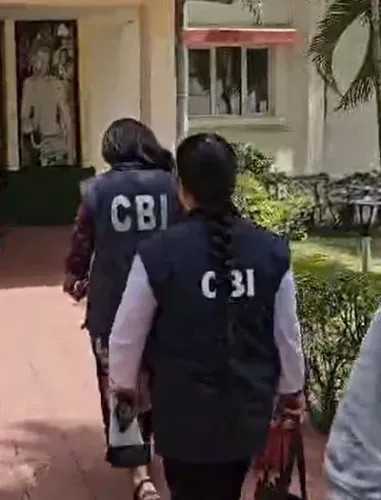
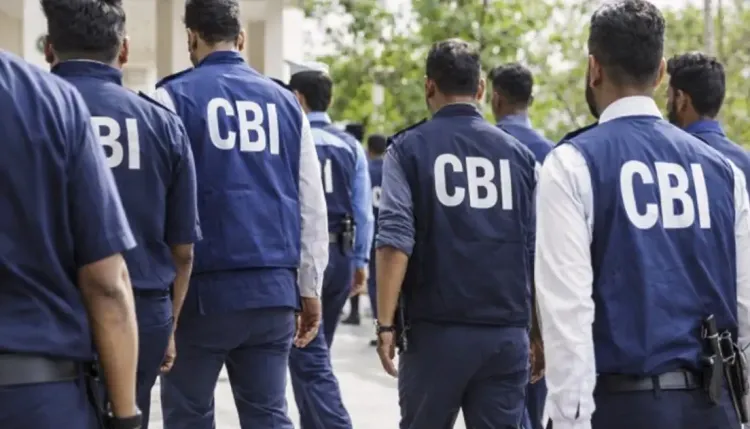
The Central Bureau of Investigation (CBI) arrested Ravi Ranjan Kumar, a Manager at the Central Warehousing Corporation (CWC), on April 24, 2026, after catching him red-handed accepting a bribe of Rs 1 lakh in Hazaribagh, Jharkhand. The operation followed a formal complaint alleging that Kumar had demanded illegal gratification in exchange for allowing a contractor to continue work already awarded to him. The swift trap operation confirms the CBI's intensified focus on corruption within Public Sector Undertakings (PSUs).
How the CBI Trap Was Executed
The CBI registered the case on April 23, 2026, a day before the arrest, after receiving a credible complaint against Kumar. The complainant alleged that the CWC manager had demanded an "undue advantage" of Rs 1,00,000 as a condition for permitting the continuation of contractual work that had already been formally awarded.
Acting swiftly on the complaint, the agency's anti-corruption unit meticulously planned and executed a sting operation. CBI officers positioned themselves strategically and monitored the transaction in real time. Kumar was caught in the act the moment he accepted the bribe amount from the complainant, leaving no room for denial.
The Accused and the Charges
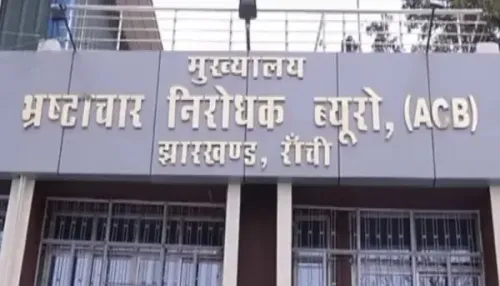
Ravi Ranjan Kumar was serving as a Manager at the Central Warehousing Corporation's Hazaribagh office at the time of his arrest. He has been booked under relevant provisions of the Prevention of Corruption Act. His immediate apprehension followed confirmation of the bribe transaction during the trap operation.
The Central Warehousing Corporation is a Government of India undertaking under the Ministry of Consumer Affairs, Food and Public Distribution. It manages a vast network of warehouses across the country, making it a critical node in India's food security and supply chain infrastructure — and, as this case illustrates, a potential site of administrative malpractice.
CBI's Broader Anti-Corruption Drive in PSUs
Officials emphasized that this arrest is not an isolated action but part of a sustained anti-corruption campaign targeting government employees and PSU officials who exploit their positions for personal gain. The CBI has been increasingly active in filing trap cases across multiple states in 2025–2026, reflecting a policy-level push to clean up public administration.
This case is particularly notable because the bribe was demanded not for granting a new contract, but for allowing an already-awarded contract to proceed — a form of extortion that directly harms small contractors and disrupts legitimate government procurement processes. Such practices inflate project costs, delay public works, and ultimately burden taxpayers.
Investigation Status and What Comes Next
The CBI has confirmed that the investigation remains active and ongoing. Investigators are examining whether Kumar acted alone or whether a larger network of corrupt officials was involved in systematic extortion at the Hazaribagh CWC facility. A broader pattern of corrupt practices linked to the accused has not been ruled out.
Authorities are also likely to scrutinize past contracts and approvals processed through Kumar's office to determine if other complainants were similarly targeted. Further arrests and legal action remain a possibility as the probe deepens. The case is expected to serve as a deterrent for other PSU officials engaging in similar misconduct.
Significance: Corruption in India's Warehousing Sector
This arrest shines a spotlight on a systemic vulnerability within India's warehousing and procurement ecosystem. The CWC manages over 400 warehouses across India with a storage capacity of millions of metric tonnes — a sprawling operation that, if riddled with corruption at the managerial level, can distort food storage logistics and contract fairness at scale.
Notably, the CBI has in recent years registered dozens of trap cases against PSU officials annually, reflecting both the scale of the problem and the agency's growing operational capacity. Critics argue that stronger institutional oversight mechanisms — including mandatory digital payments for all contract-related transactions and third-party audits — are essential to prevent such incidents from recurring.
As the CBI probe progresses, all eyes will be on whether the investigation uncovers a wider corruption network within the Central Warehousing Corporation — and whether systemic reforms follow in the wake of this arrest.
Point of View
It signals a failure of internal oversight that goes far beyond one bad actor. The CBI's trap operations are a necessary corrective, but they are reactive by design; what India urgently needs are proactive institutional safeguards — digital audit trails, whistleblower protections, and third-party contract monitoring — that make such extortion structurally impossible. Until then, every arrested official is replaced by another operating in the same broken system.
NationPress
7 Oct 2026
Frequently Asked Questions
Who was arrested by CBI in Hazaribagh for taking a bribe?
The CBI arrested Ravi Ranjan Kumar , a Manager at the Central Warehousing Corporation (CWC) in Hazaribagh, Jharkhand. He was caught red-handed accepting a bribe of Rs 1 lakh on April 24, 2026 .
Why did the CWC manager demand a bribe?
According to the CBI, Ravi Ranjan Kumar allegedly demanded Rs 1 lakh as an "undue advantage" to allow a complainant to continue contractual work that had already been awarded to him. The bribe was essentially extortion tied to an existing government contract.
What is the Central Warehousing Corporation (CWC)?
The Central Warehousing Corporation (CWC) is a Government of India PSU under the Ministry of Consumer Affairs, Food and Public Distribution . It operates over 400 warehouses across India and plays a key role in the country's food storage and supply chain management.
Is the CBI investigation into the CWC bribery case still ongoing?
Yes, the CBI has confirmed the investigation remains active and ongoing . Authorities are probing whether other individuals were involved and whether there is a broader pattern of corruption at the Hazaribagh CWC office. Further legal action has not been ruled out.
Under which law has the CWC manager been booked?
The accused, Ravi Ranjan Kumar , has been booked under the relevant provisions of the Prevention of Corruption Act . The case was formally registered by the CBI on April 23, 2026 , a day before his arrest.