Kishan Reddy Hails SKOCH Gold for Coal Mine Repurposing Drive
Synopsis
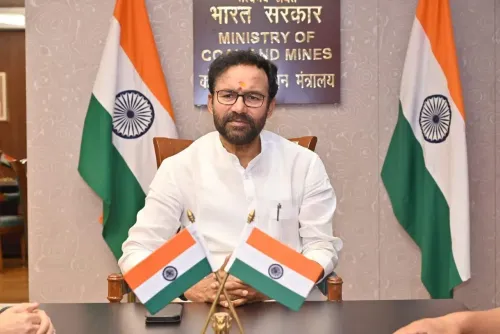
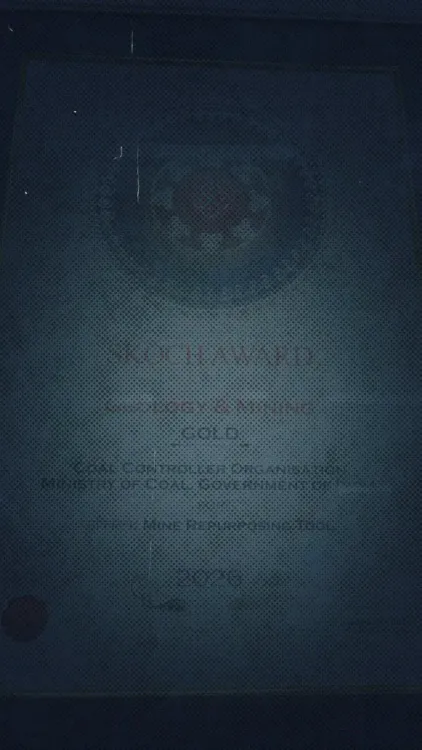
Union Coal and Mines Minister G. Kishan Reddy has congratulated the Coal Controller's Organisation on winning the SKOCH Gold Award 2026 for SUVIKALP, a data-driven initiative to repurpose closed coal mines for environmental restoration, sustainable land use, and community economic revival.
Key Takeaways
The Coal Controller's Organisation won the SKOCH Gold Award 2026 for its SUVIKALP initiative on 22 October 2026 .
SUVIKALP uses data analytics to identify viable repurposing options for closed coal mines, including ecological restoration, renewable energy, and community infrastructure.
Kishan Reddy described it as 'a meaningful step towards sustainable development and a just transition for coal-bearing regions.' India committed to net-zero emissions by 2070 at COP26 in 2021 , with just transition for coal regions forming a core plank of that commitment.
Key coal-dependent states such as Jharkhand, Chhattisgarh , and Odisha stand to be directly affected by any expanded rollout of mine repurposing guidelines.
The next milestone to watch is the rollout of SUVIKALP pilot sites and any formal Ministry of Coal guidelines on just-transition funding.
A government body quietly working to give abandoned coal mines a second life just picked up one of India's most recognised public-sector honours. Union Coal and Mines Minister G. Kishan Reddy on Thursday, 22 October 2026, congratulated the Coal Controller's Organisation (CCO) after it received the SKOCH Gold Award 2026 for SUVIKALP — a data-driven initiative designed to repurpose closed coal mines into sites of environmental restoration, sustainable land use, and economic renewal.
What SUVIKALP is actually trying to do
SUVIKALP targets one of the less-discussed aftermaths of India's coal economy: the scarred, often-abandoned landscape left behind when a mine shuts. The initiative uses data analytics to map closed mine sites and identify the most viable pathways for their reuse — whether that means ecological restoration, agriculture, renewable energy deployment, or community infrastructure. The goal, as Minister Reddy put it, is to create 'pathways for environmental restoration, sustainable land use, new economic opportunities and community well-being.'
The Coal Controller's Organisation, a regulatory body under the Ministry of Coal, oversees coal production and mine-related functions across India. Its pivot toward data-led mine repurposing signals a meaningful expansion of its mandate beyond production monitoring.
The SKOCH Gold Award and what it signals
The SKOCH Gold Award is an annual governance recognition that spotlights public-sector projects at the intersection of technology and sustainability. Winning it for SUVIKALP gives the initiative a degree of external validation — and puts coal mine repurposing visibly on the national policy map.
Minister Reddy framed the award as 'a meaningful step towards sustainable development and a just transition for coal-bearing regions.' That phrase — just transition — carries specific policy weight. India committed at COP26 in 2021 to reaching net-zero emissions by 2070, with explicit acknowledgement that coal-dependent districts would need managed transition pathways rather than abrupt shutdowns.
Coal communities caught in the transition
The stakes are acutely human. Entire district economies in states like Jharkhand, Chhattisgarh, Odisha, and parts of Telangana have been built around coal extraction for generations. When mines close, former workers and surrounding communities face sudden economic voids. SUVIKALP's pitch is that data can turn those voids into mapped opportunities — identifying which closed sites can anchor a solar park, which can be rehabilitated into forest land, which can support new livelihoods.
The watch item going forward is whether pilot sites under SUVIKALP translate into concrete, funded outcomes — and whether the Ministry of Coal follows the recognition with formal guidelines on just-transition financing mechanisms.
India has pledged a greener future; the real test is whether the communities that powered its past get to share in it.
Point of View
The Ministry of Coal is quietly expanding its mandate from extraction overseer to transition manager — a significant if incremental shift. The award gives the initiative political visibility at a moment when just-transition financing for coal regions remains under-defined. Whether this recognition accelerates formal funding mechanisms or stays largely symbolic will determine its real policy legacy.
NationPress
22 Oct 2026
Frequently Asked Questions
What is SUVIKALP and what does it do?
SUVIKALP is a data-driven initiative by the Coal Controller's Organisation under India's Ministry of Coal that uses analytics to identify the best options for repurposing closed coal mines — including environmental restoration, sustainable land use, renewable energy deployment, and community economic development.
What is the SKOCH Gold Award?
The SKOCH Gold Award is an annual Indian governance recognition that honours public-sector projects making significant contributions in technology and sustainability. In 2026, it was awarded to the Coal Controller's Organisation for the SUVIKALP initiative.
What is 'just transition' in the context of India's coal sector?
'Just transition' refers to policies that ensure coal-dependent communities and workers are not left behind as India moves toward cleaner energy. India explicitly referenced just transition measures when it announced its net-zero target by 2070 at COP26 in 2021.
Which states have the most at stake in coal mine repurposing?
States with large coal economies — including Jharkhand, Chhattisgarh, Odisha, and parts of Telangana — have the most at stake, as entire district economies in these regions have historically depended on coal extraction.
What should we watch for next with SUVIKALP?
The key developments to track are the rollout of SUVIKALP pilot sites at specific closed mine locations and whether the Ministry of Coal issues formal guidelines on funding mechanisms to support just transition in coal-bearing regions.