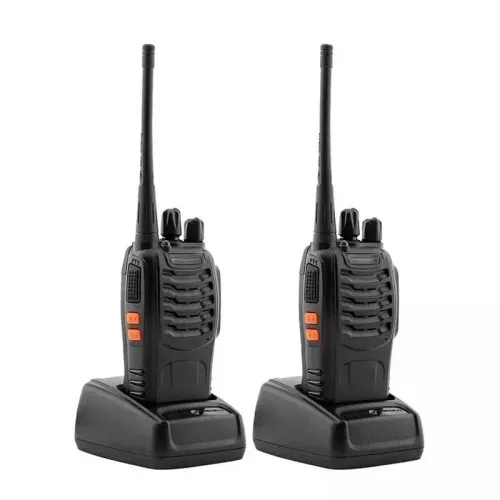
Is CCPA Taking a Stand Against E-Commerce Giants for Illegal Walkie-Talkie Sales?

Synopsis
In a significant move, the CCPA has penalized major e-commerce platforms for the illegal sale of walkie-talkies. These devices, often marketed without necessary approvals, pose risks to public safety. This article delves into the implications of this action and the regulatory landscape surrounding these personal radios.
Key Takeaways
CCPA penalizes e-commerce giants for illegal walkie-talkie sales.
Over 16,970 non-compliant listings identified.
Walkie-talkies operate on restricted frequencies used by emergency services.
Mandatory ETA certification required for legality.
New guidelines established to regulate future sales.
New Delhi, Jan 16 (NationPress) The Central Consumer Protection Authority (CCPA) has proactively addressed the widespread illegal listing and sale of walkie-talkies (personal mobile radios) on e-commerce platforms. Leading online marketplaces such as Amazon, Flipkart, and Meta have faced monetary penalties for breaching consumer protection laws and telecom regulations, as per an official statement released on Friday.
Many of these devices were discovered to function in the ultra-high frequency (UHF) band, a regulated spectrum that is also utilized by police, emergency services, disaster response teams, and other vital communication networks.
This action came after identifying over 16,970 non-compliant walkie-talkie listings across various platforms. Notices were dispatched to 13 e-commerce entities, including Amazon, Flipkart, Meesho, JioMart, Meta (Facebook Marketplace), Talk Pro, Chimiya, MaskMan Toys, India Mart, TradeIndia, Antriksh Technologies, Vardaanmart, and Krishna Mart, according to the statement.
The Authority determined that several platforms were promoting the sale of walkie-talkies operating on restricted and sensitive radio frequency bands, lacking the necessary statutory approvals or disclosures. These devices were marketed without informing consumers about the radio frequency range they operate on, whether government licensing is required, or if the device has received Equipment Type Approval (ETA). This approval is mandated by the Department of Telecommunications (DoT) to ensure that wireless devices are compliant, safe, and authorized for use in India.
Some products were misleadingly advertised as "license-free" or "100 percent legal", despite requiring government approval for usage. In certain instances, walkie-talkies were misrepresented as toys but had extensive communication ranges of up to 30 kilometers. Moreover, many product listings failed to clearly mention critical details such as the operating frequency or whether the device had obtained ETA, complicating consumers' efforts to ascertain the legality of the product for purchase and use.
The sale, import, and use of walkie-talkies in India are governed by the Indian Telegraph Act, 1885, the Indian Wireless Telegraphy Act, 1933, and the Use of Low Power and Very Low Power Short Range Radio Frequency Devices (Exemption from Licensing Requirement) Rules, 2018.
According to these regulations, only walkie-talkies operating strictly within the 446.0–446.2 MHz frequency band are exempt from licensing. Even these license-exempt devices must secure ETA certification before being imported or sold in India. Non-compliance with these requirements constitutes misleading advertising, unfair trade practices, and deficiencies in service under the Consumer Protection Act, 2019, violating the Consumer Protection (E-Commerce) Rules.
To avert the recurrence of such violations, the CCPA has released the Guidelines for the Prevention and Regulation of Illegal Listing and Sale of Radio Equipment, including Walkie-Talkies on E-Commerce Platforms, 2025, in collaboration with the Department of Telecommunications (DoT) and the Ministry of Home Affairs (MHA).
The CCPA, led by Chief Commissioner Nidhi Khare and Commissioner Anupam Mishra, has issued final orders in eight cases, namely: Meesho (Fashnear Technologies Pvt. Ltd.), Talk Pro (Iconet Services Pvt. Ltd.), MaskMan Toys, Chimiya, JioMart, Meta Platforms Inc. (Facebook Marketplace), Flipkart, and Amazon.
Investigations or hearings are currently ongoing against Antriksh Technologies, India Mart, TradeIndia, Vardaanmart, and Krishna Mart, as noted in the statement.
Point of View
I believe that the CCPA's decisive action reflects a growing commitment to safeguarding consumer rights and ensuring compliance within the e-commerce sector. It is vital that these platforms operate transparently and responsibly to maintain trust and safety for all consumers.
NationPress
30 Sept 2026
Frequently Asked Questions
What is the CCPA's recent action regarding walkie-talkies?
The CCPA has imposed penalties on major e-commerce platforms for the illegal sale of walkie-talkies that operate on restricted frequencies without necessary approvals.
Why are walkie-talkies regulated in India?
Walkie-talkies are regulated to ensure public safety, as they operate on frequencies used by emergency services and require compliance with telecommunications laws.
What does ETA certification entail?
ETA certification is a mandatory approval from the Department of Telecommunications ensuring that wireless devices are compliant and safe for use in India.
What penalties can e-commerce platforms face?
E-commerce platforms can face monetary penalties and legal action for non-compliance with consumer protection laws and telecommunications regulations.
How can consumers ensure the legality of walkie-talkies?
Consumers should check for ETA certification and ensure that the product complies with the frequency regulations outlined by the Indian government.