Pralhad Joshi: CCPA Acts on Hazardous Online Sales
Synopsis
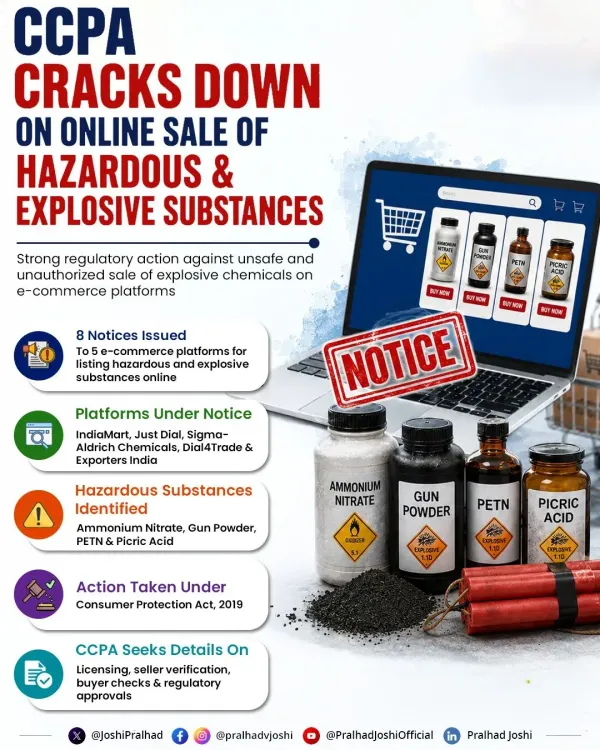
The CCPA has launched enforcement action against unauthorised online listings of hazardous and explosive substances, Union Consumer Affairs Minister Pralhad Joshi announced on 27 May 2026, citing consumer safety and national security as non-negotiable priorities under India's e-commerce regulatory framework.
Key Takeaways
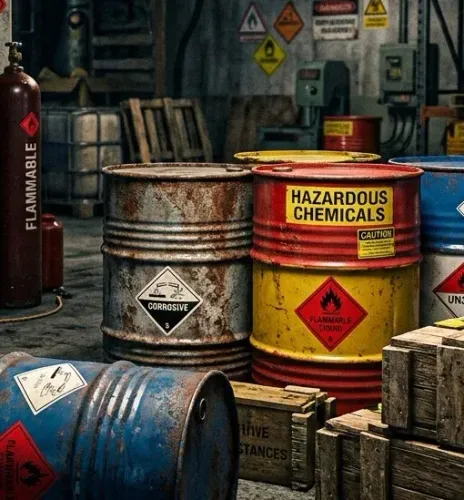
CCPA has initiated action against the unauthorised online sale and advertisement of hazardous and explosive substances on digital marketplaces.
Union Minister Pralhad Joshi framed the action as addressing both consumer safety and national security simultaneously.
The CCPA draws its enforcement powers from the Consumer Protection Act, 2019 , which significantly expanded regulatory authority over e-commerce platforms.
The action aims to strengthen platform accountability and protect consumer interests in India's evolving digital marketplace.
The government's Jago Grahak Jago consumer-awareness campaign was invoked alongside the enforcement drive, signalling a public-education dimension to the crackdown.
Formal enforcement orders, possible rule amendments, and parliamentary scrutiny are expected to follow in the coming weeks.
Union Consumer Affairs Minister Pralhad Joshi announced on Wednesday, 27 May 2026 that the Central Consumer Protection Authority (CCPA) has initiated strong enforcement action against the unauthorised online sale and advertisement of hazardous and explosive substances, signalling a sharper regulatory posture toward e-commerce platforms operating in India.
Context
In his post on X, Minister Joshi stated: 'Consumer safety and national security are non-negotiable,' framing the CCPA's action as simultaneously a consumer-rights and a national-security intervention. The move targets listings of hazardous and explosive materials that have appeared on digital marketplaces, raising concerns about both public safety and the misuse of open e-commerce infrastructure. The post was accompanied by a link to an official Press Information Bureau release providing further details of the action.
The minister tagged @jagograhakjago — the government's flagship consumer-awareness campaign — underscoring that the enforcement drive is positioned as part of a broader public-education and rights-protection effort, not merely a regulatory crackdown.
Policy Backdrop
The CCPA was established under the Consumer Protection Act, 2019, which replaced the older 1986 legislation and gave the authority substantially expanded powers to regulate e-commerce platforms, investigate unfair trade practices, and order recalls or delisting of unsafe products. Platform accountability provisions have been progressively tightened through guidelines and e-commerce rules issued under the 2019 Act.
Actions against prohibited or hazardous listings on digital marketplaces form part of a wider regulatory pattern in India, where rapid e-commerce growth has repeatedly outpaced product-safety enforcement. Successive governments have responded by layering additional oversight mechanisms onto the original consumer-protection framework, with the CCPA now serving as the primary enforcement arm for digital-market violations.
Stakeholders and Impact
The enforcement action directly affects e-commerce platforms hosting or failing to detect such listings, which now face heightened scrutiny and potential liability under the 2019 Act. Online consumers — particularly those who may inadvertently purchase mislabelled or dangerous products — stand to benefit from stricter marketplace policing.
Sellers and intermediaries dealing in chemicals, pyrotechnics, or related substances will face closer monitoring of their digital storefronts. The CCPA's intervention also sends a signal to logistics and payment-gateway partners that the regulatory perimeter around hazardous goods is being actively enforced, not just legislated.
What's Next
Observers will watch for formal CCPA enforcement orders detailing which platforms or product categories are affected, and whether the authority issues advisory notices or imposes financial penalties. Possible amendments to the Consumer Protection (E-Commerce) Rules could follow if the current action reveals systemic gaps in platform compliance.
Parliamentary questions in the upcoming session are likely to probe the scope and outcomes of this enforcement drive. The government's framing of consumer safety as inseparable from national security suggests that inter-ministerial coordination — potentially involving the Ministry of Home Affairs and explosives regulators — may shape the next phase of action.
Point of View
Minister Joshi is elevating the CCPA's mandate beyond conventional product-standards enforcement into a domain that justifies inter-agency coordination and faster regulatory action. This framing is consistent with a broader governmental trend of treating e-commerce platform accountability as a strategic, not merely commercial, concern. The invocation of the Jago Grahak Jago campaign alongside a hard enforcement action suggests the ministry is pursuing a dual track — punitive measures for platforms and awareness-building for consumers — to address gaps the 2019 Act alone has not closed. How the CCPA translates this political signal into durable compliance mechanisms will determine whether this action marks a genuine inflection point or remains a one-off intervention.
NationPress
11 Oct 2026
Frequently Asked Questions
What action has CCPA taken against hazardous online sales?
The CCPA has initiated enforcement action against the unauthorised online sale and advertisement of hazardous and explosive substances on digital marketplaces, as announced by Union Minister Pralhad Joshi on 27 May 2026.
What is the CCPA and what powers does it have?
The Central Consumer Protection Authority is a statutory regulator created under the Consumer Protection Act, 2019. It has powers to investigate unfair trade practices, order product recalls, delist unsafe items, and hold e-commerce platforms accountable for listings that harm consumers.
Why is the sale of explosives online a consumer protection issue?
Unauthorised listings of hazardous or explosive substances on e-commerce platforms pose direct safety risks to buyers and the public. Under the Consumer Protection Act, 2019, such listings constitute an unfair trade practice and a product-safety violation, giving the CCPA jurisdiction to act.
What is Jago Grahak Jago?
Jago Grahak Jago ('Wake Up, Consumer') is a long-running central government awareness campaign that promotes consumer rights, safe purchasing practices, and grievance redressal mechanisms across India.
What could follow from this CCPA enforcement action?
Possible next steps include formal CCPA orders naming specific platforms or product categories, financial penalties, amendments to the Consumer Protection (E-Commerce) Rules, and parliamentary questions probing the scope and outcomes of the crackdown.