CCPA issues notices to IndiaMART, Justdial over hazardous chemical sales
Synopsis
India's consumer protection regulator has moved against some of the country's largest B2B and B2C online platforms — including IndiaMART and Justdial — for listing explosive precursors such as ammonium nitrate and PETN without adequate safeguards. With eight notices issued and seller lists handed to the explosives safety authority PESO, this is a rare convergence of consumer law and national security enforcement targeting digital marketplaces.
Key Takeaways
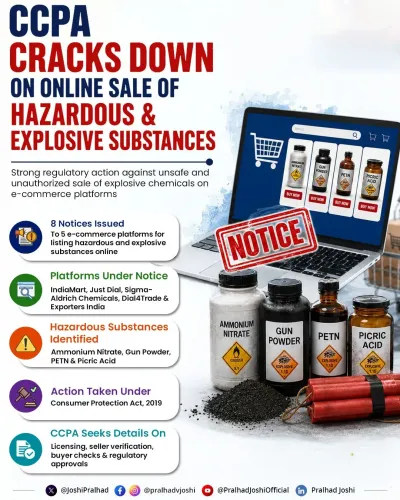
The CCPA has initiated regulatory action against IndiaMART , Justdial , Sigma-Aldrich India , Dial4Trade , and ExportersIndia over hazardous chemical listings.
Substances under scrutiny include ammonium nitrate , gun powder , picric acid , and PETN — all regulated or restricted under Indian law.
A total of eight notices have been issued seeking seller data, licensing compliance, and buyer verification details.
The Petroleum and Explosives Safety Organisation (PESO) has been looped in; seller lists shared for further enforcement action.
Platforms have been directed to ensure due diligence and full legal compliance before permitting listings of such substances.
The Central Consumer Protection Authority (CCPA) has launched regulatory action against several major online platforms — including IndiaMART, Justdial, Sigma-Aldrich India, Dial4Trade, and ExportersIndia — over the unauthorised listing, advertisement, and sale of hazardous chemicals and explosive substances, the Ministry of Consumer Affairs, Food and Public Distribution confirmed in an official statement on Wednesday, 27 May.
What Triggered the Action
The CCPA initiated proceedings following inputs regarding the online listing and sale of regulated and hazardous substances on digital commerce platforms. Among the substances under scrutiny are ammonium nitrate, gun powder, picric acid, and pentaerythritol tetranitrate (PETN) — materials that, according to the ministry, may pose serious risks to public safety and national security if sold without adequate safeguards or buyer verification mechanisms.
A preliminary examination by the authority found that several of these chemicals, as listed or advertised online, are regulated, restricted, controlled, or outright prohibited under various Indian laws governing public safety and the handling of hazardous substances.
Notices Issued and Details Sought
The regulator has served formal notices to the named e-commerce entities and online platforms. The notices seek details on seller information, licensing compliance, buyer verification mechanisms, quantities sold, import details, and applicable regulatory approvals. In total, the CCPA has issued eight notices to various entities in connection with comparable violations involving regulated and potentially dangerous substances.
'The Authority has emphasised that online platforms and intermediaries must exercise due diligence and ensure strict compliance with all applicable legal and regulatory requirements before permitting the listing, advertisement, or sale of such substances,' the ministry said.
PESO Brought Into the Loop
The CCPA also convened a dedicated meeting with officials of the Petroleum and Explosives Safety Organisation (PESO) to review the existing regulatory framework governing hazardous and explosive substances. Notably, the list of sellers operating on these platforms — as provided by the e-commerce entities in response to the notices — has been shared with PESO for necessary action under applicable laws.
This coordination signals that the regulatory response is not limited to consumer protection channels alone but extends to the specialised explosives safety authority, broadening the scope of potential enforcement.
Wider Implications for E-Commerce Platforms
The action underscores a growing regulatory concern about the ease with which restricted substances can be accessed through mainstream B2B and B2C digital marketplaces. This is not the first time Indian authorities have flagged gaps in seller verification on large online platforms, but the involvement of explosive precursors such as PETN and ammonium nitrate — materials linked to improvised explosive devices in past incidents — significantly raises the stakes. The outcome of these notices is expected to set a precedent for how intermediary liability is interpreted in the context of hazardous goods.
Point of View
But the deeper question is whether India's intermediary liability framework, currently weighted toward safe harbour, is adequate for platforms that facilitate the trade of regulated substances. The notices are a start — but without enforceable liability and mandatory pre-listing checks for restricted chemicals, the deterrent effect will remain limited.
NationPress
23 Sept 2026
Frequently Asked Questions
Why has the CCPA taken action against IndiaMART, Justdial and other platforms?
The CCPA acted after receiving inputs that these platforms were listing and selling hazardous chemicals and explosive substances — including ammonium nitrate and PETN — without adequate buyer verification or regulatory compliance. The authority found that several such substances are restricted or prohibited under Indian public safety laws.
What hazardous substances were found listed on these platforms?
The substances identified include ammonium nitrate, gun powder, picric acid, and pentaerythritol tetranitrate (PETN). These are regulated or restricted materials that pose serious risks to public safety and national security if sold without proper safeguards.
What do the CCPA notices require the platforms to provide?
The notices seek details on seller identities, licensing compliance, buyer verification mechanisms, quantities of substances sold, import documentation, and applicable regulatory approvals. A total of eight notices have been issued across the named entities.
What role does PESO play in this action?
The Petroleum and Explosives Safety Organisation (PESO) was brought into the process through a dedicated review meeting with CCPA officials. The list of sellers operating on these platforms has been shared with PESO for enforcement action under applicable explosives and hazardous substances laws.
What are the broader implications for e-commerce platforms in India?
The action signals that online intermediaries — including B2B marketplaces — can face regulatory scrutiny for enabling the sale of restricted substances, even if they act as listing platforms rather than direct sellers. Platforms may be required to implement pre-listing verification for regulated product categories going forward.