Joshi Orders CCPA Probe Into Excessive Online Ticket Cancellation Charges
Synopsis
Union Consumer Affairs Minister Pralhad Joshi has ordered the CCPA to investigate whether online ticket booking platforms charge cancellation fees exceeding airline rates or pre-booking disclosures, warning of class-action action under the Consumer Protection Act, 2019.
Key Takeaways
Pralhad Joshi directed the Department of Consumer Affairs and CCPA on 23 May 2026 to probe excessive cancellation charges by online ticket booking platforms.
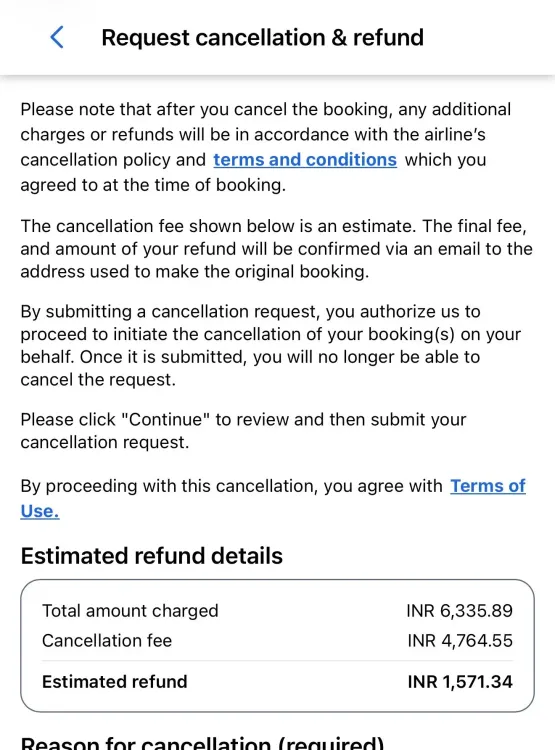
The probe will examine whether platforms charge more than airlines collect or disclose at the time of booking.
The investigation covers multiple online ticket booking platforms, not a single operator.
Practices found to be unfair could be classified as Unfair Trade Practices under the Consumer Protection Act, 2019 .
The CCPA may initiate class-action measures to provide collective relief to affected consumers.
The E-Commerce Rules, 2020 already mandate clear disclosure of cancellation terms — the probe tests compliance with those existing norms.
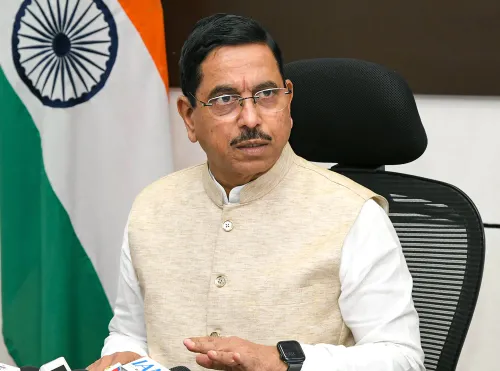
Union Consumer Affairs Minister Pralhad Joshi on Saturday, 23 May 2026 directed the Department of Consumer Affairs and the Central Consumer Protection Authority (CCPA) to investigate whether online ticket booking platforms are levying cancellation charges that exceed what airlines collect or what consumers are told at the time of booking.
Context
In a post on X, Joshi stated he had directed authorities to examine whether platforms are 'imposing excessive cancellation charges on consumers, beyond what is charged by airlines or disclosed at the time of booking.' He extended the scope of the probe to cover 'other online ticket booking platforms too,' signalling a sector-wide review rather than action against any single operator.
The minister warned that such practices 'undermine transparency and consumer trust' and, if substantiated, 'may amount to Unfair Trade Practices under the Consumer Protection Act, 2019.' He added that the CCPA would take 'necessary action, including class action measures wherever appropriate.'
Policy Backdrop
The Consumer Protection Act, 2019 replaced a three-decade-old statute and gave the CCPA sweeping powers — including the authority to initiate class-action complaints — to address unfair trade practices, misleading advertisements and violations of consumer rights across sectors, including e-commerce.
E-Commerce Rules notified in 2020 under the same law already require digital platforms to clearly disclose prices, cancellation terms and the identity of grievance officers before a transaction is completed. The current probe tests whether those disclosure norms are being honoured in practice by online travel intermediaries.
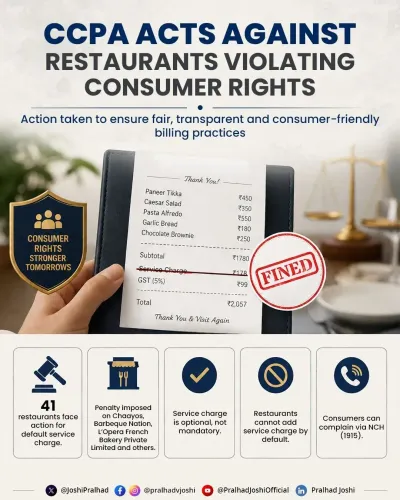
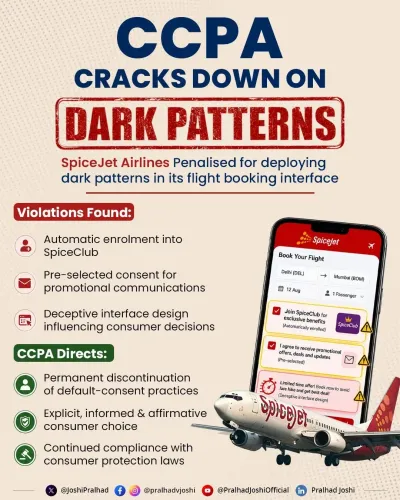
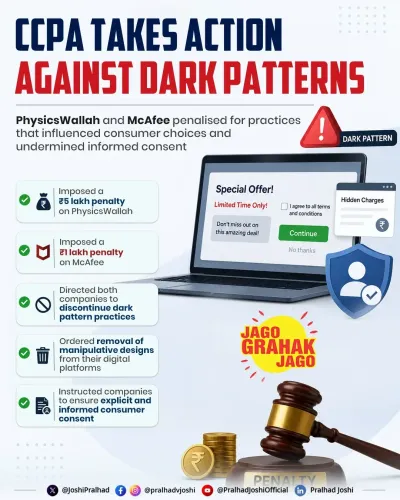
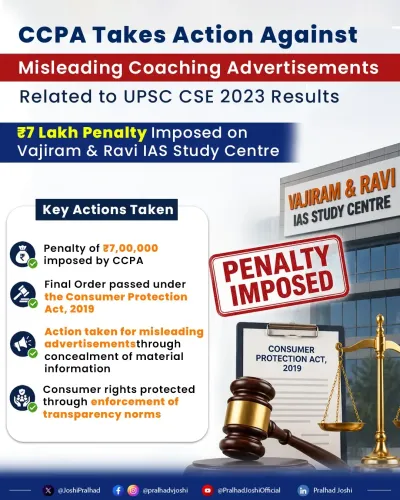
The CCPA has previously issued notices and guidelines on hidden charges levied by airlines, hotels and e-commerce marketplaces, making the latest directive part of a consistent pattern of regulatory scrutiny over opaque digital pricing.
Stakeholders and Impact
The investigation directly concerns millions of Indian air travellers who book tickets through third-party online travel platforms and may be unaware that the cancellation fee they pay differs from the charge the airline itself would collect. If the CCPA finds a gap, affected consumers could potentially benefit from class-action relief under the 2019 Act.
Online travel aggregators and booking platforms face the prospect of show-cause notices, mandatory disclosure upgrades or financial penalties if the probe establishes that their cancellation-fee structures constitute unfair trade practices. The Jago Grahak Jago programme — the Department of Consumer Affairs' long-running consumer awareness initiative — is also tagged in the minister's communication, suggesting a parallel public-education push alongside enforcement.
What's Next
The CCPA is expected to issue formal notices to relevant platforms and could publish sector-wide guidelines on permissible cancellation-charge structures. Depending on findings, the authority may also recommend amendments to the E-Commerce Rules, 2020 or coordinate with the aviation regulator to standardise the way cancellation fees are disclosed and collected across the ticketing chain.
The outcome of this probe could set a precedent for how digital intermediaries across travel, hospitality and beyond are required to align their fee structures with those of the underlying service providers — a question that regulators in several other markets have also begun to examine.
Point of View
2019 — a law that gave the CCPA class-action powers precisely for sector-wide malpractices that individual consumers cannot easily challenge alone. By framing the issue around disclosure gaps rather than price caps, the ministry sidesteps the politically sensitive question of regulating fares while still putting platforms on notice. The invocation of Jago Grahak Jago alongside enforcement signals a twin-track approach: public awareness to build pressure, regulatory action to compel compliance. This fits a broader pattern in which the ministry has progressively extended CCPA's reach from airlines and hotels to the digital intermediaries that sit between consumers and service providers.
NationPress
7 Oct 2026
Frequently Asked Questions
What has Pralhad Joshi ordered the CCPA to investigate?
Minister Pralhad Joshi has directed the CCPA to investigate whether online ticket booking platforms are charging cancellation fees that exceed what airlines collect or what is disclosed to consumers at the time of booking.
Which law gives the CCPA power to act on excessive cancellation charges?
The Consumer Protection Act, 2019 empowers the CCPA to probe and act against unfair trade practices, including initiating class-action complaints on behalf of consumers.
Can consumers get a refund if the CCPA finds platforms overcharged them?
If the CCPA establishes unfair trade practices, it can initiate class-action measures under the Consumer Protection Act, 2019 , which may result in collective relief or refunds for affected consumers.
Which platforms are under scrutiny in the CCPA ticket cancellation probe?
Minister Joshi has directed the probe to cover online ticket booking platforms broadly; no specific platform has been officially named at this stage.
What are the E-Commerce Rules 2020 and how are they relevant?
The E-Commerce Rules, 2020 , notified under the Consumer Protection Act, 2019 , require digital platforms to clearly disclose prices and cancellation terms before purchase; the current probe examines whether these disclosure norms are being followed by online travel intermediaries.