Operation Sindoor 'entirely different' from past conflicts: CDS Chauhan
Synopsis
CDS General Anil Chauhan has revealed that Operation Sindoor — still ongoing — was India's first true multi-domain military operation, combining space, cyber, and non-contact strikes from 300-400 km away. The traditional metrics of war — territory, prisoners, equipment — did not apply; victory was measured in visible effects and coordination. That is a doctrinal shift, not just a tactical one.
Key Takeaways
CDS General Anil Chauhan described Operation Sindoor as 'entirely different' from all previous Indian military conflicts at Sena Se Samvad 2026 on 16 May 2026 .
The operation required 88 hours of extreme coordination across the three armed forces, government departments, and multiple agencies.
It was conducted as a multi-domain operation — the first of its kind for India — spanning land, air, sea, space , and cyber domains.
Strikes were carried out from 300-400 km away, described by the CDS as unprecedented in India's operational geography.
General Chauhan confirmed Operation Sindoor is still ongoing and that victory metrics were redefined around visible effects rather than territory or prisoners.
The CDS also revealed he facilitated resettlement of villages Nelang and Jadung in Uttarakhand after assuming charge.
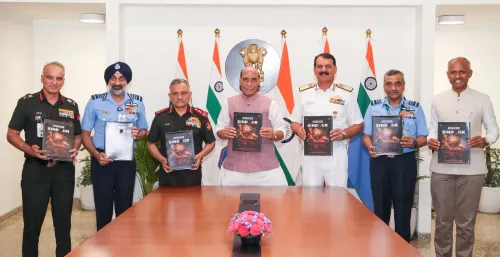
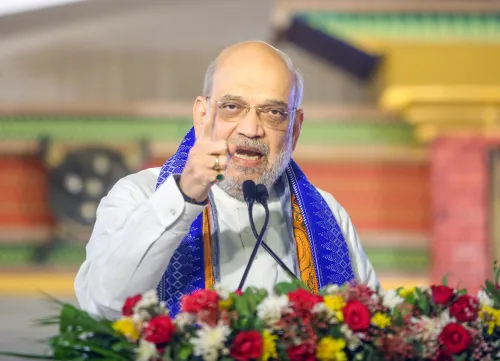
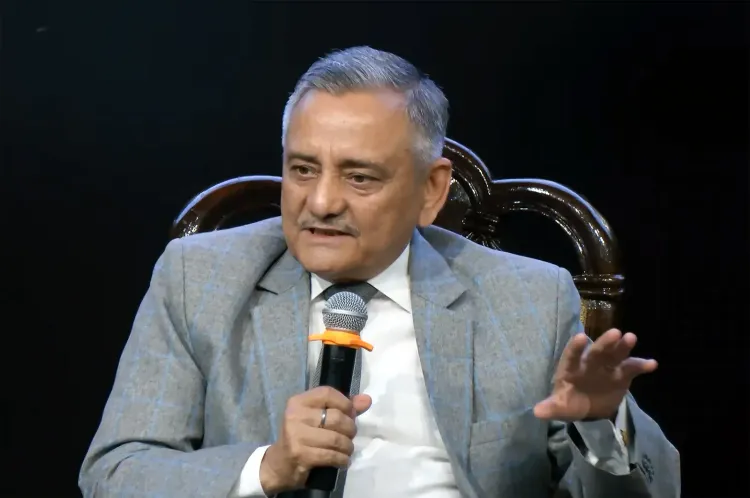
Chief of Defence Staff (CDS) General Anil Chauhan on Saturday, 16 May 2026, described Operation Sindoor as fundamentally unlike any military conflict India has previously fought, calling it a landmark shift in how the armed forces project power. Speaking at the 'Sena Se Samvad 2026' event in New Delhi, General Chauhan said the operation — launched in response to the deadly Pahalgam terror attack — demanded 88 hours of extreme coordination across multiple domains and agencies.
A New Kind of Warfare
General Chauhan was emphatic that Operation Sindoor remains active. 'Operation Sindoor is different. I am not saying 'was' since it is still ongoing, so I said it is different from all the past conflicts we may have fought,' he stated. He described it as probably India's first true multi-domain operation, conducted simultaneously across land, air, sea, space, and cyber domains in a coordinated manner.
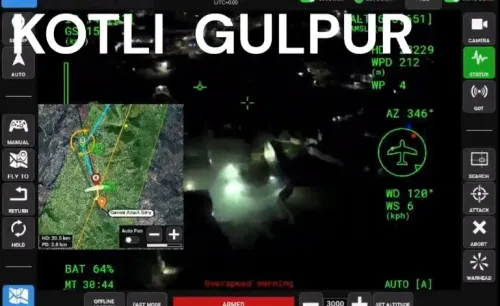
'That means we operated in all three domains in a coordinated manner. It was largely non-contact warfare. Normally, all wars have involved contact; this was largely non-contact,' the CDS said. The integration of space and cyber capabilities into active military strikes marked a decisive departure from conventional Indian military doctrine.
Unprecedented Strike Range and New Victory Metrics
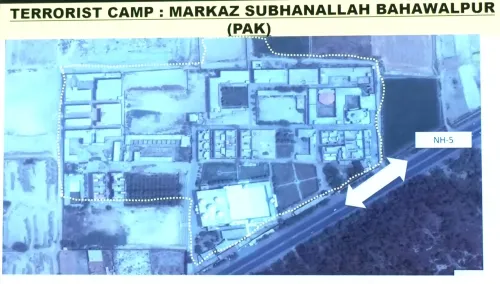
One of the most striking disclosures by General Chauhan was the operational reach achieved during the strikes against Pakistan. 'We could conduct strikes from 300-400 km away. That was unprecedented in our geographies. Therefore, this operation was entirely different,' he said.
He also argued that the traditional metrics of military success — territory captured, prisoners taken, or equipment destroyed — did not apply here. 'Here the matrices of victory were visible effects, smart and coordinated operation, that gave you a sense of victory,' he explained. This reframing of what constitutes battlefield success reflects a broader doctrinal evolution within the Indian military.
Scale of Inter-Agency Coordination
General Chauhan underscored that the 88-hour operation was not just a tri-services exercise but involved extensive coordination with other government departments and various agencies. 'The military operation may have lasted only for 88 hours, but it required a huge amount of coordination among not only the three Armed Forces but also with other government departments and various agencies,' he said. He credited this coordination as the core reason the operation stood apart from all previous ones.
Beyond the Battlefield: Resettling Villages in Uttarakhand
In a separate note reflecting his personal commitment to communities he served, General Chauhan revealed that he had facilitated the resettlement of two villages — Nelang and Jadung in Uttarakhand — after assuming charge as CDS. He had previously commanded brigades in Baramulla, Jammu and Kashmir and Senapati district, Manipur, both conflict-affected areas where, he said, the human dimension of soldiering left lasting bonds.
'They had asked me for resettlement but that time I didn't know I would become the CDS one day. After assuming charge, I resettled them once again,' he said. The CDS noted that people from these regions still reach out to him years after his postings ended, reflecting what he called a people-centric approach to conflict zones.
With Operation Sindoor still described as ongoing, the full strategic and diplomatic contours of India's military posture against cross-border terrorism are expected to come into sharper focus in the weeks ahead.
Point of View
Multi-domain' operation is significant beyond the immediate India-Pakistan context — it signals a formal doctrinal pivot that Indian military planners have been quietly building toward for years. The 300-400 km strike range disclosure, if accurate, rewrites the assumption that India's conventional deterrence was geographically constrained. What mainstream coverage underplays is the inter-agency coordination claim: bringing civilian government departments into an active 88-hour military operation at that scale, if sustained as a model, represents a structural change in how India conceptualises warfighting. The redefining of 'victory matrices' away from territory and prisoners toward 'visible effects' also raises accountability questions — who verifies those effects, and by what standard? That transparency gap will matter as the operation's full scope is eventually disclosed.
NationPress
14 Sept 2026
Frequently Asked Questions
What is Operation Sindoor and why is it considered different?
Operation Sindoor is India's military operation launched in response to the Pahalgam terror attack, involving strikes against Pakistan. CDS General Anil Chauhan called it 'entirely different' from past conflicts because it was India's first multi-domain operation, combining space, cyber, and non-contact warfare with strikes executed from 300-400 km away.
Is Operation Sindoor still ongoing?
Yes. CDS General Anil Chauhan explicitly stated on 16 May 2026 that Operation Sindoor is still ongoing, using the present tense to describe it. He said he deliberately did not use the past tense when referring to the operation.
What does 'multi-domain operation' mean in the context of Operation Sindoor?
A multi-domain operation involves coordinated military action across all domains simultaneously — land, air, sea, space, and cyber. General Chauhan said this was probably the first time India conducted such an operation, with space and cyber capabilities integrated into active strikes.
How long did the active phase of Operation Sindoor last?
The active military strikes lasted approximately 88 hours, according to CDS Chauhan. However, he noted that the coordination required across the armed forces, government departments, and agencies was extensive, and the operation itself continues.
What were the new 'victory metrics' used in Operation Sindoor?
CDS Chauhan said traditional metrics — territory captured, prisoners taken, equipment destroyed — did not apply to Operation Sindoor. Instead, victory was measured by 'visible effects' and the quality of coordination, reflecting a shift in how India evaluates military success in non-contact, precision-strike operations.