Chennai Police launch anti-corruption cell to report bribe demands

Synopsis
Chennai's top cop has put a WhatsApp number between citizens and police corruption. The new Anti-Corruption Special Cell — reachable at 78717-23000 — promises strict complainant confidentiality and immediate action on verified bribe demands, in a city where transactional corruption at police stations has long been an open grievance.
Key Takeaways
The Greater Chennai Police launched a dedicated Anti-Corruption Special Cell on 11 August to handle bribe complaints against its own personnel.
Citizens can report at 78717-23000 by call or WhatsApp ; complainant identity will be kept strictly confidential .
Amalraj said complaints will be thoroughly examined and immediate action taken where bribery is established.
The cell covers personnel of all ranks , from constables to senior officers.
Amalraj appealed to citizens not to offer bribes and to report demands promptly rather than yielding to them.
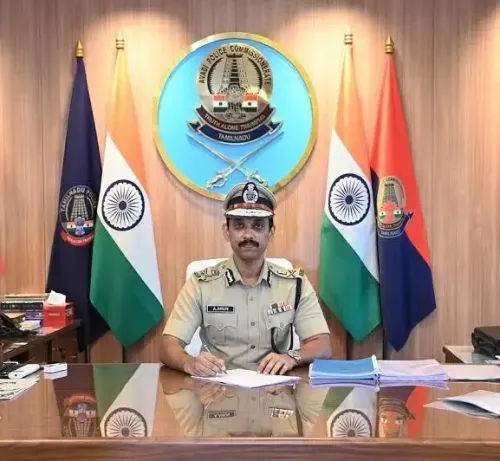
The Greater Chennai Police (GCP) on Tuesday, 11 August launched a dedicated Anti-Corruption Special Cell to receive public complaints against police personnel allegedly demanding bribes for official duties. The initiative, announced by GCP Commissioner A. Amalraj, is aimed at strengthening transparency and restoring public confidence in the force.
How the Cell Works
Citizens who face bribe demands from police personnel — irrespective of rank — can contact the Anti-Corruption Special Cell at 78717-23000, either by calling directly or via WhatsApp. The GCP has assured that the identity and personal details of all complainants will be kept strictly confidential, enabling people to report corruption without fear of reprisal.
What the Commissioner Said
Commissioner Amalraj acknowledged that an overwhelming majority of police personnel, from constables to senior officers, discharge their duties honestly and do not seek illegal gratification. However, he noted that misconduct by even a small section of personnel could damage the reputation of the entire force and erode public trust. He appealed to citizens not to offer money or inducements for services that police are duty-bound to provide free of any unofficial charge.
How Complaints Will Be Handled
According to the GCP, every complaint received through the special cell will be thoroughly examined. Where allegations of bribery are established during inquiry, the force has committed to taking appropriate and immediate action against the personnel concerned. The cell is also intended to deter citizens from yielding to bribe demands when approaching police stations for routine services.
Why This Matters
Police corruption at the transactional level — demands for small payments at stations for FIR registration, verification certificates, or bail processing — has long been a grievance in urban India. The Chennai initiative is notable for providing a WhatsApp-based channel, lowering the barrier for complaints significantly compared to formal written submissions. Notably, this comes amid broader pressure on state police forces across India to demonstrate accountability following high-profile misconduct cases. Commissioner Amalraj stressed that policing is fundamentally a public service, and that citizens should not have to pay anything beyond officially prescribed charges to get legitimate work done. Public cooperation, he said, would be crucial to the cell's success.
Point of View
But its credibility depends entirely on whether the GCP investigates complaints filed against its own ranks without institutional protection kicking in. Past internal accountability mechanisms in Indian police forces have struggled precisely because the investigating agency and the accused belong to the same chain of command. The WhatsApp channel lowers the barrier to complain — that is a genuine improvement. But without an independent oversight body reviewing outcomes, there is a real risk that the cell becomes a pressure-release valve rather than a deterrent. The Commissioner's own framing — that only a 'small section' is corrupt — is accurate but also the standard caveat that has historically preceded inaction on systemic issues.
NationPress
26 Sept 2026
Frequently Asked Questions
What is the Greater Chennai Police Anti-Corruption Special Cell?
It is a dedicated unit launched on 11 August by the Greater Chennai Police to receive public complaints against police personnel who demand bribes for official duties. Citizens can contact the cell at 78717-23000 by call or WhatsApp, with full confidentiality assured.
How can I file a complaint with the Chennai anti-corruption cell?
You can call or send a WhatsApp message to 78717-23000. The GCP has assured that the identity and details of all complainants will be kept strictly confidential to protect them from any reprisal.
Does the cell cover all ranks of police personnel?
Yes. GCP Commissioner A. Amalraj stated that complaints can be lodged against police personnel irrespective of rank, from constables to senior officers.
What action will be taken on complaints?
Every complaint received will be thoroughly examined. Where allegations of bribery are established during inquiry, the GCP has committed to taking appropriate and immediate action against the personnel involved.
Why has the Greater Chennai Police launched this initiative?
The GCP launched the cell to improve transparency, deter transactional corruption at police stations, and encourage citizens to report bribe demands rather than yield to them. Commissioner Amalraj noted that misconduct by even a small section of personnel can damage the reputation of the entire force.