CM Sai: Chhattisgarh Marks First Naxal-Free Foundation Day
Synopsis
Chief Minister Vishnu Dev Sai declared Chhattisgarh Naxal-free at the state's 26th Foundation Day cultural evening at Bharat Mandapam, New Delhi, crediting PM Modi, Home Minister Amit Shah, security forces, and the people of Bastar for the historic security milestone.
Key Takeaways
Chhattisgarh declared Naxal-free for the first time in its 26-year history as a state.
CM Vishnu Dev Sai made the announcement at the state Foundation Day Cultural Evening at Bharat Mandapam, New Delhi on 20 November 2026 .
Credit was attributed to PM Narendra Modi 's leadership, Home Minister Amit Shah 's resolve, and the courage of security forces deployed in Bastar .
Chhattisgarh was formed on 1 November 2000 and had been an active Maoist insurgency theatre for most of its existence.
The Central Government's National Policy and Action Plan against Left Wing Extremism was formalised in 2015 as the framework guiding operations.
Upcoming policy watchers will track district-wise Naxal-free notifications and rehabilitation packages for former conflict zones in Bastar .
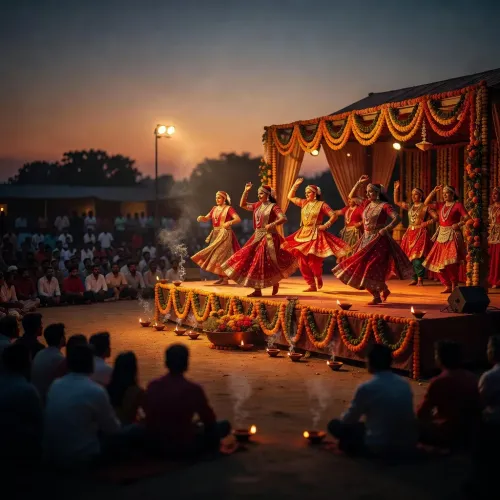
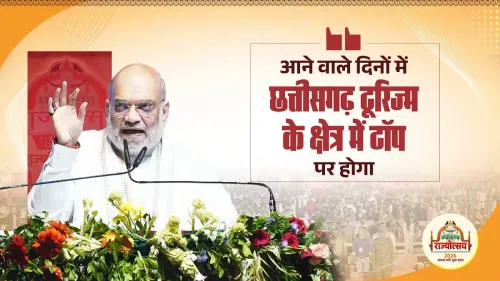
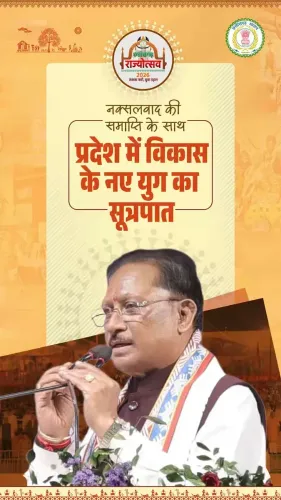
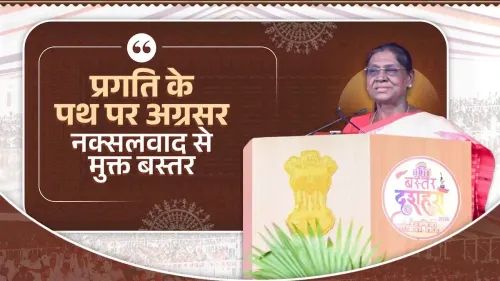
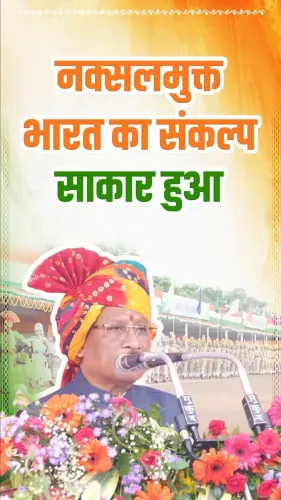
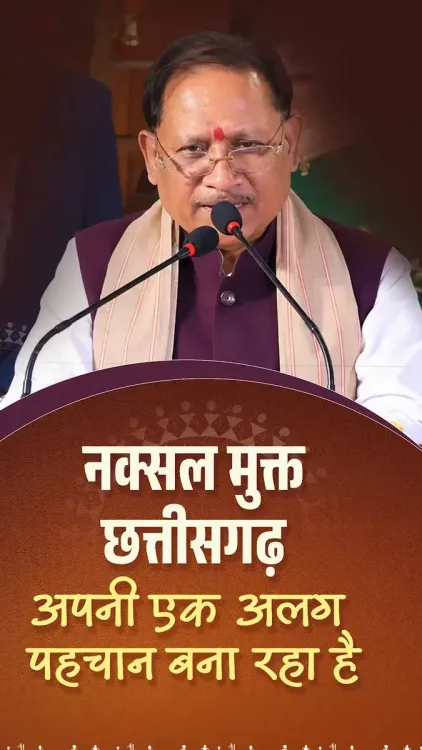
For the first time in its 26-year history, Chhattisgarh is celebrating its Foundation Day without the shadow of Maoist insurgency — and Chief Minister Vishnu Dev Sai wants the nation to understand what that means. Speaking at the Chhattisgarh Rajya Divas - Sanskritik Sandhya (Chhattisgarh State Foundation Day Cultural Evening) at Bharat Mandapam, New Delhi, on Friday, 20 November 2026, Sai declared the state Naxal-free, marking the milestone as a turning point decades in the making.
The Chief Minister's Office of Chhattisgarh shared Sai's remarks on X, with the post reading: '2026 mein yadi hum aaj Chhattisgarh Rajya Divas ki Sanskritik Sandhya mein upasthit hain, toh aaj ka paridrishya poori tarah alag hai. Chhattisgarh Naxal mukt hokar pehli baar yeh utsav mana raha hai.' — 'If we are present today at the Chhattisgarh State Day Cultural Evening in 2026, the scenario today is entirely different. Chhattisgarh is celebrating this festival for the first time having become Naxal-free.'
Modi's mandate, Shah's resolve, and the soldiers of Bastar
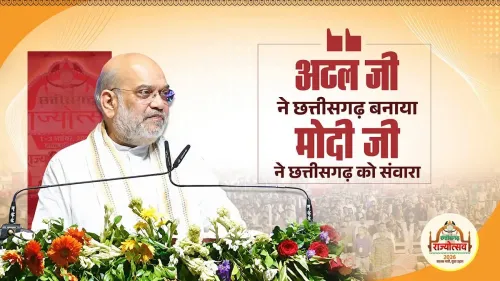
Sai attributed the transformation to a three-pillar push: the political will of Prime Minister Narendra Modi's leadership at the Centre, the 'unwavering determination' (dridh ichchhashakti) of Union Home Minister Amit Shah on internal-security policy, and the 'indomitable courage' (adamya sahas) of the security forces deployed across the region. The fourth, and perhaps the most consequential, factor he named was the people of Bastar themselves — their cooperation and blessings, he said, made it all possible.
Bastar, the sprawling southern division of Chhattisgarh, has been the epicentre of Left Wing Extremism for decades. Home to a large tribal population and mineral-rich forests, it became the operational heartland of the Communist Party of India (Maoist) — and the site of some of India's bloodiest anti-insurgency engagements. The region's name alone carried weight in security briefings for a generation.
A state born in 2000, haunted for most of its life
Chhattisgarh was carved out of Madhya Pradesh on 1 November 2000, created to give a distinct administrative identity to its tribal and mineral-rich hinterland. Almost from its founding, the state became a primary theatre of Maoist violence, with Bastar's forests providing cover for guerrilla operations that targeted security personnel, civilians, and infrastructure. The human cost — in lives lost among jawans, policemen, and villagers — stretched across every year of the state's existence.
The Central Government's National Policy and Action Plan against Left Wing Extremism, formalised in 2015, combined kinetic security operations with development outreach and surrender-rehabilitation schemes. Successive operations — accelerating sharply under the current central leadership — progressively squeezed the Maoist footprint, particularly in core Bastar districts. Friday's declaration, made from the stage of a cultural evening in the national capital, is the government's formal punctuation mark on that campaign.
Bharat Mandapam as a stage for a security story
The choice of venue is deliberate. Bharat Mandapam in New Delhi — a flagship convention infrastructure project — frames the Chhattisgarh Foundation Day not as a regional affair but as a national milestone. Hosting the cultural evening in Delhi also places CM Sai's announcement squarely in front of a central-government and media audience, amplifying the message beyond the state's borders. The hashtags #NaxalMuktChhattisgarh and #NewChhattisgarh underscore that this is a carefully choreographed political and security narrative.
What comes next will be watched closely: district-wise official notifications of Naxal-free status, new rehabilitation packages for surrendered cadres, and infrastructure pledges for communities in former conflict zones. The celebration is real — the accountability for what follows is just beginning.
Point of View
And its staging at Bharat Mandapam in New Delhi signals that the BJP-led dispensation intends to nationalise the narrative around Chhattisgarh's transformation ahead of future electoral cycles. The framing — crediting Modi, Shah, the armed forces, and Bastar's residents in one breath — is a carefully constructed coalition of legitimacy, binding security success to democratic consent. The real test, however, lies in whether the Naxal-free declaration is backed by district-level notifications, credible surrender data, and durable development investment in the vacuum insurgency leaves behind. History in similar theatres — whether in the Northeast or parts of Jharkhand — shows that security gains without economic follow-through can prove brittle.
NationPress
20 Nov 2026
Frequently Asked Questions
When did Chhattisgarh become Naxal-free?
Chief Minister Vishnu Dev Sai declared Chhattisgarh Naxal-free at the state's Foundation Day cultural evening at Bharat Mandapam, New Delhi, on 20 November 2026 , calling it the first Foundation Day celebration in the state's history without the presence of Naxalism.
What is Chhattisgarh Foundation Day and when is it celebrated?
Chhattisgarh Foundation Day marks the formation of the state on 1 November 2000 , when it was carved out of Madhya Pradesh to give the tribal and mineral-rich region its own administrative identity. It is celebrated annually on 1 November.
What is the Naxal problem in Bastar, Chhattisgarh?
Bastar , the southern division of Chhattisgarh, has been the primary operational stronghold of Maoist (Naxal) insurgents for decades. The forested, tribal region saw prolonged guerrilla activity targeting security forces, government officials, and civilians, making it one of India's most conflict-affected zones.
What was India's policy to address Naxalism in Chhattisgarh?
The Central Government formalised a National Policy and Action Plan against Left Wing Extremism in 2015 , combining security operations with development schemes and rehabilitation programmes for surrendered cadres, particularly targeting core districts in Chhattisgarh and neighbouring states.
Who is Vishnu Dev Sai?
Vishnu Dev Sai is the Chief Minister of Chhattisgarh , leading the state government that oversaw the final phase of anti-Naxal operations resulting in the Naxal-free declaration in 2026 .