Chhattisgarh CMO marks Birsa Munda's 151st birth anniversary
Synopsis
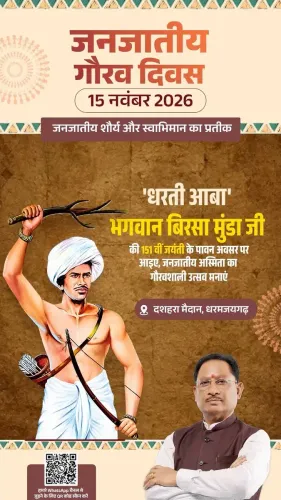
The Chief Minister's Office of Chhattisgarh marked Birsa Munda's 151st birth anniversary with a Janjatiya Gaurav Divas ceremony at Dharamjaigarh on 15 November 2026, honouring the tribal leader's enduring legacy in a region with deep Scheduled Tribe roots.
Key Takeaways
15 November 2026 marks the 151st birth anniversary of tribal icon Birsa Munda , born in 1875 in present-day Jharkhand.
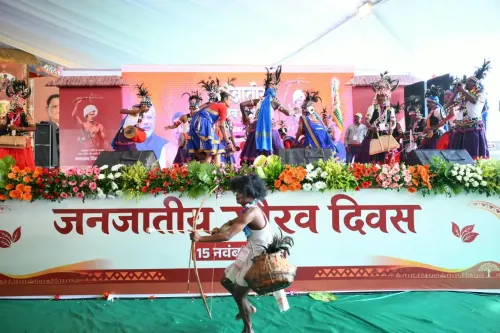
The Chhattisgarh CMO organised the Janjatiya Gaurav Divas ceremony at Dharamjaigarh , a tribal heartland town in Raigarh district.
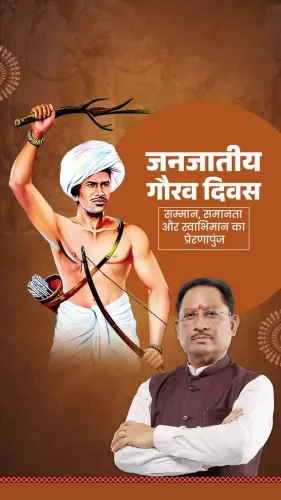
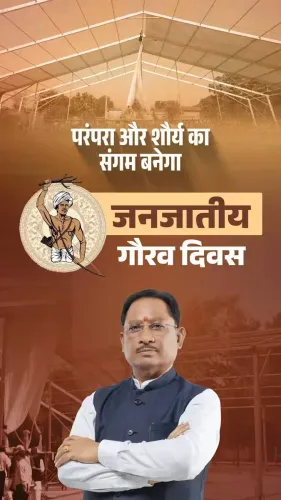
Janjatiya Gaurav Divas was declared a national observance by the Government of India in 2021 to honour tribal contributions to India's freedom struggle.
Birsa Munda led the Munda rebellion (Ulgulan) against British colonial dispossession of tribal lands and died in custody in 1900 aged 25.
Dharamjaigarh's large Scheduled Tribe population made it a pointed choice for the state-level ceremony, taking the commemoration beyond the state capital.
A hundred and fifty-one years after Birsa Munda was born into a world that would try to erase his people, Chhattisgarh paused on Sunday, 15 November 2026, to remember him — not in a capital's marble corridors, but in Dharamjaigarh, a tribal heartland town in Raigarh district, where the memory of his rebellion still carries weight.
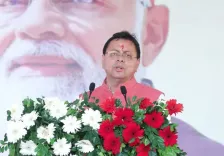
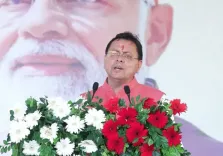
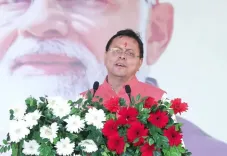
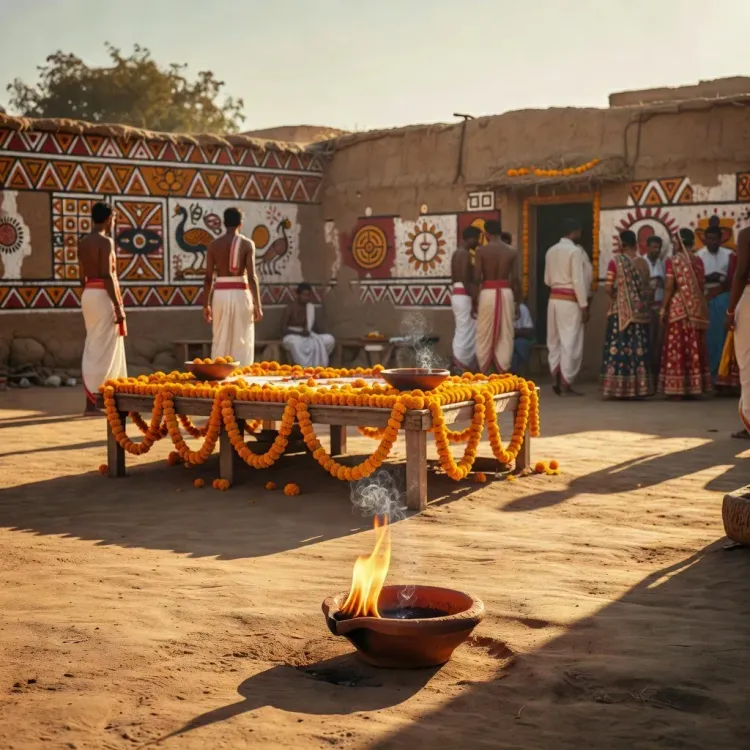
The Chief Minister's Office of Chhattisgarh marked the occasion with a post announcing the Janjatiya Gaurav Divas Samaroh — the Tribal Pride Day ceremony — held at Dharamjaigarh as part of the 151st birth anniversary of the iconic Munda leader. The state's choice of venue was deliberate: Dharamjaigarh carries one of the highest concentrations of Scheduled Tribe communities in Chhattisgarh and has long served as a focal point for tribal cultural assertion in the region.
Who was Birsa Munda — and why 151 still matters
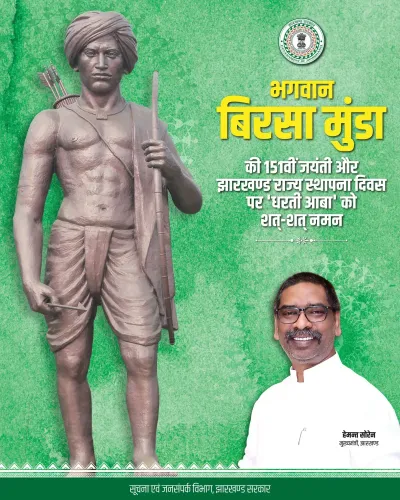
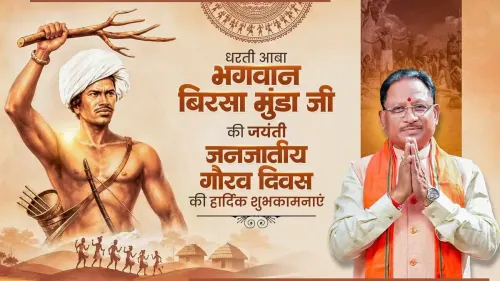
Born on 15 November 1875 in what is today Jharkhand, Birsa Munda led the Munda rebellion — the Ulgulan, or 'Great Tumult' — against British colonial dispossession of tribal lands and the forced conversion of his people. He died in British custody in 1900 at the age of just 25, but his legacy metastasised across central and eastern India into something the colonial administration never managed to suppress: a durable symbol of tribal self-determination.
Today he is formally addressed as Bhagwan Birsa Munda — the word bhagwan (god) conferred by communities who experienced his leadership as transformational rather than merely political. His face appears on currency. His name anchors airports. The reverence is institutional and visceral at once.
Janjatiya Gaurav Divas: from notification to national observance
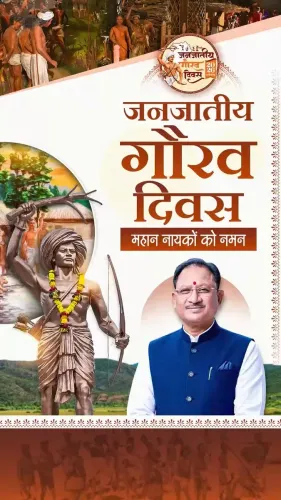
The Government of India declared 15 November as Janjatiya Gaurav Divas in 2021, formally embedding Birsa Munda's birth anniversary into the national commemorative calendar and explicitly framing tribal communities as central — not peripheral — to India's freedom struggle. Since then, state governments across Jharkhand, Chhattisgarh, Odisha, Madhya Pradesh and Maharashtra have organised public programmes on the date with growing scale each year.
The Dharamjaigarh ceremony fits that widening pattern. By anchoring the state event outside the capital Raipur, the administration signals an intent to take the observance into tribal districts rather than keep it a Secretariat-level formality.
Dharamjaigarh as a stage for tribal recognition
Dharamjaigarh is no random venue. The town sits in Raigarh district, a belt where tribal cultural identity — festivals, oral traditions, forest-use rights — remains a live and sometimes contested political reality. Holding Janjatiya Gaurav Divas here is a pointed choice, placing the government's commemorative apparatus in a community that has experienced both the promises and the gaps of tribal welfare policy firsthand.
What the ceremony produced in terms of scheme announcements or cultural infrastructure pledges was not confirmed in official communications at time of publication — but the act of showing up, in this town, on this anniversary, is itself a statement.
One hundred and fifty-one years on, the question Birsa Munda's legacy keeps asking has not changed: will recognition on a stage translate into rights on the ground?
Point of View
With Chhattisgarh, Jharkhand and Odisha each jockeying to claim the most visible commemoration. Holding the event in Dharamjaigarh rather than Raipur reflects a tactical awareness that tribal communities scrutinise venue choices as much as policy announcements. The 151st anniversary arrives at a moment when forest rights, land acquisition and welfare delivery in Scheduled Tribe districts remain flashpoints, lending Birsa Munda's anti-dispossession legacy renewed political salience. How governments translate ceremonial recognition into measurable outcomes in tribal districts will define whether Janjatiya Gaurav Divas deepens as a civic institution or becomes a calendar ritual.
NationPress
15 Nov 2026
Frequently Asked Questions
Why is 15 November celebrated as Janjatiya Gaurav Divas?
15 November is the birth anniversary of tribal leader Birsa Munda, born in 1875. The Government of India declared the date Janjatiya Gaurav Divas in 2021 to honour tribal communities and their role in India's freedom struggle.
Who was Birsa Munda?
Birsa Munda was a Munda tribal leader born on 15 November 1875 in present-day Jharkhand who led the Ulgulan (Munda rebellion) against British colonial land dispossession. He died in British custody in 1900 and is revered as Bhagwan Birsa Munda.
Where was the Janjatiya Gaurav Divas 2026 event held in Chhattisgarh?
The Chief Minister's Office of Chhattisgarh held the 2026 Janjatiya Gaurav Divas ceremony at Dharamjaigarh, a town in Raigarh district known for its large Scheduled Tribe population.
When was Janjatiya Gaurav Divas first declared?
The Government of India declared 15 November as Janjatiya Gaurav Divas in 2021, formally recognising tribal contributions to the nation's history and freedom movement.
What is the significance of Dharamjaigarh for tribal communities?
Dharamjaigarh in Raigarh district, Chhattisgarh, has one of the state's highest concentrations of Scheduled Tribe residents and has historically been a site of tribal cultural assertion and state-level community events.