CM Yogi Launches 25-Lakh Tablet Drive on Janjatiya Gaurav Diwas

Synopsis
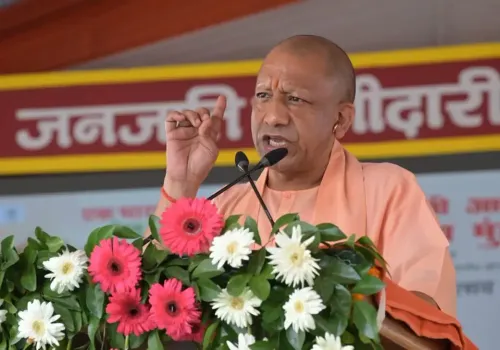
Chief Minister Yogi Adityanath inaugurated a 25-lakh tablet distribution drive in Lucknow on Janjatiya Gaurav Diwas, 15 November 2026, with over 50,000 students and trainees receiving devices at the launch ceremony — tying digital education access to tribal welfare.
Key Takeaways
CM Yogi Adityanath inaugurated the 25-lakh tablet distribution programme in Lucknow on 15 November 2026 .
The launch coincides with Janjatiya Gaurav Diwas , the national observance of Bhagwan Birsa Munda's birth anniversary.
Over 50,000 students and trainees received tablets at the inauguration ceremony itself.
The total target of 25 lakh (2.5 million) tablets is to be rolled out in phases across UP schools, colleges, and vocational institutes.
Uttar Pradesh has run student device distribution programmes since 2012 , making this the latest and largest iteration.
Phased rollout to tribal blocks aims to extend e-learning infrastructure to underserved areas beyond urban centres.
On the occasion of Janjatiya Gaurav Diwas, Lucknow became the stage for one of Uttar Pradesh's largest single-day digital education events — Chief Minister Yogi Adityanath inaugurating a programme to distribute 25 lakh tablets to students and trainees across the state, with over 50,000 beneficiaries receiving their devices on the spot on Sunday, 15 November 2026.
Birsa Munda's birth anniversary as a launch platform
Janjatiya Gaurav Diwas is observed every year on 15 November, the birth anniversary of tribal icon Bhagwan Birsa Munda. The national observance was instituted in 2021 by the Ministry of Tribal Affairs to commemorate the contributions and struggles of India's tribal communities. Choosing this date to inaugurate a mass device-distribution drive is a deliberate signal — linking digital access with tribal dignity.
Uttar Pradesh has the country's largest population and a substantial Scheduled Tribe demographic spread across its eastern and central districts. Routing a flagship education scheme through a tribal welfare occasion amplifies both the symbolic weight and the administrative reach of the rollout.
A tablet programme with deep state roots
Device distribution for students is not new to UP. The state has run successive electronics-gifting schemes since 2012 — first laptops under the Samajwadi government, then tablets and smartphones under subsequent administrations. What distinguishes the present drive is its declared scale: 25 lakh (2.5 million) tablets, making it among the most ambitious student-device programmes in any single Indian state.
The 50,000-plus students and trainees who received tablets at the Lucknow ceremony represent the first tranche of that larger target. The remaining devices are expected to be distributed in phases across schools, colleges, and vocational training institutes, with particular emphasis on improving e-learning access beyond urban centres.
Digital infrastructure as a welfare argument
State governments aligned with the current central dispensation have increasingly used tribal welfare observances as anchors for concrete scheme launches — moving the conversation from commemoration to delivery. A tablet in a student's hand in a Scheduled Tribe block is a measurable, photographable outcome that speaks directly to the gap between aspiration and access in India's education story.
The harder question — whether the devices translate into improved learning outcomes — will be answered only once usage data and evaluation reports emerge from the tribal blocks targeted by this rollout. That accountability moment is still ahead.
Fifty thousand tablets handed over in a single morning is a headline. Twenty-five lakh reaching classrooms across UP's most underserved districts would be the story that matters.
Point of View
The Yogi government fuses symbolic tribal outreach with a tangible welfare delivery — a template increasingly common in BJP-governed states seeking to demonstrate action, not just commemoration. The scale of the declared target is politically significant in UP, where student device schemes have historically been used as electoral currency across party lines. The real test, however, lies in the phased rollout's reach into Scheduled Tribe districts and whether post-distribution monitoring ensures the devices serve learning rather than gathering dust. Scrutiny of beneficiary selection criteria and usage outcomes will determine whether this becomes a governance benchmark or a headline that fades.
NationPress
15 Nov 2026
Frequently Asked Questions
What is the UP government's 25-lakh tablet scheme?
The Uttar Pradesh government's scheme aims to distribute 25 lakh (2.5 million) tablets to students and vocational trainees across the state. The inaugural ceremony was held in Lucknow on 15 November 2026 , with CM Yogi Adityanath handing over devices to over 50,000 beneficiaries on the spot.
What is Janjatiya Gaurav Diwas and why is it celebrated on 15 November?
Janjatiya Gaurav Diwas is a national observance held every year on 15 November , the birth anniversary of tribal freedom fighter Bhagwan Birsa Munda . It was instituted in 2021 by the Ministry of Tribal Affairs to honour the contributions of India's tribal communities.
Who received tablets at the Lucknow ceremony on 15 November 2026?
Over 50,000 students and vocational trainees from Uttar Pradesh received tablets at the inauguration ceremony in Lucknow . These beneficiaries represent the first tranche of the larger 25-lakh distribution target.
Does Uttar Pradesh have a history of distributing devices to students?
Yes. Uttar Pradesh has run successive student electronics distribution programmes since 2012 , including laptop and tablet schemes targeting secondary and higher education students under multiple state governments.
Will all 25 lakh tablets be distributed at once?
No. The 25-lakh tablet target is expected to be met through a phased rollout across schools, colleges, and vocational training institutes, with emphasis on tribal and underserved districts. The Lucknow ceremony on 15 November 2026 marked only the inaugural tranche.