Chhattisgarh CMO Promotes Smart Meters for Energy Savings
Synopsis
The Chief Minister's Office of Chhattisgarh on 25 July 2026 promoted smart electricity meters as a tool for accurate billing and household energy savings, linking the push to the central PM Surya Ghar rooftop solar scheme and the state's digital governance agenda under Chief Minister Vishnu Deo Sai.
Key Takeaways
The Chief Minister's Office of Chhattisgarh posted a video on 25 July 2026 promoting smart meters for household electricity savings.
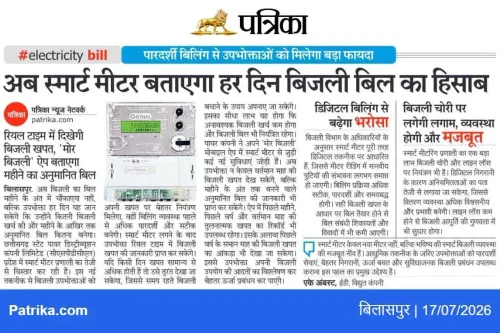
Smart meters enable real-time consumption tracking, eliminating estimated billing and helping consumers manage energy use.
The post links smart metering to the PM Surya Ghar Muft Bijli Yojana , the central rooftop solar scheme offering up to 300 units of free electricity monthly.
India's Revamped Distribution Sector Scheme (RDSS) , approved in 2021 , mandated large-scale smart meter deployment to cut AT&C losses in state discoms.
The communication was tagged to CM Vishnu Deo Sai and the Ministry of Power , signalling centre-state coordination on rollout and consumer outreach.
Accurate net metering enabled by smart devices is essential for households to receive correct solar credits under the PM Surya Ghar scheme.
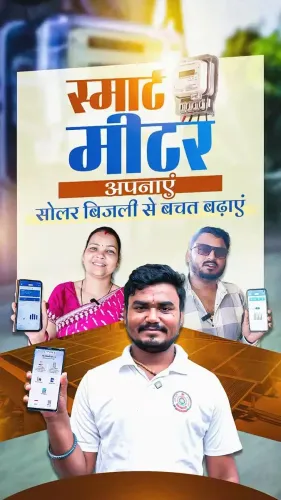
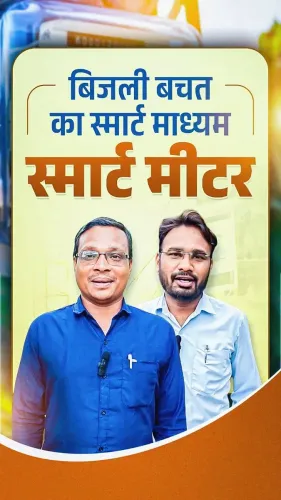
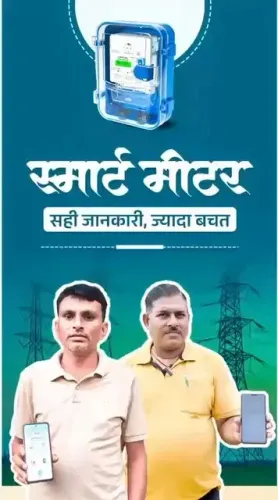
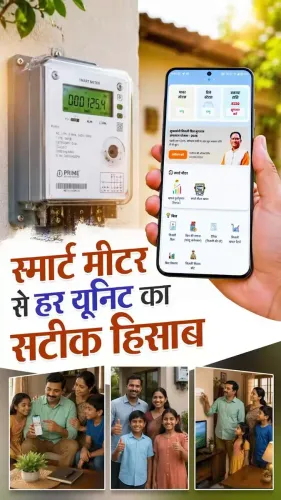
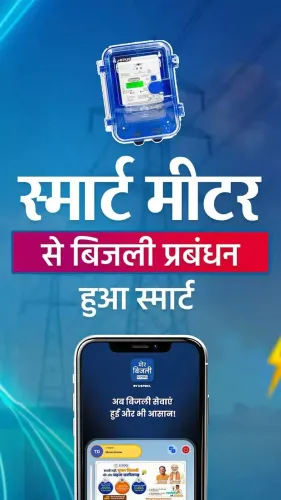
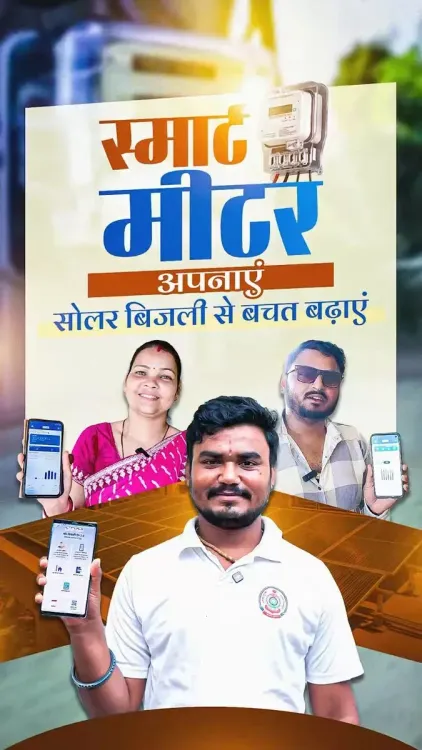
The Chief Minister's Office of Chhattisgarh on Saturday, 25 July 2026 shared a video post on X promoting smart electricity meters as a tool for reducing household power bills, urging consumers to use accurate billing data to make smarter energy choices.
The post, tagged to Chief Minister Vishnu Deo Sai, the Ministry of Power, and the state's good governance handle, carried the message: 'Bijli ki sateek jaankari, samajhdari se upyog aur adhik bachat' ('Accurate electricity information, smart usage, and greater savings'). The hashtags #SmartMeter, #PMSuryaGhar, and #DigitalChhattisgarh tied the communication to both the central government's flagship solar scheme and the state's broader digital governance agenda.
Context
Smart meters replace conventional electromechanical units with digital devices that record consumption in real time and transmit data remotely to distribution companies. For households, this eliminates estimated billing and allows consumers to track usage patterns and shift high-consumption activities to off-peak hours. The Chhattisgarh government's decision to amplify this message through the Chief Minister's Office signals a push to accelerate consumer adoption rather than treat metering as a purely technical back-end upgrade. The post's reference to #PMSuryaGhar links smart metering directly to the PM Surya Ghar Muft Bijli Yojana, the central rooftop solar scheme launched in February 2024 that provides subsidies for household solar installations capable of delivering up to 300 units of free electricity per month. Smart meters are essential to that scheme because they enable accurate net metering — measuring both the power a household draws from the grid and the surplus solar power it feeds back.Policy Backdrop
India's push for smart metering predates the solar scheme. The Revamped Distribution Sector Scheme (RDSS), approved in 2021, set large-scale smart meter deployment targets for state electricity distribution companies (discoms) with the primary goal of cutting aggregate technical and commercial (AT&C) losses — the gap between power purchased and revenue collected. High AT&C losses have long strained discom finances and, by extension, state electricity subsidies. Chhattisgarh's discoms, like those in many states, have faced financial pressure from subsidised tariffs and billing inefficiencies. Smart meters address both: they make tamper-evident billing the default and generate granular consumption data that enables time-of-day tariff structures. By framing smart meters as a consumer benefit rather than a regulatory compliance tool, the state government appears to be working to reduce public resistance to the devices, which have faced scepticism in some states over data privacy and sudden billing spikes after estimated bills are corrected.Stakeholders and Impact
For Chhattisgarh households, the immediate benefit is transparent billing. Consumers who previously received estimated bills — sometimes leading to large arrears or unexpected dues — gain a real-time view of their consumption. This is particularly relevant for rural consumers being brought under the PM Surya Ghar scheme, where accurate net metering determines the financial return on a rooftop solar investment. For the state discom, smart meter data reduces revenue leakage and supports better load forecasting. The Ministry of Power's tagging in the post suggests coordination between state and central agencies on both deployment targets and consumer communication. Broader adoption also supports India's distributed renewable energy integration goals, as rooftop solar generation must be accurately measured to be credited and compensated.What's Next
The state's next visible milestones will likely be progress reports on smart meter installation numbers under the RDSS framework and consumer enrolment figures under PM Surya Ghar in Chhattisgarh. Any revision to consumer tariff structures enabled by metering data — such as time-of-day pricing — would represent a significant downstream development. If smart meter penetration reaches a threshold where real-time grid data becomes actionable, the state could also move toward demand-response programmes that incentivise off-peak consumption, deepening the energy-saving promise the CMO's post has put before citizens.Point of View
Not just installation targets, is becoming the new battleground for smart metering adoption.
NationPress
25 Jul 2026
Frequently Asked Questions
What is a smart meter and how does it help reduce electricity bills?
A smart meter is a digital electricity meter that records real-time consumption and transmits data automatically to the discom, eliminating estimated billing. Consumers can track their usage and shift high-consumption activities to off-peak periods, directly reducing their monthly electricity costs.
What is PM Surya Ghar Muft Bijli Yojana and how is it linked to smart meters?
PM Surya Ghar Muft Bijli Yojana is a central government scheme launched in February 2024 that subsidises rooftop solar installations to provide up to 300 units of free electricity per month. Smart meters are essential to the scheme because they accurately measure both power drawn from the grid and surplus solar power fed back, ensuring correct billing and credits.
Why is Chhattisgarh promoting smart meters in 2026?
Chhattisgarh is promoting smart meters as part of its Digital Chhattisgarh and good governance agenda under CM Vishnu Deo Sai , aligned with central mandates under the RDSS scheme to modernise power distribution, cut losses, and support rooftop solar adoption through the PM Surya Ghar programme.
What is the Revamped Distribution Sector Scheme (RDSS)?
The RDSS is a central government scheme approved in 2021 that funds infrastructure upgrades for state electricity distribution companies, with smart meter deployment as a key component to reduce aggregate technical and commercial (AT&C) losses and improve billing accuracy.
Will smart meters in Chhattisgarh change how consumers are billed?
Yes. Smart meters replace estimated billing with data-driven, accurate bills based on actual consumption. Over time, they also enable time-of-day tariff structures that could allow consumers to pay lower rates by shifting usage to off-peak hours, though any such tariff changes would require separate regulatory notification.