Chhattisgarh CMO releases 'Safar' Part 2 on Bastar's transformation
Synopsis
The Chief Minister's Office of Chhattisgarh released 'Safar' Part 2 on 20 August 2026, a video series documenting Bastar's shift from decades of Maoist insurgency to a state-led narrative of development, governance, and new identity across all seven Bastar division districts.
Key Takeaways
'Safar – Lal Aatank Se Tirangle Ki Chhaon Tak' Part 2 was released by the Chhattisgarh CMO on 20 August 2026 .
The series frames Bastar division as transitioning from Left Wing Extremism to development and governance outreach.
All seven Bastar division districts — Dantewada, Bijapur, Sukma, Kanker, Kondagaon, Narayanpur, and Bastar — were tagged in the post.
The post is addressed to Prime Minister Narendra Modi and CM Vishnu Deo Sai , signalling top-level political framing.
The campaign aligns with the SAMADHAN strategy (2017) and Chhattisgarh's rehabilitation schemes dating to the mid-2000s.
Verified data on infrastructure or violence metrics in these districts has not been released alongside the video.
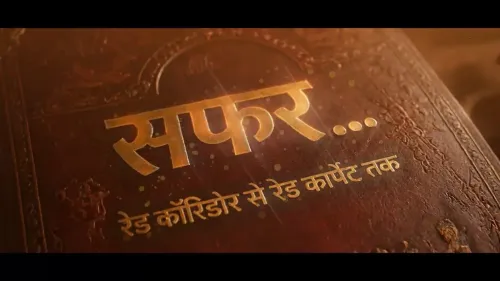
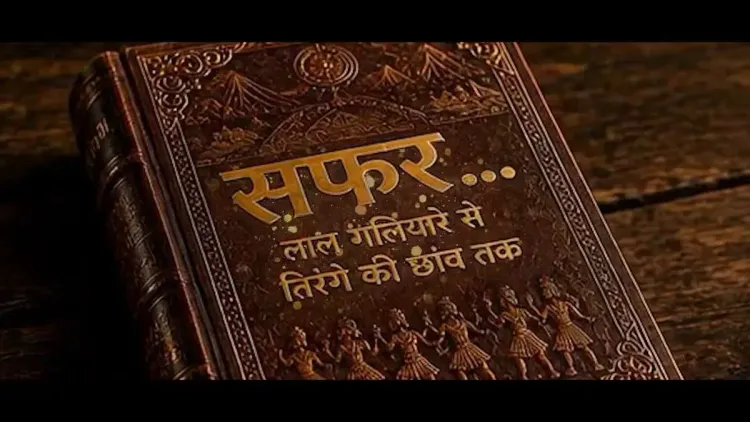
From the shadow of the red corridor to the shelter of the tricolour — that is the arc Chhattisgarh's Chief Minister's Office is drawing in a new video series released on 20 August 2026. The CMO dropped 'Safar – Lal Aatank Se Tirangle Ki Chhaon Tak' ('Journey — From Red Terror to the Shade of the Tricolour'), Part 2, a documentary-style film that frames Bastar as a region rewriting its own story.
What 'Safar' is saying about Bastar
The post calls on viewers to witness Bastar's new identity, new confidence, and new future — language that signals a deliberate pivot in official communication from security bulletins to development storytelling. The series is addressed directly to Prime Minister Narendra Modi and Chief Minister Vishnu Deo Sai, and tags all seven Bastar division districts: Dantewada, Bijapur, Sukma, Kanker, Kondagaon, Narayanpur, and Bastar itself — every district that bore the brunt of Maoist violence for decades.
The title is pointed. 'Lal aatank' — red terror — is the state's shorthand for Left Wing Extremism. Placing it against the tricolour in a single frame is a rhetorical move: the republic is arriving where insurgency once ruled.
Bastar's long road out of the red corridor
Bastar division in southern Chhattisgarh was for decades the heartland of Maoist insurgency in India. The human cost — for security forces, for civilians, for the tribal communities caught between the two — was severe and sustained. The central government's SAMADHAN strategy, introduced by the Ministry of Home Affairs in 2017, attempted to knit together security operations, infrastructure delivery, and rehabilitation into a single coordinated response. Chhattisgarh had been running its own Naxal surrender and rehabilitation schemes since the mid-2000s.
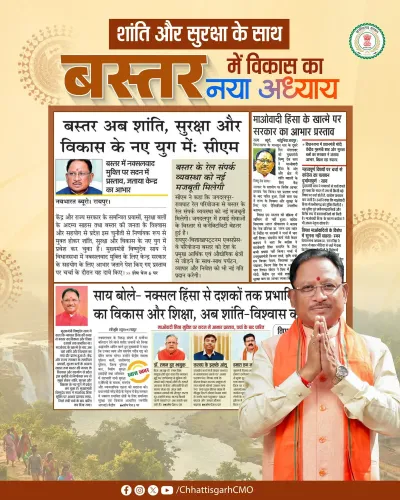
Chief Minister Vishnu Deo Sai, who took office in December 2023, has made Bastar's transformation a signature narrative of his administration — linking road-building, welfare delivery, and governance outreach to the broader security gains that preceded him. The 'Safar' series is the communication arm of that argument.
Why the state is telling this story now
Governments across central India have long understood that development in tribal belts is both a moral obligation and a counterinsurgency tool. The video series fits a pattern: as security conditions improve in an area, administrations shift from force-forward messaging to development-forward storytelling, consolidating public confidence and signalling to residents that the state is here to stay. Tagging all seven Bastar districts in a single post is not incidental — it is a map of ambition.
What the video actually shows, and what verified data on roads, schools, health centres, or violence metrics in these districts looks like, will be the real measure. The narrative has been set. The numbers will follow — or they won't.
Point of View
Where narrative control follows operational gains. For CM Vishnu Deo Sai, Bastar is both a political opportunity and a genuine test: the BJP administration that came to power in December 2023 inherited security momentum and must now deliver visible welfare outcomes to sustain it. The series is smart politics, but it also raises the stakes — every video released is an implicit promise that the numbers will eventually back the story.
NationPress
20 Aug 2026
Frequently Asked Questions
What is the 'Safar' video series by Chhattisgarh CMO?
'Safar — Lal Aatank Se Tirangle Ki Chhaon Tak' is a documentary-style video series released by the Chief Minister's Office of Chhattisgarh that chronicles Bastar's transformation from a Maoist insurgency stronghold to a region of development and governance. Part 2 was released on 20 August 2026.
Which districts are covered in the Chhattisgarh CMO's Bastar campaign?
The campaign covers all seven districts of Bastar division: Bastar, Dantewada, Bijapur, Sukma, Kanker, Kondagaon, and Narayanpur — all historically affected by Left Wing Extremism.
What is the SAMADHAN strategy for Naxal-affected areas?
SAMADHAN is a multi-dimensional strategy introduced by the Ministry of Home Affairs in 2017 to tackle Left Wing Extremism through a combination of security operations, infrastructure development, and rehabilitation of surrendered Maoists.
Who is Vishnu Deo Sai and what is his role in Bastar's development?
Vishnu Deo Sai is the Chief Minister of Chhattisgarh, in office since December 2023. He has made Bastar's transformation a central narrative of his administration, emphasising road-building, welfare delivery, and governance outreach in tribal districts formerly dominated by Maoist violence.
Has Naxal violence actually reduced in Bastar?
Security conditions in Bastar have been reported to have improved in recent years under coordinated central and state operations, but verified current statistics on violence metrics or rehabilitation numbers from the state home department have not been released alongside the 'Safar' series.