Chhattisgarh CMO: Tricolour flies in Bastar's Naxal-free villages
Synopsis
The Chief Minister's Office of Chhattisgarh announced on 17 August 2026 that the tricolour has been hoisted in remote, newly Naxal-free Bastar villages for the first time in decades, crediting the BJP's double engine government for transforming the insurgency-hit region.
Key Takeaways
The Chhattisgarh CMO announced on 17 August 2026 that the Indian flag has been hoisted in remote, previously Naxal-dominated Bastar villages after decades.
Bastar division in southern Chhattisgarh has been the core of India's Maoist insurgency for over four decades, with state presence historically limited in interior villages.
The BJP's 'double engine government' refers to simultaneous BJP rule in Raipur and New Delhi , enabling coordinated security and development operations.
The National Policy and Action Plan for Left Wing Extremism , active since 2015 , combines counter-insurgency with infrastructure and welfare delivery in affected districts.
Flag-hoisting in reclaimed villages is treated as a formal marker of restored state presence, signalling access for schools, roads, and welfare schemes.
The December 2023 Chhattisgarh assembly election brought the BJP to power in the state, creating the central-state alignment the party credits for accelerated gains.
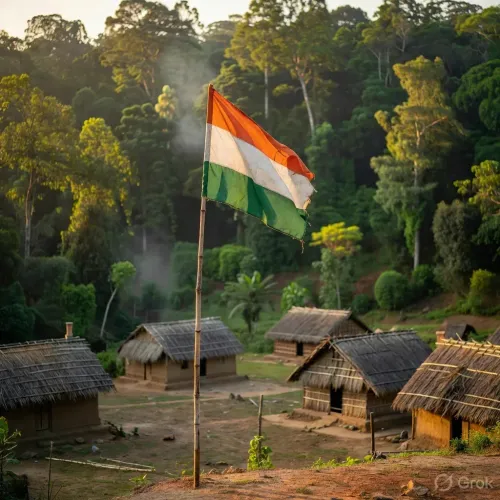
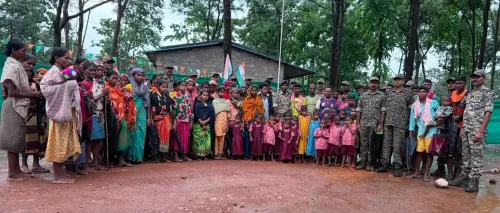
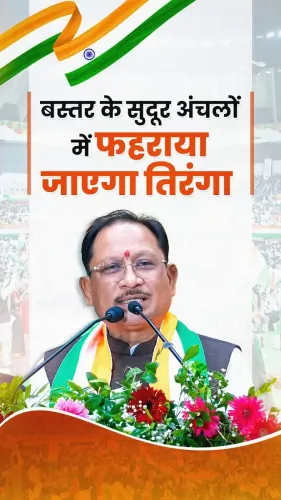
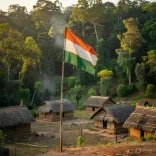
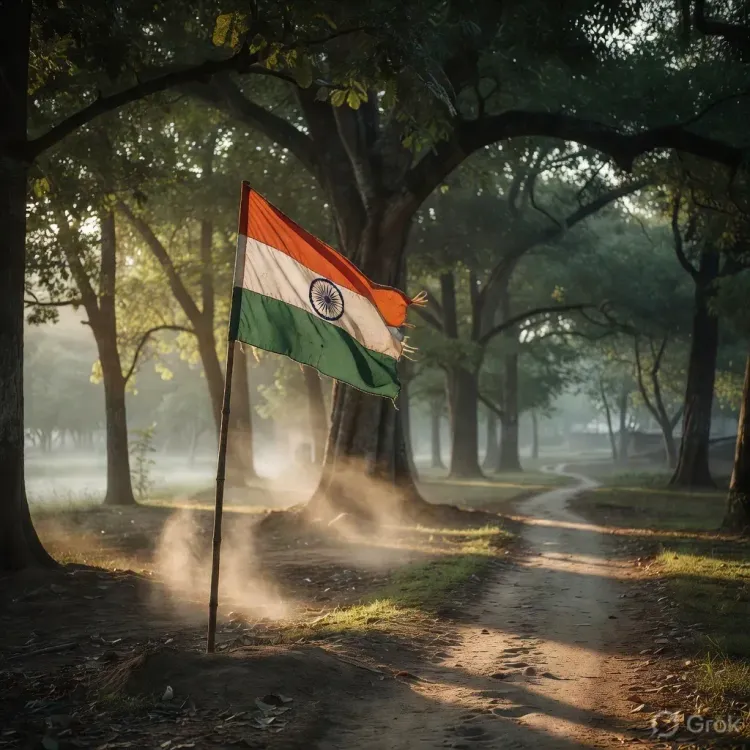
For decades, the tricolour was a stranger to some of Bastar's remotest villages — kept out by fear, geography, and the shadow of left-wing extremism. Now, the Chief Minister's Office of Chhattisgarh says that shadow is lifting, with the Indian flag hoisted in previously Naxal-dominated areas for the first time in a generation.
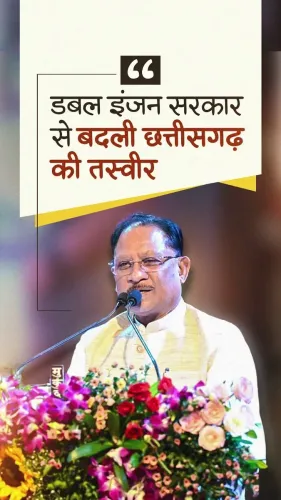
The CMO posted on 17 August 2026, declaring that the 'double engine government' — डबल इंजन सरकार — had transformed Bastar's face, with the tricolour flying in remote, newly Naxal-free villages after decades. The phrase refers to the BJP's simultaneous hold on the state government in Raipur and the central government in New Delhi, which the party argues enables coordinated security and development action impossible under split mandates.
Bastar's long insurgency and what flag-hoisting signals
Bastar division, a sprawling forested region in southern Chhattisgarh, has been the heartland of Maoist insurgency in India for over four decades. Comprising several districts including Dantewada, Sukma, Bijapur, and Narayanpur, it sits at the core of what security planners have long called the 'Red Corridor' — a belt of Naxal influence stretching across central India. State presence in many of its interior villages was, for years, either minimal or entirely absent.
Hoisting the tricolour in a village that security forces have reclaimed is not merely ceremonial. It is the government's most visible assertion that the state has returned — that schools can open, roads can be built, and welfare schemes can reach people who were effectively cut off. Each flag is a claim: yahan sarkar hai — the government is here.
The 'double engine' strategy in Chhattisgarh
The BJP's December 2023 assembly election victory in Chhattisgarh created the alignment the party had long argued was essential. Since then, the state government has operated in tandem with the National Policy and Action Plan for Left Wing Extremism — a central framework combining security operations with infrastructure investment, connectivity projects, and welfare delivery in affected districts.
Security forces have intensified operations in Bastar over the past two years, with the Ministry of Home Affairs reporting declining Naxal violence statistics in successive years. The CMO's post frames the flag-hoisting as the human dividend of that strategy — a visible, ground-level marker that the policy is producing results beyond casualty counts.
The tricolour flying where it could not before is both a security milestone and a political statement. For Bastar's tribal communities, it signals something more immediate: that roads, rations, and rights may finally follow the flag.
Point of View
Linking a potent national symbol — the tricolour — to the BJP's 'double engine' governance thesis ahead of what remains a contested security and development narrative in Bastar. Flag-hoisting in reclaimed villages has become a recurring motif in BJP messaging on left-wing extremism, serving simultaneously as a security metric and an electoral signal to tribal constituencies. The framing sidesteps ongoing debates about displacement, forest rights, and civilian casualties in counter-Naxal operations — real fault lines that complicate the 'transformed Bastar' narrative. Analysts watching the region will look to Ministry of Home Affairs violence data and ground-level development indices, not symbolic gestures, to assess whether the transformation is structural or staged.
NationPress
17 Aug 2026
Frequently Asked Questions
Why is the tricolour being hoisted in Bastar villages considered significant?
In many of Bastar's interior villages, Naxalite groups had prevented state symbols and government presence for decades. Hoisting the tricolour signals that security forces have reclaimed the area and that government services — schools, roads, welfare schemes — can now reach residents.
What is the 'double engine government' in Chhattisgarh?
It is a BJP political phrase describing simultaneous BJP rule at the central government and in the state government, which the party argues enables faster, coordinated policy implementation — particularly for security and development in Naxal-affected areas.
Which districts of Bastar are most affected by Naxalism?
Bastar division includes districts such as Dantewada, Sukma, Bijapur, and Narayanpur, which have historically been the most heavily affected by Maoist insurgency in Chhattisgarh.
What is India's national policy to tackle left-wing extremism?
Since 2015, the central government has implemented the National Policy and Action Plan for Left Wing Extremism, combining security operations with infrastructure investment, road connectivity, and welfare delivery in affected districts across the Red Corridor.
When did the BJP come to power in Chhattisgarh?
The BJP won the Chhattisgarh assembly elections in December 2023 , forming the state government and creating alignment with the central BJP administration that the party credits for accelerated anti-Naxal gains.