CM Sai: 9,500 Rooftop Solar Units Installed in Chhattisgarh
Synopsis
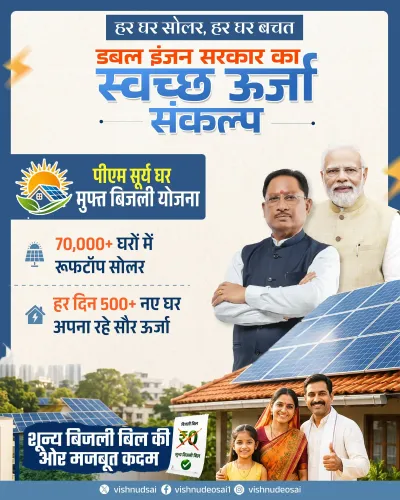
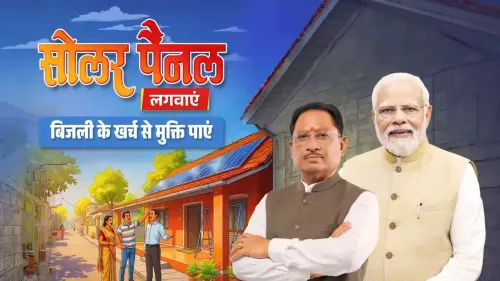
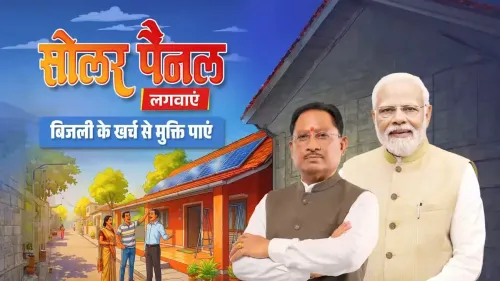
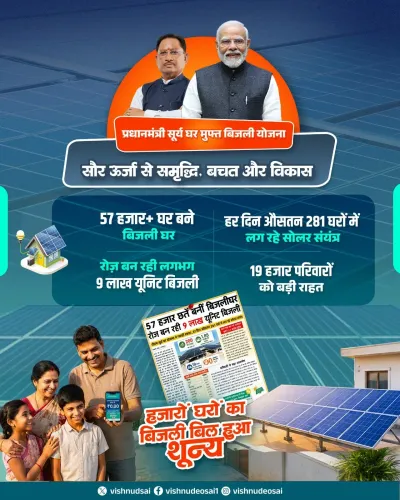
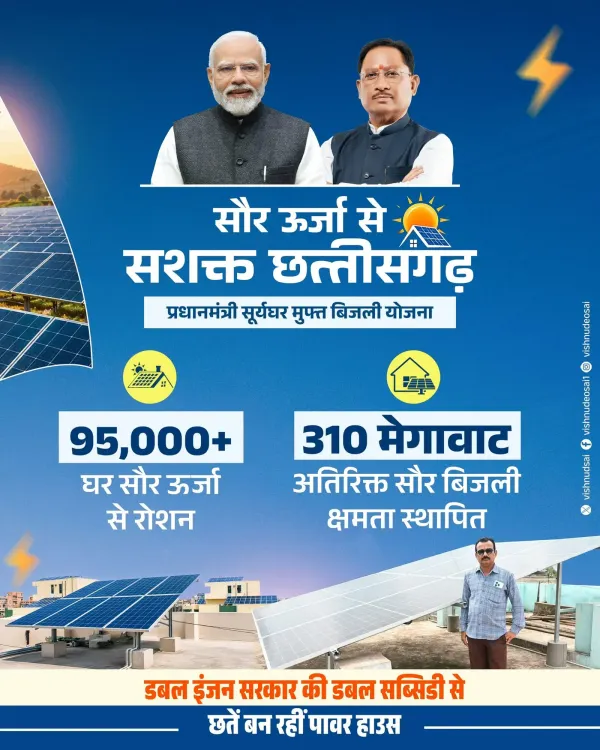
Chhattisgarh CM Vishnu Deo Sai announced that over 9,500 rooftop solar panels have been installed under PM Surya Ghar Muft Bijli Yojana, backed by a state-plus-central double subsidy, adding 310 MW of solar capacity to the state.
Key Takeaways
9,500+ households in Chhattisgarh have received rooftop solar installations under PM Surya Ghar Muft Bijli Yojana.
310 MW of additional solar capacity has been added to the state's energy mix.
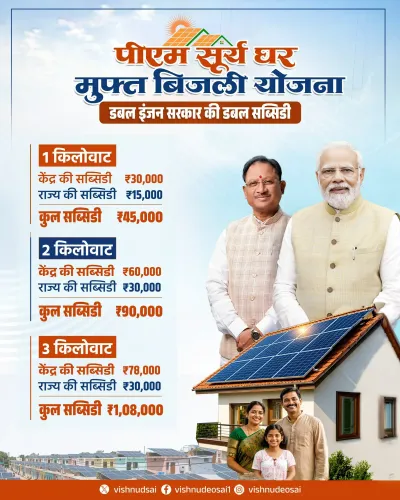
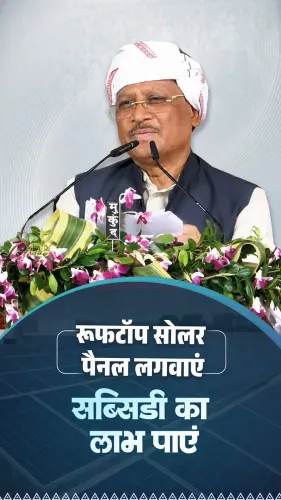
Chhattisgarh offers a state-level subsidy stacked on top of the central government's financial assistance — the 'double subsidy' model.
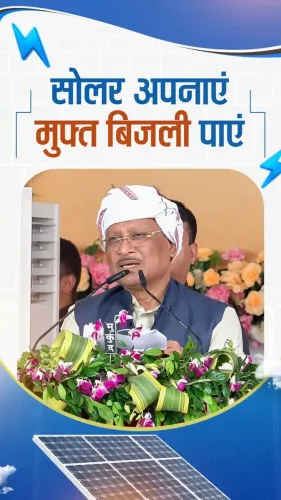
The PM Surya Ghar Muft Bijli Yojana was launched nationally in 2024 , targeting up to 300 units of free electricity per household monthly.
The scheme aligns with India's national target of 500 GW non-fossil fuel capacity by 2030 .
CM Vishnu Deo Sai framed the milestone as a 'double-engine government' governance achievement on 8 November 2026 .
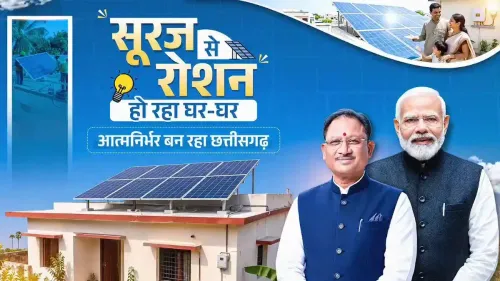
Solar panels are climbing onto rooftops across Chhattisgarh — and the numbers are starting to tell a story. Chhattisgarh Chief Minister Vishnu Deo Sai announced on Sunday, 8 November 2026 that the state has crossed 9,500 household rooftop solar installations under the PM Surya Ghar Muft Bijli Yojana, while adding 310 megawatts of fresh solar capacity to the grid.
Posting on X in Hindi, CM Sai wrote: 'सौर ऊर्जा से सशक्त होता छत्तीसगढ़' — 'Chhattisgarh being empowered by solar energy' — framing the milestone as proof that the state's 'double-engine government' model is delivering tangible household savings alongside clean-energy growth.
Double Subsidy, Single Goal: How Chhattisgarh Stacked the Incentives
The PM Surya Ghar Muft Bijli Yojana, launched by the Government of India in 2024, offers central financial assistance to help households install rooftop solar panels and receive up to 300 units of free electricity per month. The scheme was designed to cut electricity bills at the household level while pushing India toward its national target of 500 GW of non-fossil fuel capacity by 2030.
Chhattisgarh went a step further. The state government layered an additional state-level subsidy on top of the central support — the 'double subsidy' the CM referenced — to lower the upfront barrier for households in the state. This stacking model has become a signature approach among BJP-governed states seeking to accelerate the scheme's ground-level adoption.
310 MW and 9,500 Households: Reading the Scale
The 310 MW capacity figure is the more systemically significant number here. It signals not just household participation but a measurable shift in the state's generation mix — distributed solar feeding into the grid rather than dependence on centralised thermal supply. 9,500 installations across a state of roughly 33 million people remains a first-phase footprint, but it establishes the pipeline and the administrative machinery for rapid scale-up.
Chhattisgarh has historically leaned on coal-based generation given its rich mineral resources. A pivot toward rooftop solar — driven by subsidised citizen participation — marks a deliberate policy diversification, one the CM is now publicly stamping as a governance deliverable ahead of the broader national renewable push.
What the State Discom Does Next
The practical test lies in the grid integration, net-metering settlements, and subsidy disbursement velocity — the backend processes that determine whether a beneficiary's electricity bill actually falls. Analysts watching the scheme will look to monthly installation data from the state distribution company and any mid-term review of subsidy payouts to assess whether the momentum is sustained or stalls at the first-phase mark.
Chhattisgarh's solar push is not moving in isolation — it is one tile in a national mosaic. But right now, 9,500 households in Chhattisgarh are generating their own electricity from the sun. That is not a headline; that is infrastructure.
Point of View
Chhattisgarh is following a pattern visible across BJP-governed states: use co-financing to accelerate headline numbers ahead of the 2030 renewable targets. The 310 MW addition is the more durable data point; rooftop solar at distributed scale shifts grid dependency in ways that matter beyond optics. The real accountability test will come when net-metering settlements and subsidy disbursements are audited — that is where the scheme's credibility for the next 90,000 households will be won or lost.
NationPress
8 Nov 2026
Frequently Asked Questions
What is PM Surya Ghar Muft Bijli Yojana?
PM Surya Ghar Muft Bijli Yojana is a central government scheme launched in 2024 that provides financial assistance for rooftop solar panel installation, aiming to supply eligible households with up to 300 units of free electricity per month.
How many homes have got solar panels in Chhattisgarh?
According to CM Vishnu Deo Sai's announcement on 8 November 2026, more than 9,500 households in Chhattisgarh have had rooftop solar panels installed under the scheme.
What is the double subsidy in Chhattisgarh's solar scheme?
The double subsidy refers to Chhattisgarh government's additional state-level financial support layered on top of the central government's subsidy under PM Surya Ghar Muft Bijli Yojana, reducing the cost barrier further for beneficiaries.
How much solar capacity has Chhattisgarh added under this scheme?
CM Sai stated that Chhattisgarh has developed an additional 310 megawatts of solar energy capacity under the scheme.
What is India's solar energy target by 2030?
India has set a national target of achieving 500 GW of non-fossil fuel-based energy capacity by 2030, with rooftop solar schemes like PM Surya Ghar Yojana forming a key part of that push.