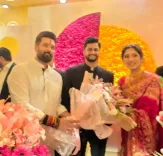
Chirag Paswan keynotes We Women Want Conclave in Delhi
Synopsis
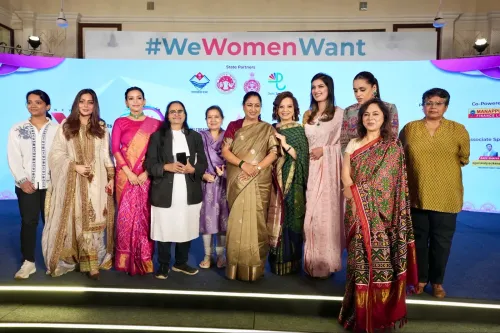
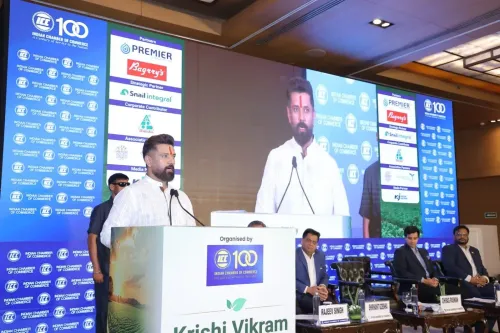
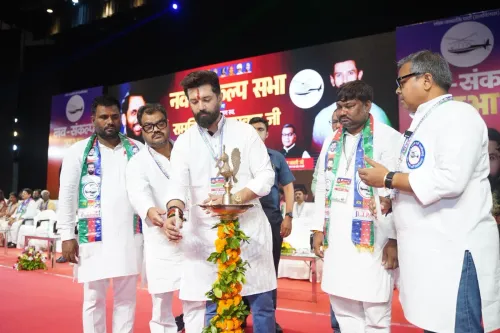
Union Food Processing Minister Chirag Paswan was the chief guest and keynote speaker at the We Women Want Conclave and Shakti Awards 2026 in New Delhi on August 10, calling women's progress the greatest strength of India's development journey and congratulating all award recipients.
Key Takeaways
Chirag Paswan addressed the 'We Women Want Conclave and Shakti Awards 2026' as chief guest and keynote speaker at New Delhi's Imperial Hotel on August 10, 2026 .
He stated that when a woman advances, her entire family, society, and nation advance with her.
Paswan described women's growing confidence across all sectors as the 'greatest strength' of new India's development journey.
He congratulated all Shakti Award recipients and called women's empowerment central to the Viksit Bharat vision.
The speech connects to the Nari Shakti Vandan Adhiniyam (2023) , which reserves one-third of parliamentary and assembly seats for women.
The Ministry of Food Processing Industries runs parallel schemes promoting women entrepreneurs through skill development and MSME participation.
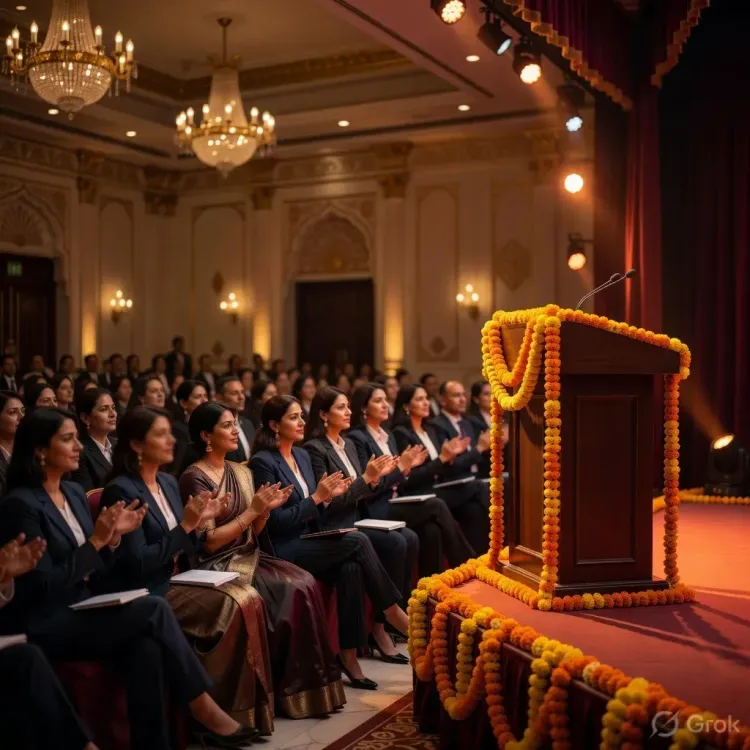
When Union Food Processing Minister Chirag Paswan took the stage at New Delhi's Imperial Hotel on Monday, August 10, 2026, the message he carried was direct: a nation rises only as fast as its women do. Addressing the 'We Women Want Conclave and Shakti Awards 2026' as chief guest and keynote speaker, Paswan framed women's advancement not as a social courtesy but as the engine of Viksit Bharat — a developed India.
Speaking in Hindi, the minister declared: 'When a woman moves forward, it is not just she who advances — her entire family, society, and nation move forward with her.' He described the confidence and capability with which India's daughters and women are entering every field as 'the greatest strength of the changing picture of new India and our development journey.'
Shakti Awards and the women who earned them
The conclave brought together women achievers from across sectors, with the Shakti Awards recognising standout contributors. Paswan extended his congratulations to all award recipients, calling their achievements a reflection of a shifting national story. 'Giving women opportunity and respect,' he said, 'is to strengthen the resolve of a developed India.'
Nari Shakti as political and policy currency
The minister's appearance sits within a well-established pattern: senior NDA leaders have consistently anchored women-empowerment rhetoric to the government's broader development narrative since 2014. That narrative got its most concrete legislative expression in 2023, when Parliament passed the Women's Reservation Bill — the Nari Shakti Vandan Adhiniyam — reserving one-third of Lok Sabha and state assembly seats for women, a landmark shift in representative politics.
For Paswan's own ministry, the intersection is tangible. The Ministry of Food Processing Industries has pushed skill-development and MSME-participation schemes specifically targeting women entrepreneurs, making the food processing sector one of the more concrete arenas where the Nari Shakti theme translates into economic opportunity rather than just oratory.
Paswan himself leads the Lok Janshakti Party (Ram Vilas), a Bihar-rooted NDA constituent with deep social-justice roots inherited from his father, the late Ram Vilas Paswan. His presence at a high-profile women's conclave in the capital signals the party's intent to widen its appeal beyond its traditional base.
The real test, as always, will be whether the platform's energy converts into measurable ground-level change — in boardrooms, in panchayats, and in the food-processing clusters where women already form a quiet majority of the workforce.
Point of View
It serves a dual purpose: reinforcing his ministry's women-entrepreneur agenda in food processing and broadening the LJP (Ram Vilas) brand beyond its Bihar-centric identity. The 2023 Women's Reservation Bill gives NDA leaders a concrete legislative anchor for such speeches, elevating them above routine ceremonial optics. Whether ministry-level schemes actually close the gender gap in food processing MSMEs will be the metric that separates symbolism from substance.
NationPress
10 Aug 2026
Frequently Asked Questions
What is the We Women Want Conclave and Shakti Awards 2026?
It is a women's leadership conclave and awards ceremony held in New Delhi on August 10, 2026, at the Imperial Hotel, recognising high-achieving women across sectors.
What did Chirag Paswan say at the conclave?
Paswan said that when a woman moves forward, her entire family, society, and nation advance with her, and called women's progress the greatest strength of new India's development journey.
What is the Nari Shakti Vandan Adhiniyam?
It is the Women's Reservation Bill passed by Parliament in 2023, which reserves one-third of seats in the Lok Sabha and state legislative assemblies for women.
How does Chirag Paswan's ministry support women entrepreneurs?
The Ministry of Food Processing Industries runs schemes focused on skill development and MSME participation specifically targeting women entrepreneurs in the food processing sector.
Which party does Chirag Paswan lead?
Chirag Paswan is the national president of the Lok Janshakti Party (Ram Vilas), a Bihar-based NDA constituent party he leads following a 2020 split in the original LJP.