Chirag Paswan links Mann Ki Baat millet push to food processing goals
Synopsis
Union Food Processing Minister Chirag Paswan has linked PM Modi's 139th Mann Ki Baat spotlight on millet revival in Meghalaya and Nagaland to his ministry's 'Prasnskaran Se Samridhi Tak' mission — turning Shri Anna into packaged products, raising farmer incomes, and creating rural youth employment.
Key Takeaways
PM Modi's 139th Mann Ki Baat highlighted youth-led millet revival in Meghalaya and Nagaland , which Minister Paswan claimed as a result of his ministry's ground-level work.
The ministry's 'Prasnskaran Se Samridhi Tak' (Processing to Prosperity) mission aims to convert Shri Anna (millets) into cookies, cakes, muffins, and nutritious packaged foods.
The value-chain approach targets three simultaneous outcomes: new markets for local produce, better prices for farmers, and entrepreneurship and jobs for rural youth.
The PMFME scheme (2020) provides the credit and technical backbone for micro millet processing units in states like Meghalaya and Nagaland.
India led the UN International Year of Millets 2023 , building the global brand equity that domestic processing clusters are now being designed to monetise.
Next signals to watch: millet processing clusters or common facility centres in the Northeast and state-level MoUs with the Food Processing Ministry.
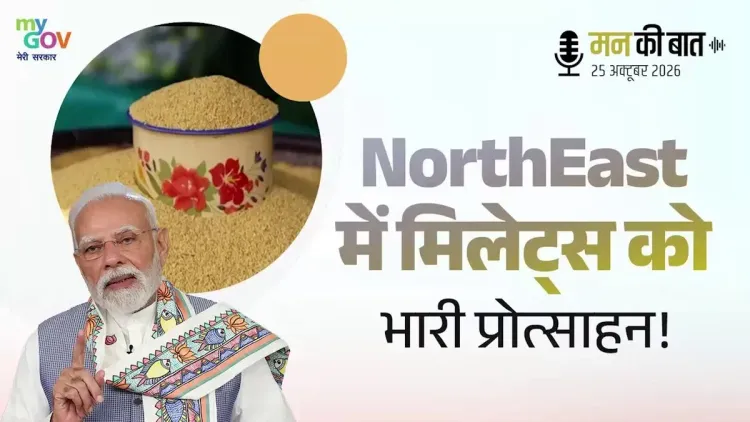
A traditional grain is quietly becoming a growth engine — and Union Food Processing Minister Chirag Paswan wants every Indian to see the connection. On Sunday, 25 October 2026, Paswan pointed to Prime Minister Narendra Modi's 139th Mann Ki Baat episode as proof that his ministry's ground-level work is catching the nation's highest attention, citing examples from Meghalaya and Nagaland where young entrepreneurs are transforming the ancient crop Shri Anna (millets) into modern market-ready products.
From Modi's microphone to the Northeast's farms
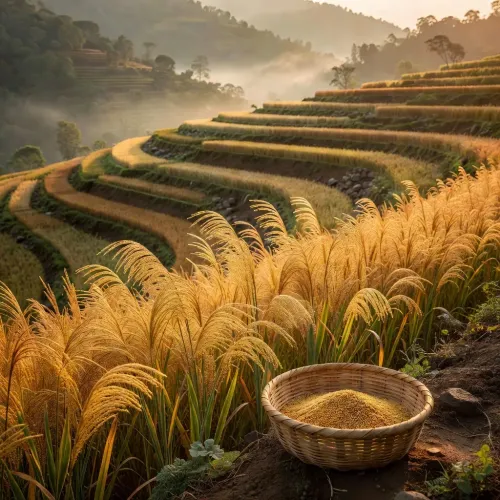
In the 139th Mann Ki Baat broadcast, PM Modi highlighted how youth in Meghalaya and Nagaland are reviving traditional millet cultivation — a crop that the government has branded Shri Anna to signal nutritional and cultural prestige. Paswan framed this as direct validation of his ministry's fieldwork, writing that it represents 'a meaningful effort of the Ministry of Food Processing Industries that is putting the Prime Minister's visionary thinking into practice on the ground.'
The Northeast has long grown millets as a staple, but formal value chains connecting those farms to urban consumers were largely absent. That gap is precisely what the ministry's current push targets — and the Mann Ki Baat spotlight dramatically widens public awareness of what is already happening in these states.
Cookies, cakes and muffins: the value-chain logic
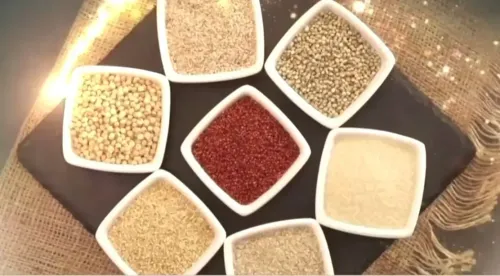
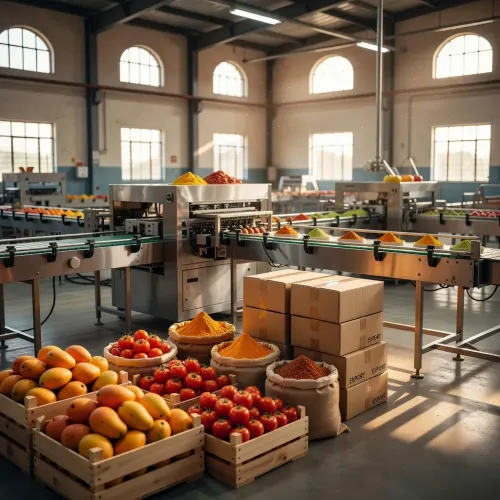
Paswan's post spells out the full supply chain the ministry is trying to build: converting Shri Anna into cookies, cakes, muffins, and nutritional foods, then applying modern food processing and 'attractive food packaging' to take those products into new markets. Each step, he argued, delivers a distinct dividend — new markets for local produce, better prices for farmers, and entrepreneurship and employment opportunities for youth.
This is the operational spine of the ministry's 'Prasnskaran Se Samridhi Tak' ('From Processing to Prosperity') pledge. The logic is tight: raw millet commands a modest farm-gate price; a branded, packaged millet cookie commands multiples of that. The ministry's role is to shrink the distance — logistical, technical, and financial — between those two price points.
PMFME and the millet policy arc behind the moment
This push does not emerge from a vacuum. India proposed and led the UN International Year of Millets 2023, investing diplomatic capital to position Indian millets as a global superfood. Domestically, the Pradhan Mantri Formalisation of Micro Food Processing Enterprises (PMFME) scheme, launched in 2020, provides credit linkages and technical support to exactly the kind of micro-level millet processing units now sprouting in the Northeast. Paswan's ministry is the nodal body for that scheme's implementation.
The broader architecture connects to the Viksit Bharat and Atmanirbhar Bharat frameworks, both of which emphasise value addition over raw-commodity exports. Processing traditional crops rather than shipping them unbranded is a concrete, measurable expression of that principle — and the Northeast, with its millet heritage and young demographic, is shaping up as a showcase corridor for the model.
What comes next for Shri Anna processing clusters
The immediate question is whether the Mann Ki Baat mention accelerates the rollout of dedicated millet processing clusters or common facility centres in Meghalaya and Nagaland — the infrastructure that converts individual entrepreneurs into a scalable industry. State-level MoUs with the ministry for packaging and branding support would be the clearest next signal to watch.
India's millet story has moved from a domestic nutrition agenda to a global branding exercise. What Chirag Paswan is now arguing — loudly, and with Prime Ministerial amplification — is that the next chapter must be written in rural food-processing units, not just on diplomatic stages.
Point of View
Reinforcing vertical coherence within the NDA government's millet story. The 'Prasnskaran Se Samridhi Tak' framing is an attempt to give food processing its own brand identity within the larger Viksit Bharat vocabulary, distinguishing the ministry from a passive implementing body to an active economic transformer. The Northeast focus is politically significant: it positions the BJP-led alliance's governance footprint in states where coalition and regional dynamics remain delicate. If processing clusters actually materialise in Meghalaya and Nagaland, the ministry can claim a tangible legacy beyond awareness campaigns — a credibility test that will define the policy arc through the next election cycle.
NationPress
25 Oct 2026
Frequently Asked Questions
What is Shri Anna and why is the government promoting it?
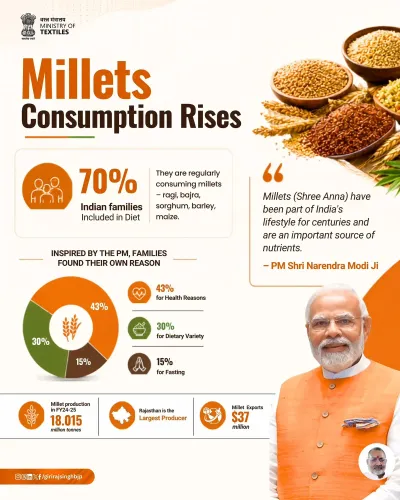
Shri Anna is the government's official brand name for traditional millets — crops like jowar, bajra, ragi and small millets valued for their nutrition and climate resilience. India promoted millets globally by leading the UN International Year of Millets in 2023, and domestically the Ministry of Food Processing Industries is supporting their conversion into packaged foods to raise farmer incomes and create rural employment.
What did PM Modi say about millets in Mann Ki Baat episode 139?
According to Minister Chirag Paswan's post, PM Modi highlighted examples from Meghalaya and Nagaland where young people are reviving traditional millet cultivation and turning it into a livelihood opportunity. The specific content of the episode cited in the post could not be independently verified at time of publication.
What is the PMFME scheme and how does it help millet processing?
The Pradhan Mantri Formalisation of Micro Food Processing Enterprises (PMFME) scheme, launched in 2020, provides credit linkages, technical support, and capacity building to small-scale food processing units. It covers millet processing among other food categories, helping rural entrepreneurs formalise and scale up production.
What is 'Prasnskaran Se Samridhi Tak' that Chirag Paswan mentioned?
'Prasnskaran Se Samridhi Tak' translates to 'From Processing to Prosperity' and is the Food Processing Ministry's overarching mission tagline. It encapsulates the goal of converting raw agricultural produce — including millets — into value-added, packaged products to boost farmer incomes and strengthen the rural economy.
Which Northeast states are leading the millet revival highlighted in Mann Ki Baat?
Meghalaya and Nagaland were specifically cited by PM Modi in the 139th Mann Ki Baat episode and highlighted by Minister Chirag Paswan as examples of youth-led millet revival. Both states have a traditional history of millet cultivation, making them natural candidates for the ministry's food processing push in the region.