Shivraj Singh Chouhan Visits Punjab Farm, Pushes Integrated Farming
Synopsis
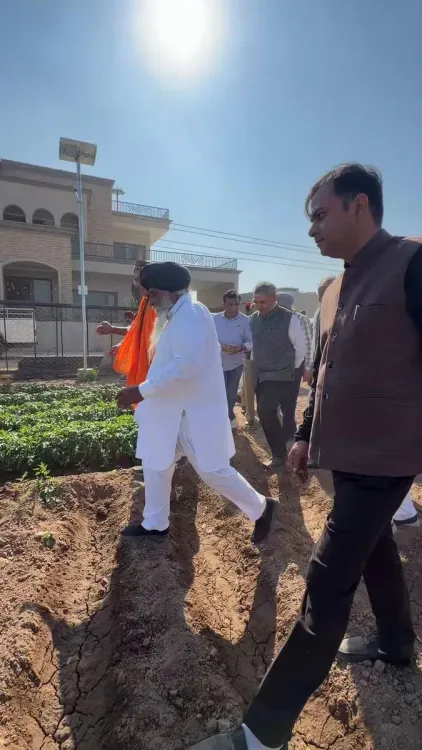
Union Agriculture Minister Shivraj Singh Chouhan visited progressive farmer Bhupendra Singh's integrated farm in Badarpur, Punjab, showcasing multi-crop cultivation as a model for breaking the paddy-wheat monoculture and boosting farmer incomes under the #KhetBachaoAbhiyan campaign.
Key Takeaways
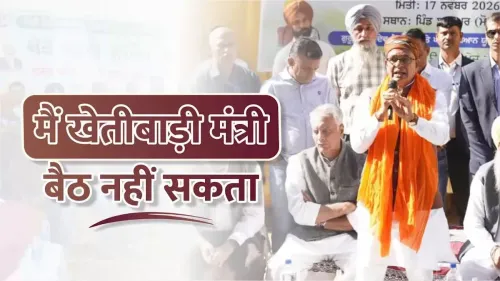
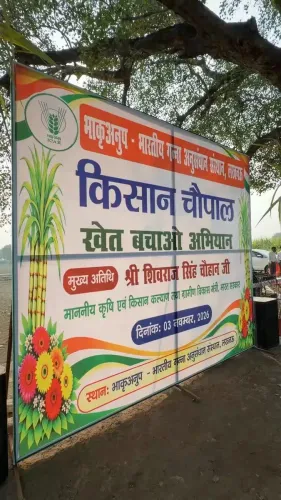
Union Agriculture Minister Shivraj Singh Chouhan visited village Badarpur, Punjab on 17 November 2026 to see an integrated farming model in action.
Progressive farmer Bhupendra Singh 's field grows vegetables, fruit, potato, peas, chickpea and other crops simultaneously on a single plot.
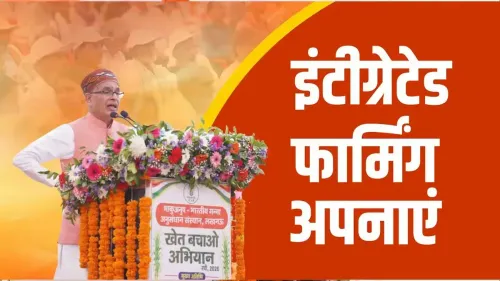
Chouhan urged farmers to move beyond the paddy-wheat cycle and adopt integrated, diversified farming to improve incomes and soil health.
Punjab's paddy-wheat monoculture has caused severe groundwater depletion and contributes to seasonal stubble-burning pollution.
The National Mission for Sustainable Agriculture (2014) and state-level diversification pilots since 2013 have laid the policy groundwork for this push.
The #KhetBachaoAbhiyan hashtag signals a campaign framing for the minister's outreach on crop diversification.
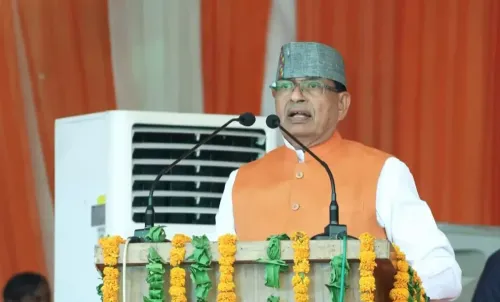
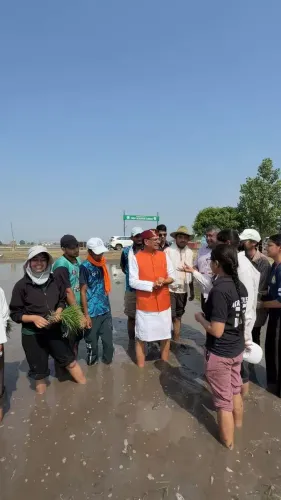
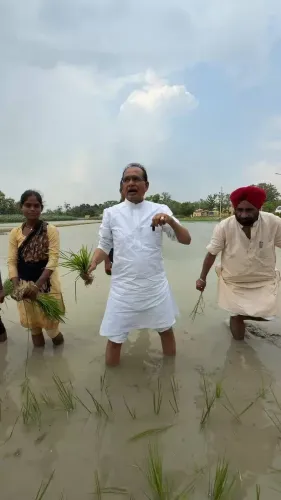
A single field in village Badarpur, Punjab, growing vegetables, fruit, potato, peas, chickpea and more — side by side — is exactly the kind of image Union Agriculture Minister Shivraj Singh Chouhan wants every Indian farmer to picture when they look at their own land. On Tuesday, 17 November 2026, Chouhan visited the farm of progressive farmer Bhupendra Singh and shared what he called an inspiring model of integrated farming under the hashtag #KhetBachaoAbhiyan.
Posting on X, Chouhan wrote: 'Punjab ke gram Badarpur mein pragatishsheel kisan Shri Bhupendra Singh ji ke khet par integrated farming ka ek prerak model dekha' — 'In village Badarpur, Punjab, I saw an inspiring model of integrated farming at the field of progressive farmer Shri Bhupendra Singh.' He urged all farmers to 'adopt diversity alongside paddy-wheat, move towards integrated farming, and raise their income while taking care of the health of the soil.'
Why Punjab's Paddy-Wheat Treadmill Is the Problem
The appeal is not incidental. Punjab is ground zero for one of Indian agriculture's most stubborn crises: a paddy-wheat monoculture that has drained aquifers, degraded soil and left farmers exposed to volatile prices for just two crops. Groundwater levels in several districts have fallen dramatically over decades of flood-irrigation for paddy. And every October, the stubble left after harvest burns across the state, blanketing northern India in smog.
Successive governments have tried to crack this cycle. Central and state crop-diversification pilots have run in Punjab since 2013, and the National Mission for Sustainable Agriculture (2014) explicitly promoted integrated farming systems — combining crops, horticulture and livestock — to build resilience and raise incomes. The results have been mixed, largely because the minimum support price architecture still rewards paddy and wheat most reliably.
Bhupendra Singh's Field as a Living Proof-of-Concept
That is what makes the Badarpur visit pointed. By spotlighting Bhupendra Singh — a farmer already growing a diverse basket on a single plot — Chouhan is deploying the most persuasive argument in extension work: a neighbour's success, not a government circular. The field's mix of vegetables, fruit and pulses represents multiple income streams and, critically, crops that return nutrients to the soil rather than stripping it.
Integrated farming models typically combine food crops with horticulture, perhaps a small dairy unit, even fisheries or beekeeping — reducing input costs, spreading risk and generating income across more months of the year than a two-crop calendar allows.
The #KhetBachaoAbhiyan Signal
The hashtag #KhetBachaoAbhiyan — 'Save the Farm Campaign' — frames the outreach as a movement rather than a ministerial directive. Whether it translates into fresh budgetary incentives for diversification or state-level procurement support for non-paddy crops is the question Punjab farmers will be watching closely in the next agricultural season.
For now, Chouhan's message is simple and agricultural: the land that feeds India also needs to be fed. Keeping it locked in a two-crop loop is a slow drain on its future.
Point of View
Which remains the core tension in any diversification push. The #KhetBachaoAbhiyan framing signals an attempt to build a grassroots narrative around soil health and income stability, though without matching procurement guarantees for alternative crops, the campaign risks remaining aspirational. The choice of Punjab — the symbolic heartland of the Green Revolution and its long-term ecological costs — is deliberate and politically loaded.
NationPress
17 Nov 2026
Frequently Asked Questions
What is #KhetBachaoAbhiyan?
#KhetBachaoAbhiyan, meaning 'Save the Farm Campaign,' is a campaign promoted by Union Agriculture Minister Shivraj Singh Chouhan urging farmers to adopt crop diversification and integrated farming to protect soil health and raise incomes.
What is integrated farming and how does it help farmers?
Integrated farming combines multiple crops — food grains, vegetables, horticulture, and sometimes livestock or fisheries — on the same farm. It spreads income risk across crops and seasons, reduces input costs, and helps restore soil nutrients depleted by monoculture.
Why is Punjab's paddy-wheat cycle a problem?
Punjab's intensive paddy-wheat rotation has severely depleted groundwater levels, degraded soil health, and produces large quantities of stubble that farmers burn each year, causing major air pollution across northern India.
What government schemes support crop diversification in India?
The National Mission for Sustainable Agriculture, launched in 2014, promotes integrated farming systems. Central and state governments have also run crop diversification pilot programmes in Punjab since 2013 to reduce dependence on water-intensive paddy.
Who is Bhupendra Singh, the farmer Shivraj Chouhan visited?
Bhupendra Singh is a progressive farmer from village Badarpur in Punjab whose field grows a diverse mix of vegetables, fruit, potato, peas and chickpea, serving as a demonstration model for integrated farming.