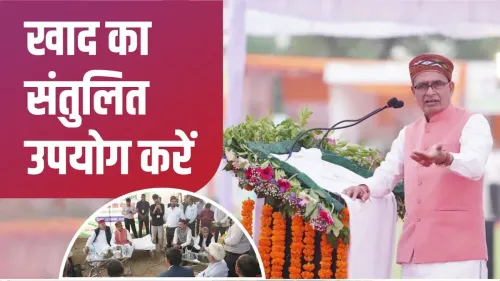
Shivraj Singh Chouhan Warns Against Excess Urea, DAP Use
Synopsis
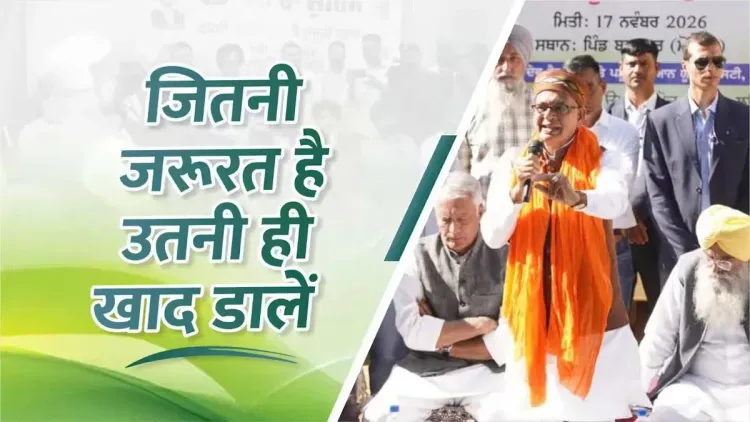
Union Agriculture Minister Shivraj Singh Chouhan warned on November 17 that excessive use of urea, DAP and chemical fertilizers is harming soil health, urging farmers to apply only as much as their land actually needs.
Key Takeaways
Union Agriculture Minister Shivraj Singh Chouhan posted a public advisory on November 17, 2026 warning against over-application of urea, DAP and chemical fertilizers.
The minister stated directly that excess chemical fertilizer use is 'damaging the health of Mother Earth' and called on farmers to apply only what is needed.
India's Soil Health Card scheme , launched in 2015 , provides plot-specific nutrient maps and dosage guidance to help farmers calibrate input use.
The neem-coated urea policy , expanded nationally from 2015 , was designed to curb excessive urea application and improve nitrogen efficiency.
Decades of heavy subsidised fertilizer use have caused widespread soil nutrient imbalance and declining organic carbon levels in Indian farmland.
The advisory is part of a long-standing government emphasis on balanced fertilizer application, bio-fertilisers and natural farming promotion.
India's farmlands are quietly bleeding out — not from drought or flood, but from too much of a good thing. Union Agriculture Minister Shivraj Singh Chouhan on Tuesday, November 17, 2026, issued a sharp public advisory urging farmers across the country to stop over-applying chemical fertilizers, warning that the soil itself is paying the price.
Posting on X in Hindi, the minister was direct: 'एक सीमा से ज्यादा यूरिया, डीएपी और केमिकल फर्टिलाइजर के उपयोग से धरती माता का स्वास्थ्य भी खराब हो रहा है।' — 'Using urea, DAP and chemical fertilizers beyond a certain limit is damaging the health of Mother Earth. So apply only as much fertilizer as is needed.'
What excess fertilizer actually does to the soil
The concern is well-grounded in agronomy. Decades of heavy urea and di-ammonium phosphate (DAP) application have caused widespread soil nutrient imbalance across Indian agricultural states, sharply declining organic carbon levels and degrading the microbial life that makes land productive in the first place. When the soil's biology collapses, yields plateau — and farmers pour in even more inputs chasing harvests that never quite arrive. It is a treadmill built from subsidies.
India's fertilizer subsidy architecture has historically made urea artificially cheap, incentivising over-use. Successive policy interventions — from the nationwide roll-out of neem-coated urea from 2015 onward to curb excessive nitrogen application, to the launch of the Soil Health Card scheme in 2015 that provides farmers with plot-specific nutrient maps and dosage recommendations — have tried to break this cycle. The minister's post signals that the message still needs reinforcing at the farm level.
A minister with a long record on this message
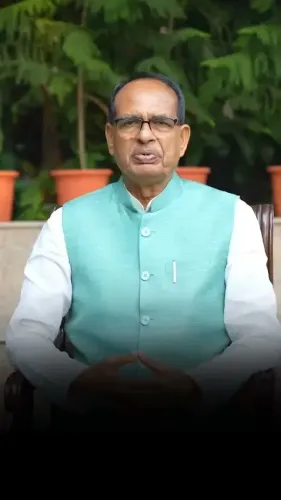
Chouhan is not speaking from a distance. As a four-term Chief Minister of Madhya Pradesh, he oversaw agricultural outreach programmes for over a decade and has consistently championed soil conservation and organic farming clusters since taking charge of the Union Agriculture Ministry. The post, accompanied by a video, appears aimed directly at the farming community — a grassroots communication rather than a policy announcement.
The broader government push has also included promotion of bio-fertilisers and natural farming models as alternatives to purely chemical input regimes, with periodic reviews of the fertilizer subsidy structure designed to nudge consumption patterns toward balanced application.
The number farmers should remember
The core ask is deceptively simple: match input to actual soil need. The Soil Health Card, if used as intended, tells a farmer exactly what their plot requires — no more, no less. The gap between that recommendation and what actually gets applied is where soil degradation begins. Chouhan's post is, in essence, a call to close that gap before the cost becomes irreversible.
Healthy soil is not a renewable resource on any human timescale. Once the organic carbon is gone and the microbial ecosystem is disrupted, restoring it takes years of deliberate effort. The minister knows this. Now he is asking India's farmers to act like they know it too.
Point of View
Subsidy reforms and soil-testing infrastructure to wean farmers off heavy chemical input dependence — with limited success on the ground. The fact that a senior minister is still delivering this message via social media in 2026 suggests the structural incentive problem — cheap, heavily subsidised urea — has not been fully resolved. The post also signals the Agriculture Ministry's intent to keep natural and balanced-farming messaging prominent heading into the next agricultural season, potentially prefiguring new guidelines or expanded natural farming programme announcements.
NationPress
17 Nov 2026
Frequently Asked Questions
Why is excess urea and DAP harmful for soil?
Over-application of urea and DAP disrupts soil nutrient balance, lowers organic carbon content and degrades the microbial ecosystem that sustains long-term productivity, ultimately reducing crop yields despite higher input costs.
What is the Soil Health Card scheme in India?
The Soil Health Card scheme, launched in 2015 , issues cards to farmers with plot-specific soil nutrient data and fertilizer dosage recommendations, helping them apply only what their land actually requires.
What did Agriculture Minister Shivraj Singh Chouhan say about fertilizers?
On November 17, 2026 , Chouhan posted that using urea, DAP and chemical fertilizers beyond a certain limit is harming soil health, and urged farmers to apply only as much fertilizer as is genuinely needed.
What is neem-coated urea and why was it introduced?
Neem-coated urea, expanded nationwide from 2015 , slows nitrogen release from urea granules, reducing over-application and improving fertilizer efficiency — a direct policy response to India's chronic urea overuse problem.
How can farmers know the right amount of fertilizer to use?
The government's Soil Health Card provides farm-specific nutrient analysis and recommended dosages. Farmers are encouraged to get their soil tested and follow card guidelines rather than applying blanket quantities of chemical inputs.