CISF sector-specific reorganisation from Nov 1: Ports, power, coal get dedicated units
Synopsis
India's CISF is scrapping its decades-old territorial command model from 1 November 2026, replacing it with industry-aligned sectors for ports, power, coal, steel, and petroleum. The move, backed by Home Ministry approval, also gives the force formal RSO status under the international port security code — marking a significant operational upgrade for one of the world's largest industrial security forces.
Key Takeaways
The CISF will implement a sector-specific command structure effective 1 November 2026 , replacing territorial jurisdiction-based oversight.
New dedicated sectors include Coal (Ranchi) , Steel (Bhilai) , Petroleum and Natural Gas (Guwahati) , Power-I (New Delhi) , and Power-II (Kolkata) .
The Western Sector (Mumbai) and South Sector (Chennai) become the West Coast Port Sector and East Coast Port Sector , respectively.
CISF has been designated a Recognised Security Organisation (RSO) under the ISPS Code for port facility security.
Existing Airport , DAE , and DoS Sectors in New Delhi and Bengaluru remain unchanged.
The restructuring was approved by the Union Home Ministry following detailed deliberations at Force Headquarters.
The Central Industrial Security Force (CISF) will overhaul its administrative and operational command structure effective 1 November 2026, transitioning from territorial jurisdiction to sector-specific supervision across key industries including ports, power, coal, steel, and petroleum. The restructuring, approved by the Union Home Ministry, comes as the force's mandate expands well beyond conventional industrial security into specialised domains.
Key Structural Changes
The reorganisation replaces geography-based oversight with industry-aligned commands. The National Capital Region Sector has been reconstituted as the Government Buildings, Museums and Monuments and Mass Rapid Transit System (GBMM & MRTS) Sector, based in New Delhi.
The North Sector (New Delhi) and North Eastern Sector-II (Kolkata) have been restructured into Power-I and Power-II Sectors, respectively. The Eastern Sector (Ranchi) transitions into the dedicated Coal Sector, while the Central Sector (Bhilai) becomes the Steel Sector. The North Eastern Sector (Guwahati) is now the Petroleum and Natural Gas Sector.
Maritime Security Gets a Dedicated Command
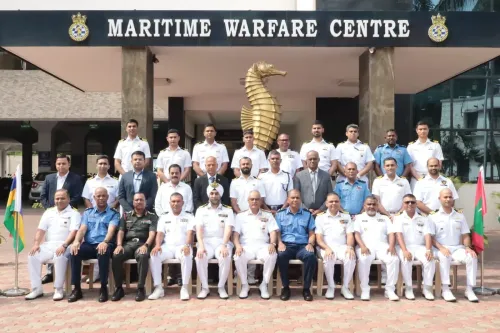
In a significant move to strengthen India's maritime trade infrastructure, the Western Sector (Mumbai) and the South Sector (Chennai) have been redesignated as the West Coast Port Sector and the East Coast Port Sector, respectively. The CISF has also been designated a Recognised Security Organisation (RSO) for port facilities under the International Ship and Port Facility Security (ISPS) Code, underlining its growing role in safeguarding critical maritime trade nodes.
The realignment of port-sector supervision is expected to build specialised port-security expertise and deepen coordination with port authorities and allied stakeholders, according to an official statement.
What Remains Unchanged
The existing Department of Atomic Energy (DAE) and Department of Space (DoS) Sector in Bengaluru, along with Airport Sector-I in New Delhi and Airport Sector-II in Bengaluru, will continue under their current functional arrangements without any change.
Why This Reorganisation Matters
Under the earlier framework, supervision was primarily organised around territorial boundaries — an approach that the CISF has been moving away from for over 25 years in selected sectors such as aviation and strategic establishments under the DAE and DoS. The experience from those sectors demonstrated the advantages of specialised supervision: focused training, sector-specific Standard Operating Procedures (SOPs), better deployment of specialised personnel, and tighter coordination with concerned organisations.
Notably, the shift was preceded by detailed deliberations involving supervisory formations, branches at Force Headquarters, and senior officers before receiving Home Ministry clearance. The CISF's expanding mandate — covering airports, ports, metro systems, nuclear installations, and space facilities — makes a unified territorial command increasingly inadequate for the force's operational complexity.
With the restructuring set to take effect from 1 November 2026, the CISF enters a new phase of functional specialisation that could serve as a model for other central armed police forces managing multi-domain mandates.
Point of View
Nuclear plants, space facilities, metro networks, and ports simultaneously. The real question is whether the reorganisation is accompanied by equivalent upgrades in sector-specific training pipelines and inter-agency coordination protocols, or whether it remains a structural relabelling exercise. The RSO designation under the ISPS Code is the most consequential element here: it formally embeds CISF into the international maritime security architecture at a time when Indian ports are central to trade diversification. That deserves more attention than the administrative renaming that dominates the announcement.
NationPress
18 Oct 2026
Frequently Asked Questions
What is the CISF reorganisation announced for November 2026?
The Central Industrial Security Force (CISF) will transition from a territory-based command structure to a sector-specific one from 1 November 2026, creating dedicated units for industries such as ports, power, coal, steel, and petroleum. The restructuring was approved by the Union Home Ministry and covers most of the force's operational sectors.
Which new sectors are being created under the CISF reorganisation?
The reorganisation creates several new functional sectors: Coal (Ranchi), Steel (Bhilai), Petroleum and Natural Gas (Guwahati), Power-I (New Delhi), Power-II (Kolkata), West Coast Port Sector (Mumbai), East Coast Port Sector (Chennai), and the GBMM & MRTS Sector (New Delhi). Airport, DAE, and DoS sectors remain unchanged.
Why is CISF moving away from territorial command to sector-specific supervision?
The CISF had operated functional commands in select areas — including aviation and nuclear/space establishments — for over 25 years, which demonstrated clear advantages in focused training, tailored SOPs, and closer coordination with industry partners. Building on that experience, the force has extended the model across all remaining territorial sectors.
What is the significance of CISF's RSO designation under the ISPS Code?
The CISF has been formally designated a Recognised Security Organisation (RSO) for port facilities under the International Ship and Port Facility Security (ISPS) Code, an international maritime security framework. This embeds the force within global port-security protocols and is expected to strengthen coordination with port authorities and international maritime bodies.
Which CISF sectors will not be affected by the November 2026 reorganisation?
The Department of Atomic Energy (DAE) and Department of Space (DoS) Sector in Bengaluru, Airport Sector-I in New Delhi, and Airport Sector-II in Bengaluru will continue to operate under their existing functional arrangements without any change.