CAA citizenship process will be completed soon, says Amit Shah in Kolkata
Synopsis
Home Minister Amit Shah used the platform of Shyama Prasad Mukherjee's 125th birth anniversary to make a pointed promise: CAA citizenship for religious refugees — including those in West Bengal — is coming soon. With the state now under BJP rule and implementing rules already notified, the pledge signals the Centre is ready to move from legislation to delivery.
Key Takeaways
Home Minister Amit Shah announced in Kolkata that the CAA citizenship process for religious refugees will be completed soon.
Shah invoked the Liaquat-Nehru Pact of 8 April 1950 , arguing it failed to protect minority Hindus in Pakistan and East Pakistan.
West Bengal CM Suvendu Adhikari was praised by Shah for action against corruption in his first two months in office.
Shah indicated the Uniform Civil Code (UCC) is on track for implementation in West Bengal.
PM Narendra Modi addressed the convention virtually, crediting Mukherjee with building a political movement against Congress dominance.
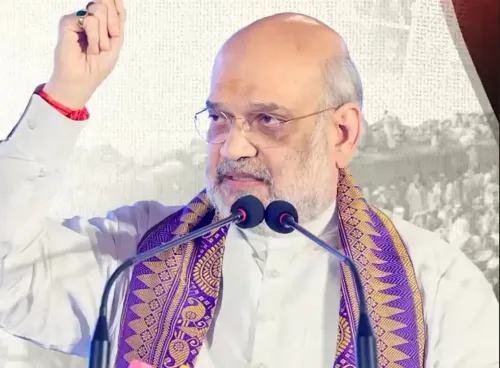
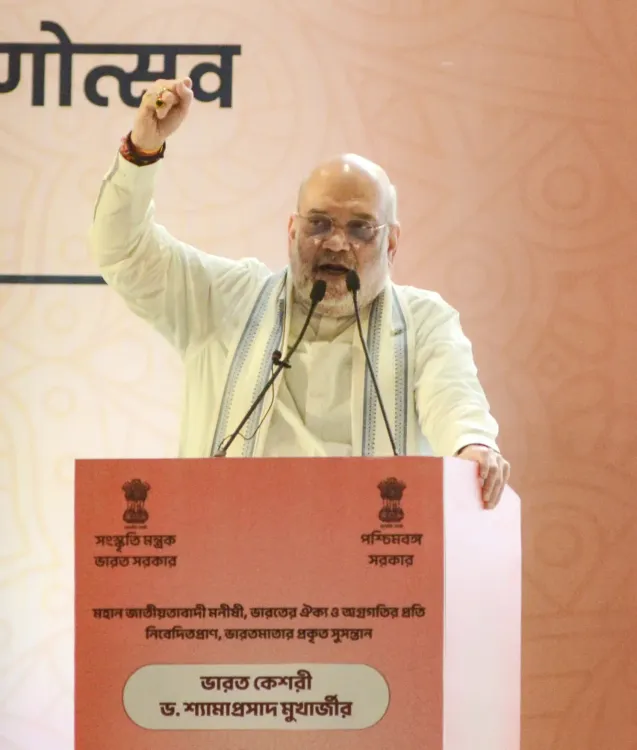
Union Home Minister Amit Shah on Monday declared that the process of granting citizenship under the Citizenship Amendment Act (CAA) to genuine refugees fleeing religious persecution in neighbouring countries — including those arriving in West Bengal — will be concluded shortly. Shah made the announcement at a convention in Kolkata marking the 125th birth anniversary of Bharatiya Jana Sangh founder Shyama Prasad Mukherjee.
Shah's CAA Assurance
Addressing the gathering, Shah assured that citizenship would be extended to all eligible refugees facing religious oppression in neighbouring countries. He framed the CAA as a fulfilment of the legacy of Shyama Prasad Mukherjee, noting that it was the party founded by Mukherjee — now the Bharatiya Janata Party (BJP) — that had promulgated the law to protect Hindu and other minority refugees. He added that those involved in corruption should be prepared to face accountability.
Historical Context: The Liaquat-Nehru Pact
Shah invoked the Liaquat-Nehru Pact, signed on 8 April 1950 between Prime Minister Jawaharlal Nehru and Pakistani Prime Minister Liaquat Ali Khan, as a point of historical contrast. According to Shah, while the pact was intended to guarantee minority rights in both India and Pakistan, it failed in practice to protect minority Hindus in Pakistan and East Pakistan — which later became Bangladesh. He argued that Mukherjee had studied the pact and identified this asymmetry, recognising that the safety of Hindus in those territories was not adequately addressed even as the agreement prioritised the interests of Muslims in India.
West Bengal Government and UCC
Shah also praised West Bengal Chief Minister Suvendu Adhikari for his performance in the first two months as the state's administrative head. According to Shah, Adhikari had delivered on his pre-election promise of firm action against anti-social and corrupt elements in the state. Shah further indicated that the pre-election commitment to implement the Uniform Civil Code (UCC) in West Bengal is progressing toward fulfilment.
PM Modi's Virtual Address
Prime Minister Narendra Modi also addressed the convention virtually, describing Shyama Prasad Mukherjee's life as the seed of a mass movement and a philosophical current in Indian public life. Modi noted that when the Bharatiya Jana Sangh was established, the Indian National Congress (Congress) was overwhelmingly dominant nationally, leaving little space for alternative ideologies. He said Mukherjee built the organisation by confronting that adversity head-on.
What Comes Next
Shah did not specify a timeline for completing the CAA citizenship process, but his assurance signals that the Centre intends to accelerate pending applications. The CAA, enacted in December 2019, has faced sustained legal and political challenges; its implementing rules were notified only in March 2024. With West Bengal now under BJP leadership, the state is expected to play a central role in the rollout. All eyes will be on how quickly the administrative machinery processes applications and whether a formal deadline is announced.
Point of View
Now under BJP governance, is the most symbolically charged state for this rollout, given its large refugee population and the Mukherjee legacy Shah was invoking. Whether the Centre pairs this promise with measurable milestones — or whether it remains a political signal ahead of local consolidation — will define whether this announcement ages well or joins the list of deferred commitments.
NationPress
6 Jul 2026
Frequently Asked Questions
What did Amit Shah say about CAA citizenship in Kolkata?
Home Minister Amit Shah announced at a convention in Kolkata on Monday that the process of granting citizenship under the Citizenship Amendment Act to religious refugees from neighbouring countries, including those in West Bengal, will be completed soon. He gave no specific deadline but assured all eligible refugees would receive citizenship.
What is the Citizenship Amendment Act (CAA)?
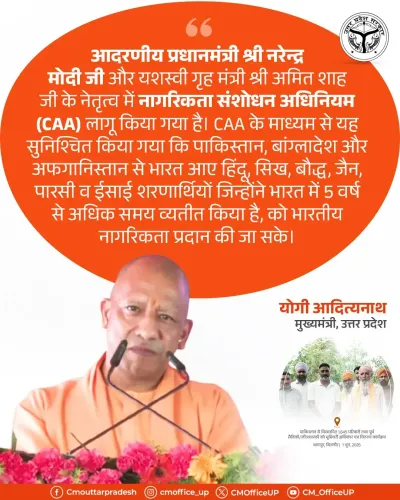
The CAA, enacted in December 2019, provides a pathway to Indian citizenship for Hindu, Sikh, Buddhist, Jain, Parsi, and Christian refugees who fled religious persecution in Pakistan, Bangladesh, and Afghanistan before 31 December 2014. Its implementing rules were notified in March 2024.
Why did Shah reference the Liaquat-Nehru Pact?
Shah cited the Liaquat-Nehru Pact of 8 April 1950 to argue that an earlier bilateral agreement between India and Pakistan failed to protect minority Hindus in Pakistan and East Pakistan, framing the CAA as the historical corrective that Shyama Prasad Mukherjee had envisioned.
What did Shah say about West Bengal's Uniform Civil Code?
Shah indicated that the pre-election promise to implement the Uniform Civil Code in West Bengal is progressing toward fulfilment, though no timeline or legislative roadmap was specified at the event.
Who else spoke at the Shyama Prasad Mukherjee anniversary event?
Prime Minister Narendra Modi addressed the convention virtually, describing Mukherjee's life as the foundation of a mass and philosophical movement in India, and noting that Mukherjee built the Bharatiya Jana Sangh against overwhelming Congress dominance of that era.