CJI Surya Kant: 'Parasites' remark targeted fake degree holders, not youth
Synopsis
The Chief Justice of India stepped in with a rare written clarification after his courtroom remarks about 'parasites' and 'youngsters like cockroaches' went viral — insisting he was targeting fake-degree fraudsters in the legal profession, not the country's youth. The episode lays bare how unguarded judicial observations, stripped of courtroom context, can ignite a national controversy within hours.
Key Takeaways
CJI Surya Kant issued a formal clarification on Saturday, 17 May 2025 , saying his remarks were misquoted by sections of the media.
His 'parasites' and 'youngsters like cockroaches' comments were directed at individuals who entered professions — including law, media, and social media — using fake and bogus degrees .
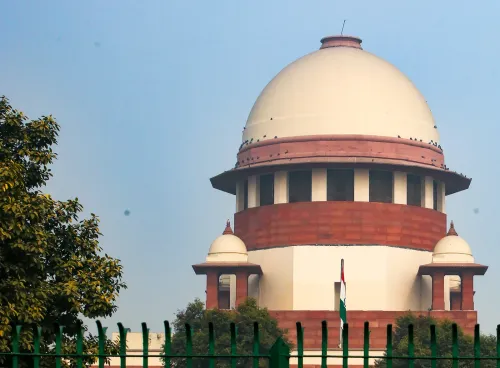
The original remarks were made as oral observations during a Supreme Court hearing on Friday, 16 May 2025 , in a petition challenging the Delhi High Court's refusal to grant senior designation to an advocate.
The bench also comprised Justice Joymalya Bagchi .
CJI Kant called suggestions that he criticised India's youth 'totally baseless' and described young Indians as 'the pillars of a developed India'.
Chief Justice of India Surya Kant on Saturday, 17 May 2025, issued a formal clarification stating that his oral observations — including references to 'parasites' and 'youngsters like cockroaches' — had been misquoted by sections of the media, and that his criticism was directed solely at individuals who had infiltrated professions using fake and bogus degrees, not at India's youth at large.
What the CJI Actually Said
In a written statement, CJI Kant said he was 'pained' to read reports portraying him as having criticised the nation's young people. 'I am pained to read how a section of the media has misquoted my oral observations made during the hearing of a frivolous case yesterday,' he said. The CJI was unequivocal that his target was a specific category of individuals — those who had entered the legal profession, media, social media, and other fields by misrepresenting their qualifications. 'What I had specifically criticised were those who have entered professions like the Bar with the aid of fake and bogus degrees. Similar persons have sneaked into the media, social media, and other noble professions as well, and hence, they are like parasites,' the statement read.
CJI Defends India's Youth
Rejecting the controversy as 'totally baseless', CJI Kant went on to express his admiration for Indian youth. 'Not only am I proud of our present and future human resource, but every youth of India inspires me,' he said. He described the country's young people as 'the pillars of a developed India' and added: 'It is not an exaggeration to say that Indian youth have great regard and respect for me, and I too see them as the pillars of a developed India.'
Context: The Hearing That Sparked the Row
The controversy originated on Friday, 16 May 2025, during a hearing before a Supreme Court bench headed by CJI Kant and comprising Justice Joymalya Bagchi. The bench was hearing a petition filed by an advocate who had challenged the Delhi High Court's refusal to consider him for senior designation. During oral observations — which carry no legal weight as formal judgments — the bench remarked that 'parasites' in society were seeking to attack institutions, and cautioned members of the Bar against associating with such elements. The CJI had also remarked that some 'youngsters like cockroaches', who failed to establish themselves professionally, ended up becoming 'media, social media, RTI activists, or other activists' and began attacking institutions. These remarks, made in the course of an oral exchange rather than as part of any written order, were widely reported and triggered sharp reactions across social media and civil society.
Why the Clarification Matters
Oral observations by senior judges during hearings are not binding precedent, but they carry significant public weight — particularly when made by the Chief Justice of India. The speed and scale of the backlash highlighted how judicial remarks, stripped of courtroom context, can acquire a different meaning in public discourse. Notably, the episode also underscores the tension between judicial candour in open court and the amplification effect of social media. The CJI's decision to issue a written clarification — rather than let the record speak — signals the seriousness with which the Supreme Court is treating the reputational dimension of the episode.
What Happens Next
No formal action has been reported in connection with the petition that prompted the original remarks. The clarification is likely to be placed on record, though it remains to be seen whether the controversy subsides or prompts further debate about judicial communication norms. Legal observers say the episode may renew calls for clearer guidelines on how oral observations by benches are reported and contextualised by media.
Point of View
But they carry the full weight of the office, and that weight can be weaponised out of context. What is less discussed is the underlying petition: a senior designation dispute that, by the CJI's own description, was a 'frivolous case' — raising the question of why it warranted such charged courtroom language in the first place. The episode is a reminder that the judiciary's greatest reputational risks now come not from its written orders but from its unscripted moments.
NationPress
7 Oct 2026
Frequently Asked Questions
What did CJI Surya Kant say about 'parasites' and 'cockroaches'?
CJI Surya Kant made oral observations during a Supreme Court hearing on 16 May 2025 referring to 'parasites' attacking institutions and 'youngsters like cockroaches' who failed professionally and turned to activism. He later clarified these remarks were aimed at individuals using fake degrees to enter professions — not at India's youth generally.
Why did CJI Surya Kant issue a clarification?
The CJI said he was 'pained' by media reports that portrayed him as having criticised the nation's youth. He issued a written statement calling such interpretations 'totally baseless' and reaffirming his admiration for Indian young people.
What was the case in which the remarks were made?
The remarks arose during the hearing of a petition filed by an advocate challenging the Delhi High Court's refusal to consider him for senior designation. The bench was headed by CJI Kant and also comprised Justice Joymalya Bagchi.
Are oral observations by Supreme Court judges legally binding?
No. Oral observations made by judges during hearings are not part of any formal order or judgment and carry no legal precedential value. However, they carry significant public weight, particularly when made by the Chief Justice of India.
Who did the CJI say his criticism was actually aimed at?
CJI Kant said his criticism was directed specifically at individuals who had entered professions such as law, media, and social media using fake and bogus degrees, describing them as 'parasites' in those fields.