CJI Surya Kant inaugurates Tower of Justice in Gurugram, lays foundation for Nuh complexes
Synopsis
The Tower of Justice in Gurugram — eight years in the making — was inaugurated by the same judge who laid its foundation stone in 2017, now as Chief Justice of India. With over 1.25 lakh cases pending in Gurugram courts and a proposed International Arbitration Centre on the horizon, the complex is more than a building: it is a stress test for whether infrastructure alone can keep pace with one of India's fastest-growing legal caseloads.
Key Takeaways
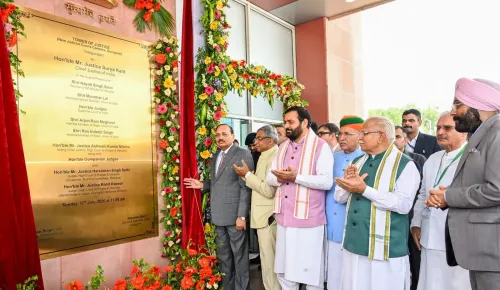
Chief Justice of India Justice Surya Kant inaugurated the Tower of Justice judicial complex in Gurugram on 12 July 2025 .
Justice Kant had personally laid the foundation stone of the same complex in January 2017 as a Judge of the Punjab and Haryana High Court.
Gurugram courts currently handle over 24,000 civil disputes , nearly 1,000 commercial disputes , and more than 1 lakh cases under the Negotiable Instruments Act .
The complex features video conferencing facilities and a judicial record room; a proposed International Arbitration Centre will operate under High Court supervision.
Foundation stones for judicial complexes in Tawadu and Punhana in Nuh district were also laid virtually during the same event.
Chief Minister Nayab Singh Saini and Union Ministers Manohar Lal Khattar and Arjun Ram Meghwal were among the dignitaries present.
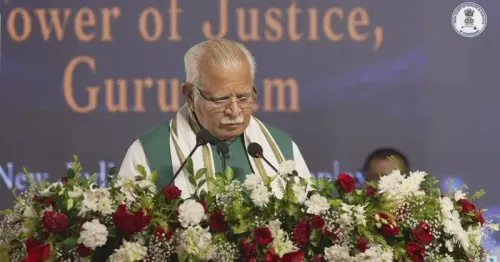
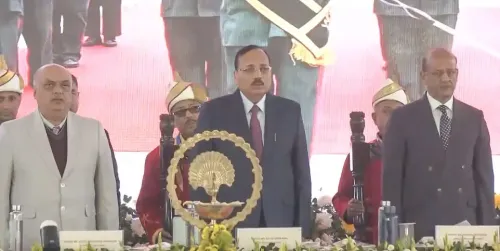
Chief Justice of India Justice Surya Kant on Sunday, 13 July 2025, inaugurated the Tower of Justice judicial complex in Gurugram, calling the construction of modern court infrastructure a clear reflection of the Haryana government's commitment to strengthening the justice delivery system. The inauguration marks the culmination of a project whose foundation stone was laid in January 2017 — by Justice Kant himself, then serving as a Judge of the Punjab and Haryana High Court.
Key Developments at the Inauguration
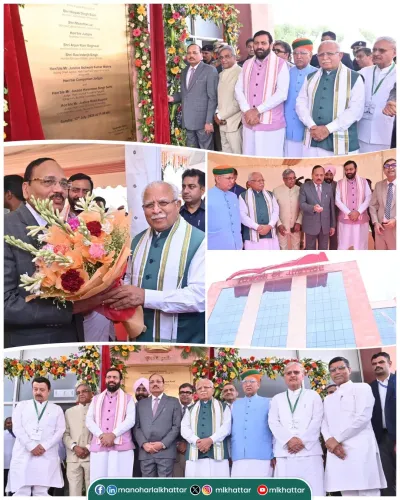
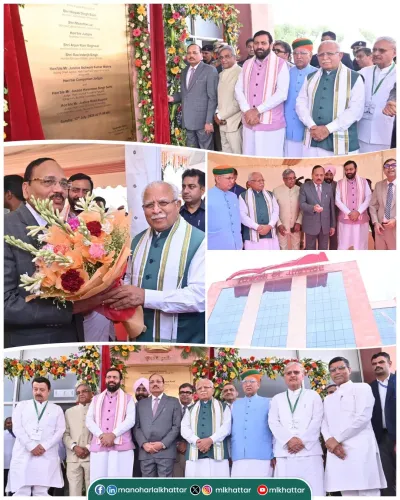
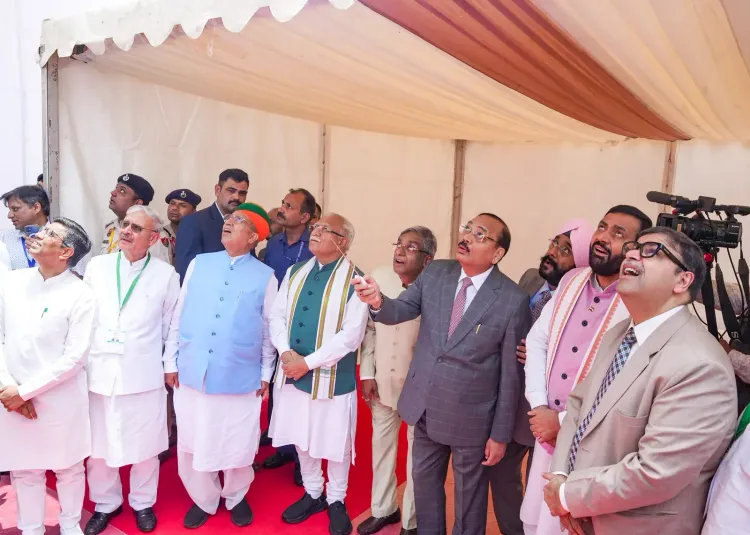
The ceremony was attended by Haryana Chief Minister Nayab Singh Saini, Union Minister for Housing and Urban Affairs Manohar Lal Khattar, Union Minister of State for Law and Justice Arjun Ram Meghwal, Union Minister of State Rao Inderjit Singh, Justice Vikram Nath, Acting Chief Justice of the Punjab and Haryana High Court Justice Ashwani Kumar Mishra, Justice Harsimran Singh Sethi, Building Committee Chairman Justice Deepak Sibal, and Justice Harpreet Singh Brar.
During the same event, Justice Kant also virtually laid the foundation stones of judicial complexes in Tawadu and Punhana in Nuh district. Workers who contributed to the construction of the Tower of Justice were felicitated with mementoes by the dignitaries present.
Why Gurugram Needs This Complex
Gurugram, once predominantly an agrarian district, has transformed into a major hub of industry, technology, and global investment. More than half of the Fortune 500 companies maintain regional offices in the city, alongside over 1,500 Indian companies and start-ups. This economic expansion has directly fuelled a surge in legal disputes.
At present, Gurugram courts are managing more than 24,000 civil disputes, nearly 1,000 commercial disputes, and over 1 lakh cases under the Negotiable Instruments Act. The Tower of Justice, according to Justice Kant, is designed to directly address this mounting caseload by enabling more courts, faster disposal of pending matters, and enhanced capacity in commercial and NI Act litigation.
What the Complex Offers
The Tower of Justice has been equipped with video conferencing facilities and a well-organised judicial record room to meet modern judicial requirements. A significant proposed addition is an International Arbitration Centre, which will function under the supervision of the Punjab and Haryana High Court — a facility that could position Gurugram as a regional hub for commercial dispute resolution.
Justice Kant emphasised that the true measure of a court lies not in architectural grandeur but in how effectively it closes the distance between citizens and justice. 'The priority should always be to establish a judicial system that is both efficient and impartial,' he said, adding that speed in justice must never come at the cost of constitutional values.
Government's Position
Chief Minister Saini described the Tower of Justice as 'a powerful symbol of the dignity of the Constitution, the prestige of the judiciary and the unwavering faith of citizens in the justice delivery system.' He stressed that alongside economic progress, a speedy, accessible, and transparent justice system is equally essential for building a Viksit Bharat.
Saini noted that the coincidence of the complex's inauguration being performed by the very judge who had laid its foundation stone eight years earlier lent the occasion a historic dimension. With judicial infrastructure across Haryana being significantly upgraded through proactive state support, the Tower of Justice is expected to set a benchmark for court facility development in the region.
Point of View
But the real test lies in throughput, not architecture. With over 1.25 lakh cases already pending, additional courtrooms will ease pressure only if accompanied by faster appointment of judges — a chronic bottleneck that no building can fix. The proposed International Arbitration Centre is the more consequential announcement: if operationalised effectively, it could redirect commercial disputes away from already-burdened civil courts. But 'proposed' is doing a lot of work in that sentence, and India has a mixed record of converting arbitration ambition into institutional reality.
NationPress
11 Oct 2026
Frequently Asked Questions
What is the Tower of Justice in Gurugram?
The Tower of Justice is a state-of-the-art judicial complex inaugurated in Gurugram on 12 July 2025 by Chief Justice of India Justice Surya Kant. It is designed to expand court capacity in a city that currently has over 1.25 lakh pending cases, and includes video conferencing facilities, a judicial record room, and a proposed International Arbitration Centre.
Who inaugurated the Tower of Justice and who was present?
Chief Justice of India Justice Surya Kant inaugurated the complex, joined by Haryana Chief Minister Nayab Singh Saini, Union Minister Manohar Lal Khattar, Union Ministers of State Arjun Ram Meghwal and Rao Inderjit Singh, and several High Court judges including Acting Chief Justice Ashwani Kumar Mishra.
Why does Gurugram need a new judicial complex?
Gurugram's rapid economic growth — home to over half of Fortune 500 regional offices and more than 1,500 Indian start-ups — has driven a sharp rise in property, technology, contract, and employment disputes. Courts in the city are currently handling over 24,000 civil disputes, nearly 1,000 commercial disputes, and more than 1 lakh Negotiable Instruments Act cases.
What is the proposed International Arbitration Centre at the Tower of Justice?
An International Arbitration Centre is proposed as part of the Tower of Justice complex and will function under the supervision of the Punjab and Haryana High Court. It is intended to provide a structured forum for resolving commercial disputes, potentially reducing the burden on regular civil courts.
What other judicial infrastructure was announced at the event?
During the same ceremony, Chief Justice Surya Kant virtually laid the foundation stones of new judicial complexes in Tawadu and Punhana in Nuh district, Haryana, as part of the state's broader push to strengthen judicial infrastructure across districts.