Rajasthan school row: CJP-villager clash puts dilapidated Bagru school in spotlight
Synopsis
A crumbling primary school in Rajasthan's Bagru became the flashpoint for a CJP-villager clash that has since pulled in the state Education Minister. With ₹12 lakh reportedly sanctioned and students still studying in a private home, the political battle risks burying the one question that actually matters: when does construction start?
Key Takeaways
A CJP inspection team clashed with villagers at the Government Primary School, Rampura-Kanwarpura , Bagru Assembly constituency , Rajasthan , on Friday .
The school has reportedly been in a dilapidated state for one to two years ; students are currently taught from a private residence .
Approximately ₹12 lakh has reportedly been sanctioned for a new school building, but construction has not begun.
CJP accused Education Minister Madan Dilawar of instigating the confrontation and issued a 48-hour ultimatum demanding action.
Minister Dilawar backed the villagers, stating that anyone wishing to enter a school must obtain permission from its head.
Villager Chhota Devi Sharma acknowledged the school's poor condition and called for reconstruction to take priority over political disputes.
A confrontation between villagers and a team of the Cockroach Janata Party (CJP) over the crumbling condition of a government primary school in Rampura-Kanwarpura village, Bagru Assembly constituency, Rajasthan, has spiralled into a political controversy — even as the children the school serves continue to study in a private residence. The incident, which unfolded on Friday, has drawn in state Education Minister Madan Dilawar and raised pointed questions about why a school building reportedly awaiting ₹12 lakh in sanctioned funds remains unbuilt.
What Happened at the School
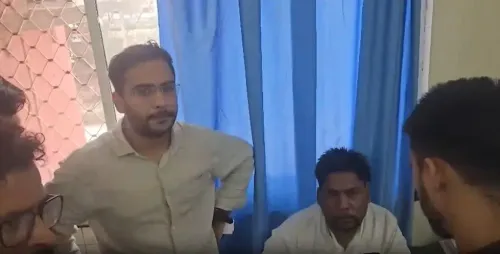
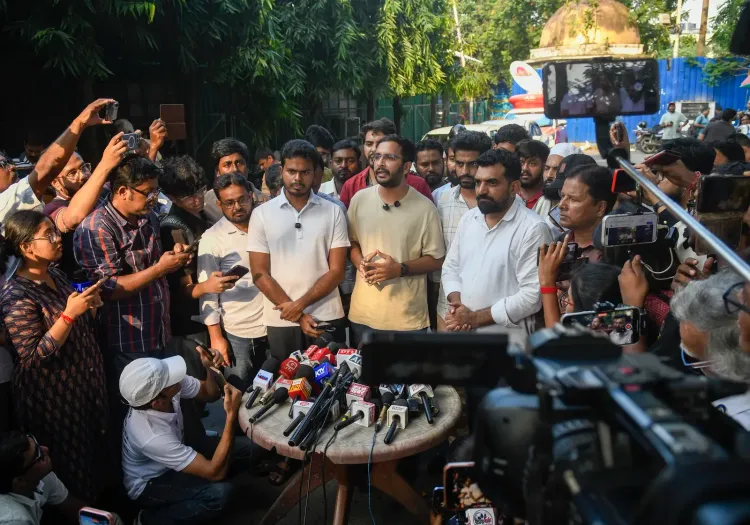
A CJP inspection team arrived at the Government Primary School, Rampura-Kanwarpura on Friday to assess its condition, reportedly acting on complaints from villagers. The visit quickly turned confrontational. CJP activists alleged they were physically obstructed and prevented from conducting their inspection. Villagers countered that they did not want political organisations converting the school into an arena of dispute, insisting the community itself was already pushing for reconstruction.
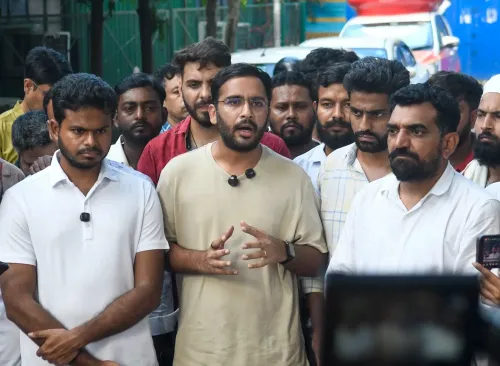
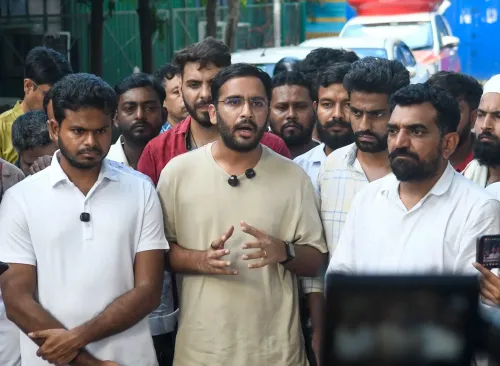
The situation escalated when protesters blocked the road using tractor-trolleys. A second confrontation followed when the CJP team returned, this time accompanied by party spokesperson Ashutosh Ranka. CJP subsequently accused Education Minister Madan Dilawar of instigating the villagers and issued a 48-hour ultimatum, demanding action against those allegedly responsible and the withdrawal of any restrictions on school inspections.
Government's Response
Minister Dilawar rejected the accusations and publicly backed the villagers' position. He stated that schools must remain secure environments and that any individual or group wishing to enter a school building should first obtain permission from its head. The government has maintained this stance as CJP threatens further protests.
The Condition of the School and Funds in Question
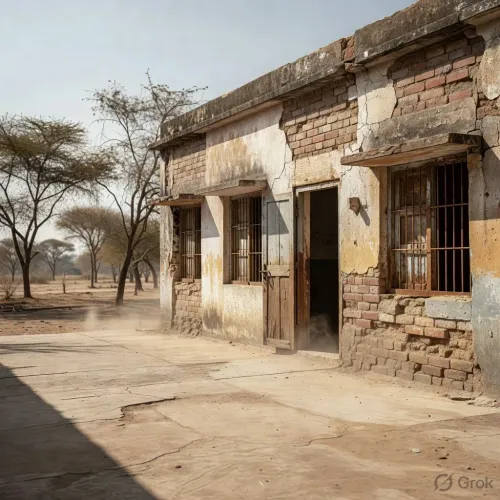
At the centre of the dispute is the Government Primary School in Rampura-Kanwarpura, which has reportedly remained in a dilapidated state for one to two years. Students are currently being taught from a private residence, and questions have been raised about the rent being paid for those premises. Villagers say approximately ₹12 lakh has already been sanctioned by the government for construction of a new school building — making the absence of any visible progress a source of frustration across political lines.
Villager Chhota Devi Sharma acknowledged the school's poor state and called for immediate improvement, even while criticising both sides for allowing the dispute to overshadow the core issue. Other residents echoed that the sanctioned funds should be directed toward construction, not political point-scoring.
Broader Stakes: Inspection Rights and School Safety
For CJP, the Rampura-Kanwarpura incident is part of a wider campaign on the state of government schools in Rajasthan. The organisation says it has been responding to villager complaints and conducting school inspections to document deficiencies. The confrontation has now broadened the original infrastructure issue into a debate over the right of outside organisations to inspect government schools and the limits of state authority over such access.
What Needs to Happen Next
Regardless of how the political dispute resolves, several practical questions remain unanswered: when will construction of the new building begin; where will students study in the interim; who will oversee quality and progress of the work; and whether the completed facility will meet basic infrastructure standards. For parents and students of Rampura-Kanwarpura, these questions carry far more weight than the political claims on either side. The controversy has at least confirmed, across all parties involved, that the school needs urgent attention. Whether the political noise generates a real solution — or fades without one — will determine the outcome for the children caught in the middle.
Point of View
The accountability question is straightforward — yet it has been drowned out by a confrontation over inspection rights. The government's insistence on prior permission for school visits raises a genuine governance question: if official channels were delivering results, would outside inspections even be necessary? The children studying in a rented building are the clearest evidence that the system had already failed before the cameras arrived.
NationPress
22 Aug 2026
Frequently Asked Questions
What is the Rampura-Kanwarpura school controversy in Rajasthan?
It is a dispute that erupted after a CJP inspection team visited the Government Primary School in Rampura-Kanwarpura village, Bagru Assembly constituency, Rajasthan, and clashed with villagers. The school has reportedly been in a dilapidated state for one to two years, with students currently studying in a private residence while approximately ₹12 lakh in government funds for a new building remains unspent.
What is the CJP and why did it visit the school?
The Cockroach Janata Party (CJP) says it has been conducting inspections of government schools across Rajasthan in response to villager complaints about poor infrastructure. The Rampura-Kanwarpura visit was part of this broader campaign to document and highlight deficiencies in state school buildings.
What did Education Minister Madan Dilawar say about the incident?
Minister Madan Dilawar rejected CJP's accusation that he instigated the confrontation and backed the villagers' position. He stated that schools must remain secure and that anyone wishing to enter a school should first obtain permission from its head teacher.
Has the government sanctioned money to rebuild the school?
According to villagers, approximately ₹12 lakh has already been sanctioned by the government for construction of a new school building. However, construction has not yet begun, and students continue to be taught from a private residence in the interim.
What has CJP demanded following the confrontation?
CJP issued a 48-hour ultimatum demanding action against those allegedly involved in obstructing and assaulting its team, as well as the withdrawal of any restrictions on school inspections. The party has warned of further protests if its demands are not met.