CM Assam Office Highlights Budget 2026 Focus on Growth
Synopsis
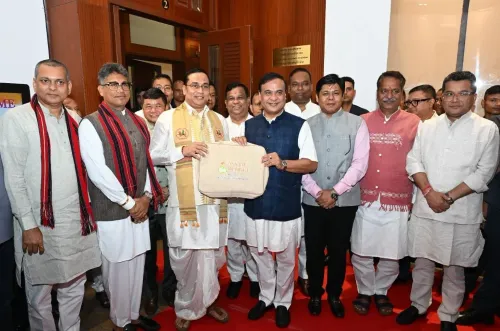
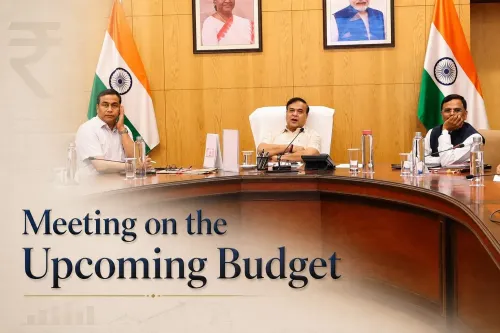
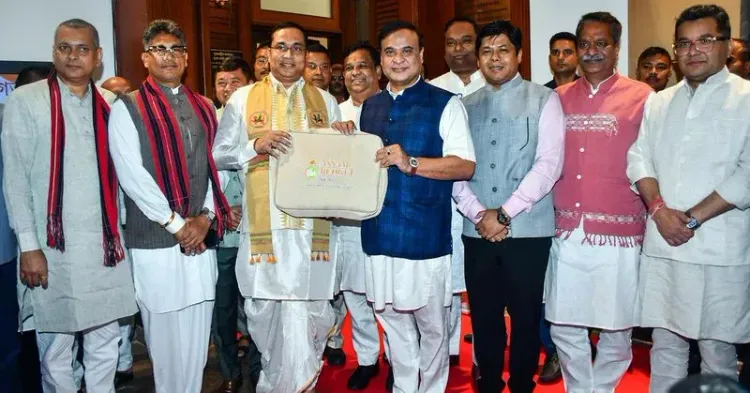
The Chief Minister's Office of Assam announced on 11 July 2026 that the Assam Budget for FY 2026-27 prioritises infrastructure, welfare, agriculture, healthcare, education and employment, with a focus on inclusive growth and improved public service delivery statewide.
Key Takeaways
The Chief Minister's Office of Assam shared details of the Assam Budget 2026 on 11 July 2026 .
The budget covers six broad priority areas: infrastructure, welfare, agriculture, healthcare, education and employment .
The stated goal is to accelerate inclusive growth and improve public service delivery across Assam .
The budget pertains to Financial Year 2026-27 and was tabled in the Assam Legislative Assembly .
Farmers, students, healthcare workers and job seekers are among the primary stakeholder groups addressed by the budget's priorities.
Rollout of allocations and any mid-year supplementary demands in the assembly will be key milestones to watch during FY 2026-27 .
The Chief Minister's Office of Assam shared on Saturday, 11 July 2026 that the Assam Budget 2026 lays strong emphasis on infrastructure, welfare, agriculture, healthcare, education and employment, with a stated focus on accelerating inclusive growth and improving public service delivery across the state.
Context
The post by the Chief Minister's Office of Assam draws attention to the tabling of the state budget for Financial Year 2026-27 in the Assam Legislative Assembly. The budget is described as anchored in six broad pillars — infrastructure, welfare, agriculture, healthcare, education and employment — signalling a multi-sector approach to state expenditure. The announcement reflects the government's intent to communicate fiscal priorities directly through official social media channels.
Policy Backdrop
Assam, a northeastern state bordering Bhutan, Bangladesh and Myanmar, has an economy historically driven by agriculture, tea cultivation and the oil sector. Under Chief Minister Himanta Biswa Sarma, who has led the state government since May 2021, the Government of Assam has consistently presented annual budgets that balance capital expenditure on infrastructure with revenue spending on welfare and human development. This pattern aligns with broader Indian state-level fiscal strategies that emerged in the post-pandemic period, prioritising both physical connectivity and social sector investment.
The emphasis on 'inclusive growth' and 'public service delivery' echoes a recurring theme in Assam's budgetary discourse, where reducing regional disparities — particularly between urban centres and remote district and block levels — has been a stated administrative goal. Previous budget cycles have similarly highlighted agriculture and welfare as twin levers for rural economic uplift in the state.
Stakeholders and Impact
The budget's stated priorities touch directly on the lives of Assam's farmers, students, healthcare workers and job seekers — four constituencies that together represent a significant share of the state's working population. An emphasis on agriculture signals continued support for the rural economy, which remains the livelihood backbone for a large proportion of households in the state. Focus on education and employment points to efforts to address youth unemployment, a persistent challenge across northeastern India.
Healthcare and infrastructure allocations, if implemented as outlined, are expected to benefit communities in underserved districts where access to hospitals and all-weather roads has historically been limited. Strengthening public service delivery at the district and block level is seen as a key administrative mechanism to ensure that budgetary outlays translate into measurable outcomes on the ground.
What's Next
Attention will now turn to the rollout of allocations during FY 2026-27 and the pace at which individual departments operationalise the budget's stated priorities. The Assam Legislative Assembly may also take up supplementary demands or mid-year reviews that refine the initial allocations. Whether the government's emphasis on inclusive growth and service delivery translates into tangible improvements in key human development indicators will be the defining measure of this budget's success.
Point of View
Sustaining this messaging through the implementation phase will be as important as the announcement itself.
NationPress
11 Jul 2026
Frequently Asked Questions
What are the main focus areas of the Assam Budget 2026?
The Assam Budget 2026 focuses on six key areas: infrastructure, welfare, agriculture, healthcare, education and employment, with an overarching goal of inclusive growth and better public service delivery.
When was the Assam Budget 2026-27 tabled?
The Assam Budget for FY 2026-27 was tabled and announced around 11 July 2026 , as highlighted by the Chief Minister's Office of Assam on social media.
Who is the Chief Minister of Assam in 2026?
Himanta Biswa Sarma is the Chief Minister of Assam, a position he has held since May 2021 .
How does the Assam Budget 2026 benefit farmers and rural communities?
The budget's emphasis on agriculture and welfare is aimed at supporting the rural economy, which is the primary livelihood source for a large share of households in Assam, with public service delivery improvements targeting district and block levels.
What happens after the Assam Budget 2026 is presented?
After the budget is tabled, the focus shifts to departmental rollout of allocations during FY 2026-27, with the Assam Legislative Assembly likely to take up supplementary demands or mid-year reviews as implementation progresses.