CM Bhagwant Mann Felicitates 882 Govt School NEET 2026 Qualifiers

Synopsis
Chief Minister Bhagwant Mann felicitated 882 students from Punjab government schools who qualified NEET 2026, the first time the state has recorded such a figure. The milestone is being cited as proof of the AAP government's public school reform agenda under the Punjab Sikhya Kranti initiative.
Key Takeaways
882 students from Punjab state government schools qualified NEET 2026 , described as a first-time historic figure for the state.
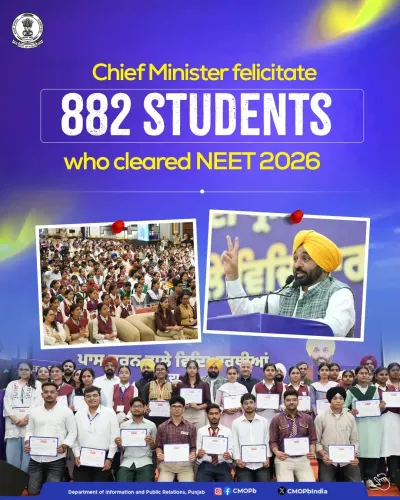
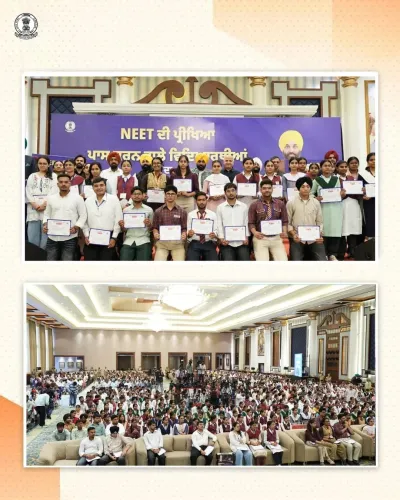
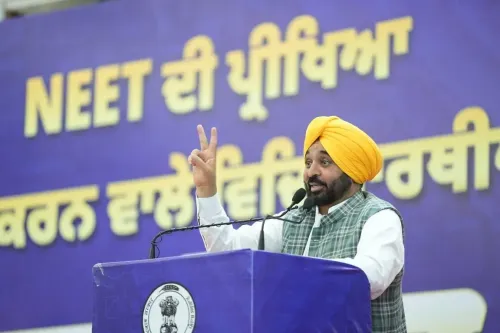
CM Bhagwant Mann personally honoured the students at a dedicated felicitation ceremony on 28 July 2026 .
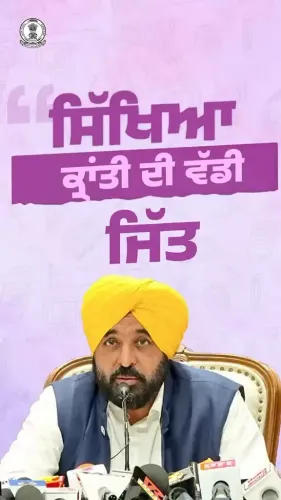
The achievement is linked to the AAP government's Punjab Sikhya Kranti initiative, which extends the party's Delhi education model to Punjab.
The government's stated goal is to ensure every child in state schools has access to resources and support for competitive examinations.
The milestone is framed as a step toward Rangla Punjab , the ruling party's vision of a prosperous and equitable Punjab.
Year-on-year NEET qualifier data from government schools will be a key metric for evaluating the state's education reforms going forward.
The Chief Minister's Office of Punjab announced on Tuesday, 28 July 2026 that Chief Minister Bhagwant Mann honoured students from state government schools who qualified NEET 2026 at a felicitation ceremony, marking what the government described as a historic milestone for public education in the state.
What Happened
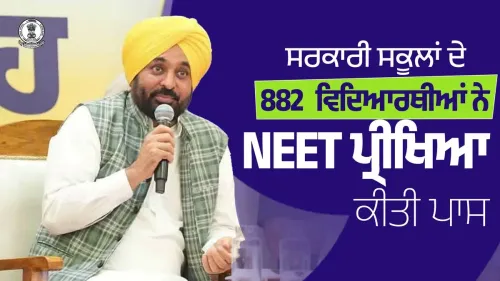
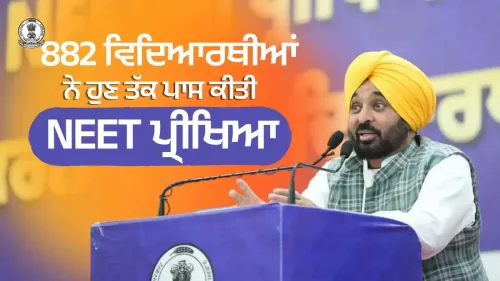
At the felicitation ceremony, CM Bhagwant Mann recognised the achievement of 882 students from Punjab government schools who cleared the National Eligibility cum Entrance Test (NEET) 2026. The Chief Minister's Office described this as the first time in the state's history that so many government school students have qualified the examination in a single year. The official post stated: 'For the first time this year, 882 students from state government schools have qualified the NEET examination, creating history.'
Context
NEET is the sole national-level entrance examination for undergraduate medical and dental admissions across India, conducted by the National Testing Agency. Historically, students from private coaching institutes and well-resourced private schools have dominated the qualified pool, making government-school representation a key equity benchmark. The figure of 882 qualifiers from state-run schools is being positioned by the Punjab Government as evidence that public schooling can compete with private alternatives when adequately supported.
Policy Backdrop
The Aam Aadmi Party (AAP), which came to power in Punjab in March 2022 under CM Bhagwant Mann, has consistently prioritised public school reform as a flagship agenda. The party drew on its earlier education model implemented in Delhi from 2015 onward — characterised by infrastructure upgrades, teacher training, and structured coaching support for competitive examinations — and extended it to Punjab after winning the assembly elections. Initiatives under the broad umbrella of Punjab Sikhya Kranti (Punjab Education Revolution) have aimed at reducing students' dependence on expensive private coaching centres. The government's stated goal, reiterated at the ceremony, is to ensure 'every child gets the opportunity, resources, and support needed to dream big and turn those dreams into reality.'
Stakeholders and Impact
The immediate beneficiaries are the 882 government school students who now hold NEET qualifications and are eligible to compete for undergraduate medical seats. More broadly, the development signals a potential shift in access to professional medical education for students from lower-income families who rely on the state school system. The Punjab Education Department and medical aspirants across the state are the primary stakeholders, while the result also carries political weight for the ruling AAP government ahead of future electoral cycles.
What's Next
Attention will now turn to how many of these 882 qualifiers secure actual MBBS or BDS seats through the subsequent counselling rounds, which is the ultimate measure of outcome. Observers will also watch for announcements in the upcoming Punjab state budget on whether funding for exam-preparation support within government schools will be expanded. Year-on-year tracking of NEET qualifier numbers from state schools will serve as the key performance indicator for the government's education reform claims.
The ceremony underscores the Punjab Government's intent to anchor its political identity in measurable public-sector education outcomes, with Rangla Punjab — a prosperous, thriving Punjab — cited as the broader vision driving the transformation.
Point of View
Offering a concrete, verifiable metric to substantiate its education reform narrative ahead of future electoral contests. The AAP has long staked its brand on replicating the 'Delhi school model' in every state it governs, and a rising NEET qualifier count from public schools directly validates that claim. However, the true test will come at the counselling stage — whether these qualifiers translate into actual medical college admissions will determine whether the reform reaches its intended depth. Nationally, this fits into a broader pattern of state governments competing to demonstrate equity gains in high-stakes entrance examinations as a measure of governance quality.
NationPress
28 Jul 2026
Frequently Asked Questions
How many Punjab government school students qualified NEET 2026?
882 students from Punjab state government schools qualified NEET 2026, according to the Chief Minister's Office of Punjab. This is described as the highest such figure in the state's history.
What is Punjab Sikhya Kranti?
Punjab Sikhya Kranti (Punjab Education Revolution) is the umbrella initiative of the AAP government in Punjab aimed at upgrading public schools, improving teaching quality, and providing structured support for competitive examinations such as NEET.
Who felicitated the NEET 2026 qualifiers from Punjab government schools?
Chief Minister Bhagwant Mann personally honoured the students at a felicitation ceremony announced on 28 July 2026 by the Chief Minister's Office of Punjab.
What is the AAP's education model and how does it apply to Punjab?
The Aam Aadmi Party developed an education reform model in Delhi from 2015, focused on infrastructure upgrades, teacher training, and exam coaching in government schools. After winning the 2022 Punjab assembly elections , it extended this approach to Punjab under CM Bhagwant Mann .
What happens next for the 882 NEET qualifiers from Punjab government schools?
The 882 qualifiers are now eligible to participate in national and state-level MBBS and BDS counselling rounds . Securing an actual medical seat through counselling will be the next critical step, and their success rate will be closely watched as a measure of the reform's real-world impact.