CM Bhagwant Mann Felicitates 882 NEET Qualifiers Under Sikhya Kranti
Synopsis
Punjab's Chief Minister Bhagwant Mann felicitated 882 NEET qualifiers on 26 July 2026, crediting the state's Sikhya Kranti scheme for the milestone. The announcement highlights the AAP government's education reform agenda and its measurable impact on competitive medical exam outcomes in the state.
Key Takeaways
882 students have cleared the NEET medical entrance examination under Punjab's Sikhya Kranti education initiative, as announced on 26 July 2026 .
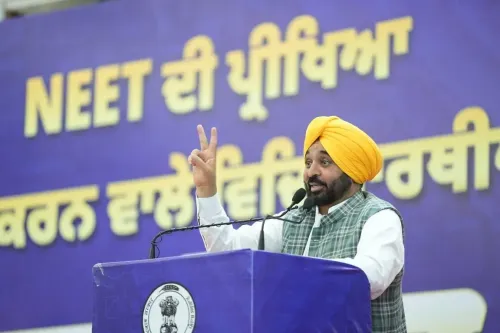
Chief Minister Bhagwant Mann presided over a formal felicitation ceremony to honour the NEET qualifiers.
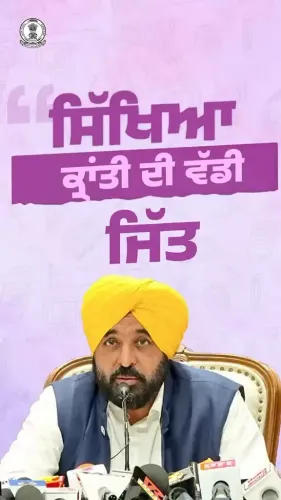
The Sikhya Kranti scheme is the AAP government's flagship education reform programme, launched after it came to power in Punjab in 2022 .
NEET is India's mandatory national entrance test for MBBS and BDS admissions, established following a Supreme Court directive in 2016 .
The announcement positions NEET pass rates as a measurable policy outcome of the Punjab government's education agenda.
Future budget allocations and scheme expansions tied to education performance metrics will be closely watched by stakeholders.
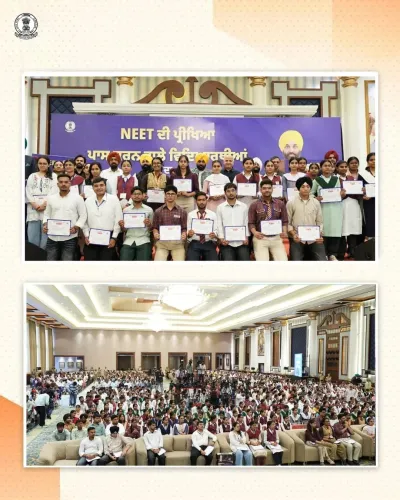
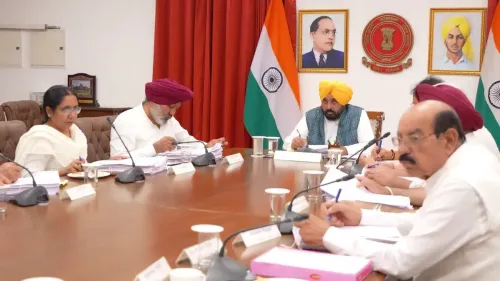
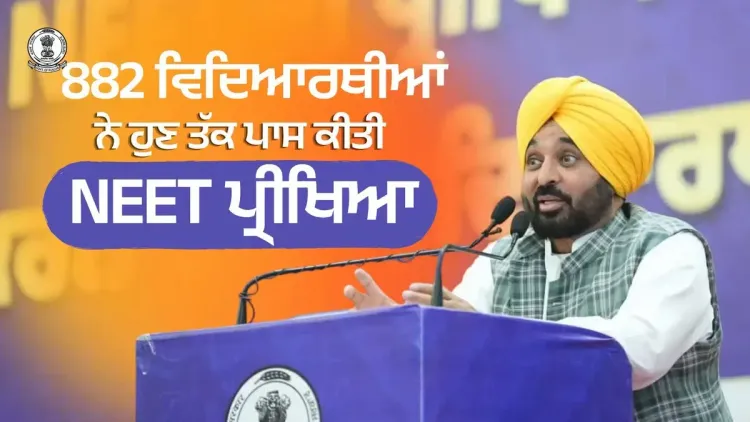
The Chief Minister's Office of Punjab announced on Sunday, 26 July 2026 that 882 students have cleared the NEET examination under the state's Sikhya Kranti initiative, as Chief Minister Bhagwant Mann presided over a felicitation ceremony honouring the successful medical aspirants.
The post, shared in Punjabi, stated that under Sikhya Kranti (Education Revolution), the milestone of 882 NEET qualifiers is 'a matter of great pride for Punjab's education sector.' The ceremony was organised to formally recognise students who cleared the national medical entrance test.
Context
The National Eligibility cum Entrance Test (NEET) is India's single nationwide entrance examination for admission to MBBS and BDS programmes, mandated following a Supreme Court directive in 2016. Clearing NEET is a prerequisite for any student seeking admission to medical colleges across the country, making the examination highly competitive and consequential for lakhs of aspirants annually.
Punjab hosted this felicitation event to publicly acknowledge students who succeeded, a practice common among state governments seeking to demonstrate the impact of their education policies on measurable outcomes like competitive exam results.
Policy Backdrop
The Aam Aadmi Party government, which came to power in Punjab in 2022, placed education reform at the centre of its governance agenda. The Sikhya Kranti scheme is the flagship initiative under this focus, aimed at improving school infrastructure, teaching quality, and students' performance in competitive examinations.
The programme draws conceptual parallels to education reforms undertaken by the AAP government in Delhi, where government school outcomes became a political and policy talking point. Punjab's version targets similar metrics, with NEET qualifications serving as a visible benchmark of progress in the government school ecosystem.
Stakeholders and Impact
The 882 NEET qualifiers recognised at the ceremony represent students who navigated one of India's most competitive examinations, many of them from government schools or state-supported coaching programmes. For Punjab's medical aspirants, state-level felicitation serves both as recognition and as an incentive for future cohorts.
Broader stakeholders include Punjab's government school teachers, parents, and district education officials, whose collective effort feeds into outcomes like NEET pass rates. The announcement also arrives amid ongoing national debates around medical seat expansion and exam standardisation, giving the state's milestone additional resonance.
What's Next
Attention will now turn to whether the Sikhya Kranti scheme receives additional budget allocations tied to this performance milestone, and how Punjab's NEET qualification numbers trend in subsequent examination cycles. The government is likely to use this figure in its broader political communication around education governance ahead of future electoral cycles.
Analysts and education observers will watch for any announced expansion of state-supported NEET coaching infrastructure or scholarship schemes for the 882 qualifiers to support their medical education journey beyond the entrance examination.
Point of View
Mirroring a playbook the party refined in Delhi. By anchoring the milestone to a named scheme, the government frames individual student success as a policy dividend rather than a demographic trend. This approach is particularly significant given that Punjab's 2022 mandate was partly built on education promises, making NEET results a direct accountability metric. Whether the cumulative figure of 882 qualifiers reflects a structural improvement in government school quality or a surge in private coaching uptake remains the critical question for independent assessment.
NationPress
26 Jul 2026
Frequently Asked Questions
How many students passed NEET under Punjab's Sikhya Kranti scheme?
According to the Chief Minister's Office of Punjab, 882 students have cleared the NEET examination under the Sikhya Kranti initiative as of the felicitation ceremony held on 26 July 2026 .
What is Sikhya Kranti in Punjab?
Sikhya Kranti , meaning 'Education Revolution,' is a flagship education reform initiative of the Aam Aadmi Party government in Punjab, launched after the party came to power in 2022 . It focuses on improving school outcomes, infrastructure, and students' performance in competitive examinations like NEET.
What is NEET and why does it matter for Punjab students?
NEET (National Eligibility cum Entrance Test) is India's single nationwide entrance examination for admission to MBBS and BDS medical programmes. Clearing NEET is mandatory for any student seeking a medical college seat in India, making it one of the most consequential exams for Punjab's medical aspirants.
What did CM Bhagwant Mann do at the NEET felicitation ceremony?
Chief Minister Bhagwant Mann presided over a state-organised felicitation ceremony on 26 July 2026 to honour students who cleared the NEET examination, with the Chief Minister's Office announcing the milestone of 882 qualifiers under the Sikhya Kranti scheme.
When did AAP come to power in Punjab and what were its education promises?
The Aam Aadmi Party formed the Punjab government in 2022 , with education listed as a priority sector. The party pledged to reform government schools and improve student outcomes in competitive examinations, commitments that the Sikhya Kranti scheme is designed to fulfil.