Sitharaman: Trade Pacts Unlock Markets for Farmers, MSMEs
Synopsis
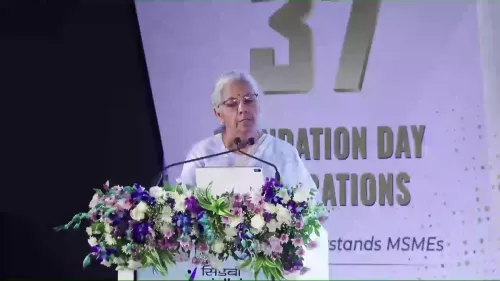
Finance Minister Nirmala Sitharaman, speaking at a business leadership event on 26 July 2026, said India's bilateral trade agreements are crafted to deliver market access for farmers, women-led MSMEs, garment and leather exporters, and AYUSH wellness products — not just large corporates.
Key Takeaways
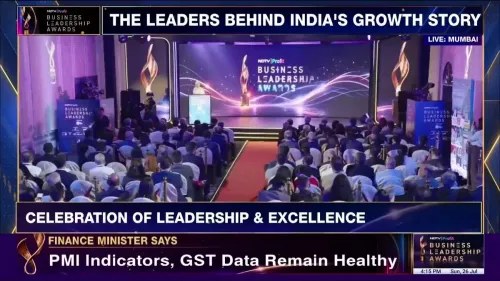
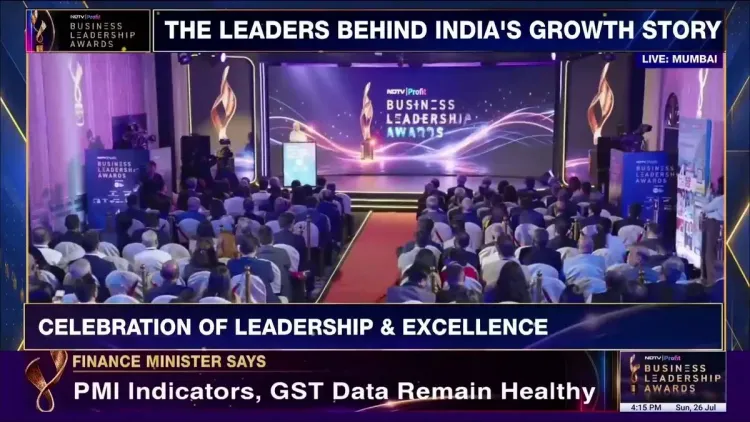
Union Finance Minister Nirmala Sitharaman spoke at the NDTV Profit Business Leadership Awards 2026 on 26 July 2026 .
She said India's trade agreements reflect trust in the capabilities of 140 crore Indians and the scale of its market.
Direct beneficiaries named include farmers, women-led MSMEs, garment exporters, leather and handicrafts artisans, and AYUSH product exporters.
India signed landmark bilateral agreements with the UAE and Australia in 2022 , covering goods, services, and investment.
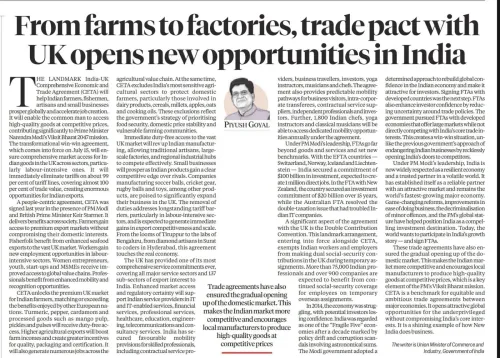
Ongoing FTA talks with the European Union and the United Kingdom are expected to include chapters on geographical indications and sustainable development.
The Production Linked Incentive (PLI) scheme launched in 2020 complements the trade pact strategy by building domestic export competitiveness.
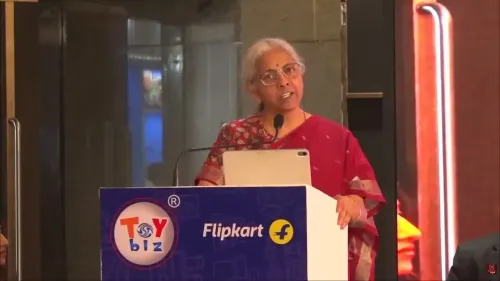
Union Finance Minister Nirmala Sitharaman on Sunday, 26 July 2026 highlighted India's expanding web of bilateral trade agreements, saying each deal reflects the scale of the country's market, its economic potential, and global trust in the capabilities of 140 crore Indians. Speaking at the NDTV Profit Business Leadership Awards 2026, she outlined how these pacts are designed to benefit farmers, small businesses, and exporters of traditional products.
Context
Sitharaman described India's trade agreements as instruments of inclusion, not just commerce. 'These Agreements are for farmers whose products now have access to the developed world,' she said, adding that they extend new competitiveness to 'entrepreneurs, women-led MSMEs, garment exporters, leather and handicrafts.' She also specifically named AYUSH — India's system of traditional wellness including Ayurveda, Yoga, Unani, Siddha, and Homeopathy — as a direct beneficiary of improved market access.
The remarks come as India's bilateral trade architecture has grown substantially. The India-UAE Comprehensive Economic Partnership Agreement, signed in 2022, opened duty-free channels for several agricultural and textile products. The India-Australia Economic Cooperation and Trade Agreement, also concluded in 2022, covers goods, services, and investment with phased tariff reductions.
Policy Backdrop
India's pivot toward tailored bilateral pacts reflects a broader strategic shift away from stalled multilateral trade negotiations. Each agreement is structured to leverage India's large domestic market while securing reciprocal access for labour-intensive and heritage sectors — areas where Indian producers hold comparative advantages but have historically faced tariff and non-tariff barriers in developed economies.
The Production Linked Incentive (PLI) scheme, launched in 2020, has run parallel to this diplomatic push, targeting competitiveness in textiles, leather, food processing, and wellness products. Together, the PLI framework and bilateral agreements form a two-track approach: one builds supply-side capacity domestically, the other secures demand-side access internationally.
Stakeholders and Impact
Sitharaman's framing deliberately centres constituencies that are central to India's employment and export profile. MSMEs — micro, small, and medium enterprises — account for a significant share of India's manufacturing employment and non-farm exports. Women-led MSMEs and artisan clusters in garments, leather, and handicrafts stand to gain from reduced tariffs and improved regulatory recognition in partner countries.
For the AYUSH sector, established by a dedicated ministry in 2014, trade agreements that include chapters on standards and certifications for traditional medicine products could unlock premium markets in Europe, the Gulf, and the Asia-Pacific. Organic product exporters similarly benefit when agreements include mutual recognition of certification standards, reducing compliance costs.
What's Next
Attention now turns to ongoing negotiations with the European Union and the United Kingdom, two agreements that have been in advanced stages of discussion. Both deals are expected to include chapters on sustainable development and geographical indications — provisions of particular relevance to Indian agricultural and handicraft exporters seeking brand protection in large consumer markets.
Parliamentary review of implementation reports for the UAE and Australia agreements is also expected in coming sessions, which will provide the first legislative scrutiny of whether the promised market-access gains are materialising on the ground for farmers and small exporters.
Point of View
Inclusive project rather than a corporate-led exercise — a politically deliberate choice ahead of continued FTA negotiations with the EU and UK. By centering farmers, women entrepreneurs, and AYUSH, the Finance Ministry is pre-empting domestic criticism that trade liberalisation benefits only large industry. The explicit mention of 'developed world' access for farmers also reinforces the narrative that India is negotiating from a position of confidence, not concession. Whether implementation reports for the UAE and Australia agreements validate these claims will be the real test of this framing.
NationPress
26 Jul 2026
Frequently Asked Questions
What did Nirmala Sitharaman say about India's trade agreements?
She said India's bilateral trade agreements are unique and reflect the scale of India's market and trust in 140 crore Indians, and that they are designed to benefit farmers, women-led MSMEs, garment exporters, leather and handicraft producers, and AYUSH wellness exporters.
Which trade agreements has India signed recently?
India signed the Comprehensive Economic Partnership Agreement with the UAE and the Economic Cooperation and Trade Agreement with Australia, both in 2022, providing duty-free or reduced-tariff access for several Indian goods including agricultural and textile products.
How do India's trade deals help farmers?
The agreements open up markets in developed countries for Indian agricultural products, reducing or eliminating import duties that previously made Indian farm exports uncompetitive in those markets.
What is AYUSH and why is it mentioned in trade talks?
AYUSH refers to India's traditional systems of medicine — Ayurveda, Yoga, Unani, Siddha, and Homeopathy — promoted by a dedicated ministry since 2014. Trade agreements that include standards recognition chapters can help AYUSH products gain regulated access to premium markets in Europe, the Gulf, and Asia-Pacific.
What trade agreements is India currently negotiating?
India is in advanced negotiations for free trade agreements with the European Union and the United Kingdom, which are expected to include chapters on geographical indications, sustainable development, and services — areas of significant interest for Indian exporters.