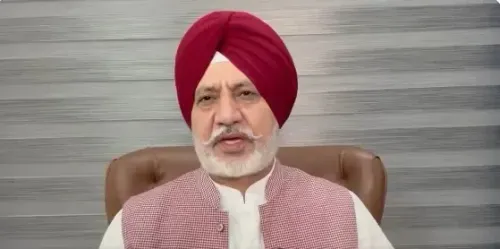
CM Bhagwant Mann Hits Back at Centre Over Punjab Stubble Burning Blame
Synopsis
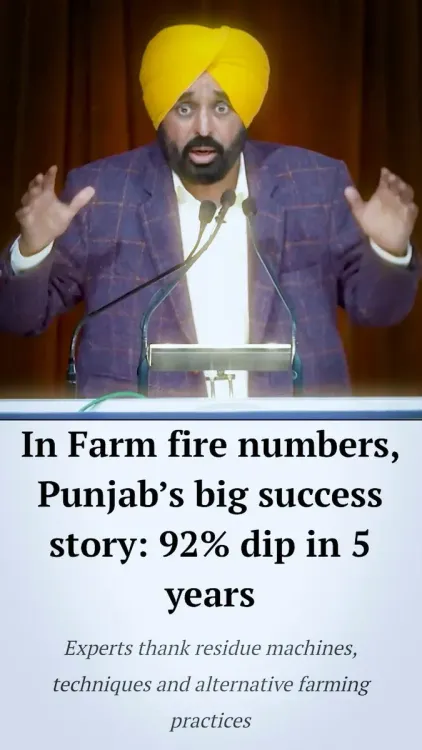
Punjab CM Bhagwant Mann has pushed back against the Central Government's recurring practice of blaming Punjab for seasonal air pollution, asserting that stubble-burning incidents have dropped sharply in 2026 due to state machinery support and farmer awareness.
Key Takeaways
Bhagwant Mann posted on 12 November 2026 rebuking the Centre's habit of holding Punjab responsible for seasonal air pollution.
He credited the state government's machinery support and farmers' awareness for a 'very big reduction' in stubble-burning cases this season.
The Supreme Court had ordered Punjab and neighbouring states in 2019 to strictly curb stubble burning to protect NCR air quality .
The Central Government's Crop Residue Management scheme (2018–2023) provided subsidised machinery like happy seeders to Punjab farmers.
Official satellite fire-count data for the 2026 kharif season will be the key metric to verify Mann's claim of reduced incidents.
Stubble burning remains an economic problem as well as an enforcement challenge, with burning being cheaper and faster than alternatives.
Every autumn, when smoke from Punjab's paddy fields rolls across the Indo-Gangetic plain, the blame game begins — and Punjab Chief Minister Bhagwant Mann has had enough of it. On Thursday, 12 November 2026, Mann pushed back sharply against what he called the Central Government's habit of making Punjab the default scapegoat for the country's seasonal air-pollution crisis, asserting that this year's stubble-burning numbers have dropped significantly.
Posting in Punjabi on X, Mann declared: 'ਹਰ ਗੱਲ ਲਈ ਪੰਜਾਬ ਨੂੰ ਜ਼ਿੰਮੇਦਾਰ ਠਹਿਰਾਉਣਾ ਕੇਂਦਰ ਸਰਕਾਰ ਦੀ ਆਦਤ ਬਣ ਚੁੱਕੀ ਹੈ।' ('It has become a habit of the Central Government to hold Punjab responsible for everything.') He continued: 'We know very well how to protect our land, our water, and our air. Thanks to our government's support, the availability of machinery, and the wisdom of farmers, there has been a very big reduction in stubble-burning cases this time.'
A Recurring Winter Battle Between Chandigarh and Delhi
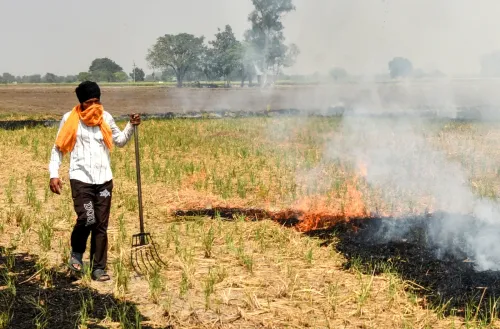
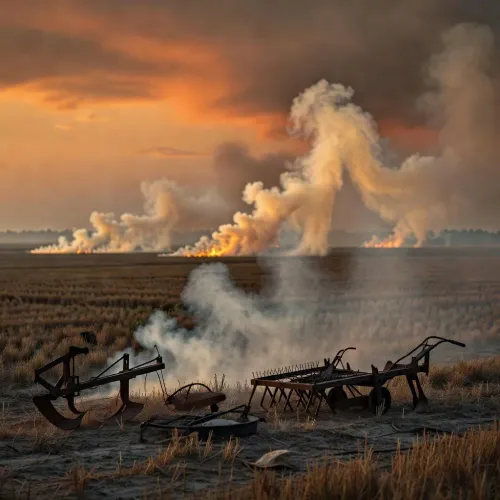
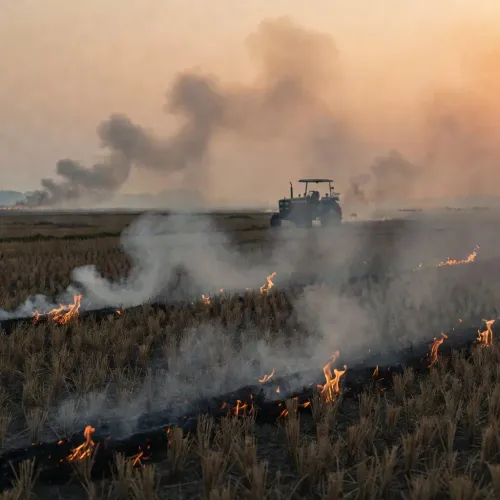
The politics of parali — paddy stubble — is as seasonal as the harvest itself. Each October–November, farmers across Punjab and neighbouring Haryana burn leftover paddy straw to clear fields quickly before the wheat-sowing window closes. The resulting smoke is a major contributor to the choking smog that blankets the National Capital Region and surrounding areas, triggering public-health alerts and courtroom battles.
In 2019, the Supreme Court of India ordered Punjab and neighbouring states to strictly curb stubble burning to protect NCR air quality. The directive set the stage for years of uneasy coordination — and recurring finger-pointing — between state capitals and New Delhi. Between 2018 and 2023, the Central Government rolled out the Crop Residue Management (CRM) scheme, channelling subsidised machinery including happy seeders, super-straw management systems, and mulchers to Punjab farmers as alternatives to burning.
Mann's State vs. Centre Frame — and What's Behind It
Mann's post is calibrated to serve two audiences at once. For Punjab's farming community, it is a defence of their agency and a rebuff of what many growers see as unfair vilification. For the national political stage, it is a pointed jab at the BJP-led Central Government from the Aam Aadmi Party administration that has governed Punjab since March 2022 — a government that has routinely framed centre-state disputes over funding and enforcement as evidence of federal overreach.
The claim of a 'very big reduction' in fire incidents this season is the article of substance in Mann's post. If official satellite and ground data for the 2026 kharif season corroborate that figure, it would mark a meaningful shift in a trend that has stubbornly resisted both subsidy programmes and judicial pressure for over a decade. Official data releases from the Indian Agricultural Research Institute and state remote-sensing agencies are the numbers to watch.
What the Machinery Push Has — and Hasn't — Changed
Punjab's own interventions in recent years have included expanding in-situ crop-residue management, increasing the fleet of CRM machines available through cooperative societies, and linking stubble-free cultivation to direct financial incentives for farmers. Mann's post credits this combination — government support, machinery availability, and farmer awareness — as the driver of this year's improvement.
Stubble burning, however, is not purely a state-capacity problem. It is fundamentally an economic one: burning is fast and free; alternatives take time and money. Until the cost equation shifts decisively — through higher compensation per acre, denser machinery networks, or a viable market for paddy straw as biomass fuel — the reduction in fire counts will remain fragile, vulnerable to any year when monsoon rains delay the harvest and compress the sowing window.
Mann's assertive framing may dominate the headlines today. But the real verdict on Punjab's 2026 stubble-burning season will be written in satellite fire-count data — and in the air-quality readings of every city downwind.
Point of View
But it carries a substantive claim — a measurable fall in fire incidents — that separates it from pure political rhetoric. If verified by satellite data, the reduction would validate Punjab's in-situ residue management push and weaken the Centre's annual enforcement narrative. More broadly, the exchange reflects the structural tension in Indian federalism where environmental mandates are set centrally but implemented and funded through states that often lack the resources — or political incentive — to comply fully. The real test will be whether this year's numbers hold when weather conditions tighten the sowing window in future seasons.
NationPress
12 Nov 2026
Frequently Asked Questions
What did Bhagwant Mann say about stubble burning in Punjab?
On 12 November 2026 , Mann stated that it has become a habit of the Central Government to blame Punjab for everything, and claimed that stubble-burning cases have seen a 'very big reduction' this season due to state government support, machinery availability, and farmer awareness.
Why does Punjab have a stubble burning problem?
After the kharif paddy harvest, farmers have a narrow window to clear fields before wheat sowing begins. Burning stubble is the fastest and cheapest method, making it economically attractive despite legal restrictions and environmental damage.
What is the Crop Residue Management scheme?
The Crop Residue Management (CRM) scheme was a Central Government programme rolled out between 2018 and 2023 that provided subsidised machinery — such as happy seeders and mulchers — to Punjab farmers as alternatives to burning paddy straw.
What did the Supreme Court say about stubble burning?
In 2019 , the Supreme Court of India directed Punjab and neighbouring states to strictly curb stubble burning in order to protect air quality in the National Capital Region .
Is Bhagwant Mann's claim of reduced stubble burning verified?
Mann has asserted a 'very big reduction' in stubble-burning incidents for the 2026 season. Official verification will come from satellite fire-count data released by agricultural research bodies and state remote-sensing agencies.