CM Bhagwant Mann Pays Tribute to Bhai Maharaj Singh
Synopsis
Punjab Chief Minister Bhagwant Mann on 5 July 2026 paid homage to Bhai Maharaj Singh, the 19th-century Sikh leader who led resistance against British rule after the First Anglo-Sikh War and died in Singapore exile in 1856, calling him the first martyr of India's freedom struggle.
Key Takeaways
Punjab Chief Minister Bhagwant Mann paid tribute to Bhai Maharaj Singh on his martyrdom anniversary on 5 July 2026 .
Mann described Bhai Maharaj Singh as the first martyr of the freedom struggle who led an awakening movement against British rule in Punjab.
Bhai Maharaj Singh organised resistance against the British East India Company after the First Anglo-Sikh War of 1845–46 .
He was exiled to Singapore by British authorities and died there in 1856 .
The tribute reflects a broader pattern of the AAP government in Punjab commemorating 19th-century Sikh resistance figures ahead of Independence Day.
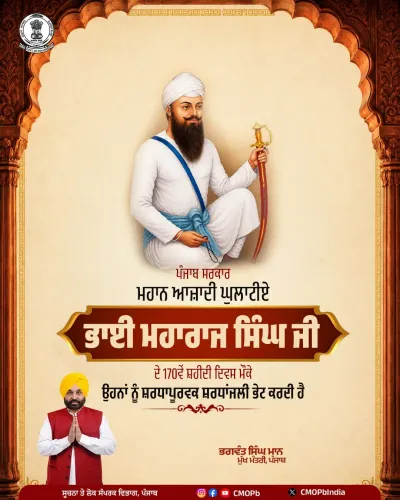
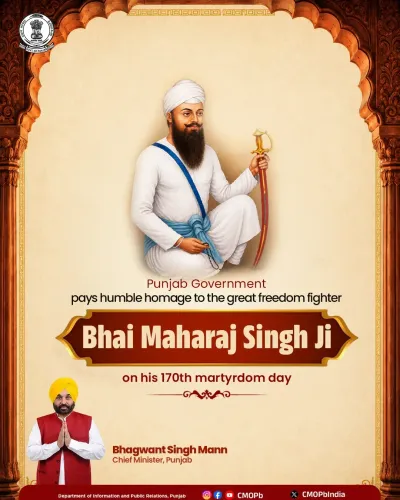
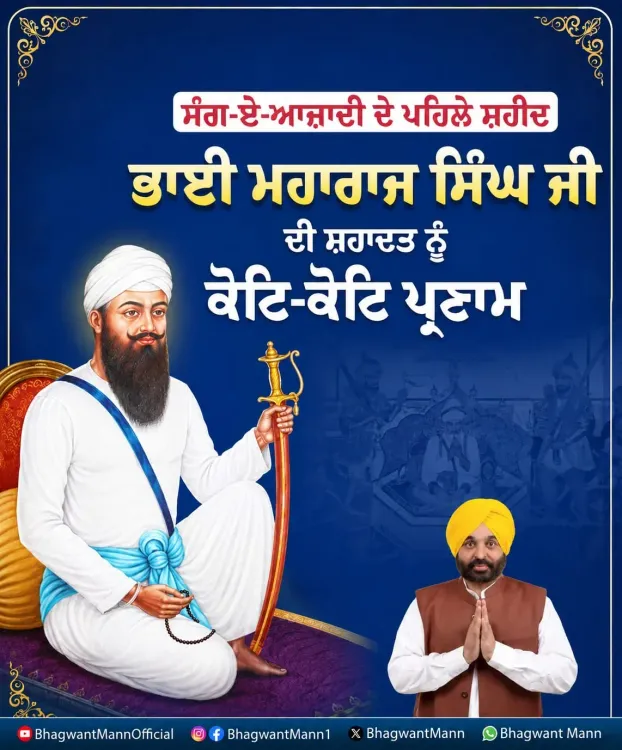
Punjab Chief Minister Bhagwant Mann on Sunday, 5 July 2026, paid homage to Bhai Maharaj Singh, honouring the 19th-century Sikh resistance leader on his martyrdom anniversary. Mann posted a tribute on X, describing Bhai Maharaj Singh as the first martyr of the freedom struggle who led the awakening movement against British rule in Punjab following the First Anglo-Sikh War.
Context
In his post, written in Punjabi, Chief Minister Mann offered koti-koti pranam (countless salutations) to Bhai Maharaj Singh, calling him jang-e-azadi da pehla shaheed ('the first martyr of the freedom struggle'). He noted that Bhai Maharaj Singh had led a jagriti lehar ('awakening movement') against British authority in Punjab in the aftermath of the First Anglo-Sikh War of 1845–46.
Bhai Maharaj Singh was a Sikh religious leader and resistance organiser who mobilised spiritual and armed opposition to the expanding British East India Company following the Treaty of Lahore, which placed Punjab under partial British control. He was eventually captured and exiled to Singapore, where he died in 1856, making him one of the earliest known figures of anti-colonial resistance in the region.
Policy Backdrop
State governments in India, particularly in Punjab, have a long-standing practice of commemorating 19th-century regional resistance figures on social media and through official events. These tributes serve to situate local anti-colonial agency within the broader national independence narrative, often highlighting leaders who were active well before the mainstream nationalist movement of the 20th century.
References to the period between the Anglo-Sikh Wars and the revolt of 1857 are especially prominent in Punjab's official commemorative calendar, reflecting a regional historiographical tradition that emphasises Sikh and Punjabi contributions to India's independence struggle. The Aam Aadmi Party government under Mann has continued this tradition since taking office in 2022.
Stakeholders and Impact
The tribute is significant to the Sikh community and residents of Punjab, for whom Bhai Maharaj Singh represents an early symbol of resistance against colonial rule. Commemorating such figures reinforces a sense of regional identity and historical pride, particularly as Independence Day approaches in August.
Scholars and historians focused on pre-1857 anti-colonial movements have long argued that figures like Bhai Maharaj Singh deserve broader recognition in mainstream Indian history curricula. State-level tributes by sitting chief ministers lend institutional weight to such calls.
What's Next
The Punjab government's commemoration of Bhai Maharaj Singh may signal broader efforts ahead of Independence Day 2026, potentially including announcements on memorials, curriculum updates, or state-sponsored events recognising 19th-century Punjab martyrs. Whether this tribute is accompanied by any formal policy or programme remains to be seen.
Point of View
The post implicitly asserts that Punjab's anti-colonial story predates and runs parallel to the mainstream nationalist narrative centred on figures from other regions. With Independence Day approaching, such commemorations also serve as soft groundwork for potential policy announcements on heritage and education. The tribute is ceremonial in form but carries a clear signal about the government's cultural priorities.
NationPress
5 Jul 2026
Frequently Asked Questions
Who was Bhai Maharaj Singh?
Bhai Maharaj Singh was a 19th-century Sikh religious leader who organised armed and spiritual resistance against British rule in Punjab after the First Anglo-Sikh War of 1845–46. He was captured by British authorities and exiled to Singapore, where he died in 1856.
Why did Bhagwant Mann pay tribute to Bhai Maharaj Singh?
Punjab Chief Minister Bhagwant Mann paid tribute to Bhai Maharaj Singh on his martyrdom anniversary, honouring him as the first martyr of India's freedom struggle who led an awakening movement against British rule in Punjab.
What was the First Anglo-Sikh War?
The First Anglo-Sikh War was a conflict fought between 1845 and 1846 between the Sikh Empire and the British East India Company. It ended with the Treaty of Lahore, which placed Punjab under partial British control and triggered subsequent resistance movements.
Where did Bhai Maharaj Singh die?
Bhai Maharaj Singh died in Singapore in 1856, where he had been exiled by British colonial authorities after being captured for his resistance activities in Punjab.
How does Punjab commemorate its 19th-century freedom fighters?
The Punjab state government and Sikh institutions regularly mark anniversaries of regional resistance figures from the mid-19th century through social media tributes, official events, and calls for greater recognition in national history curricula.