CM Bhagwant Mann Reviews 'Yudh Nasheyan Virudh', OKs 117 New Vehicles for DSPs
Synopsis
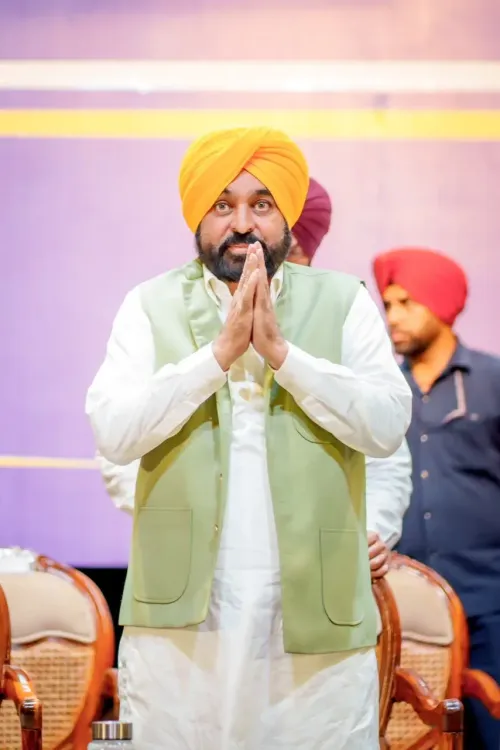
Punjab CM Bhagwant Mann reviewed the 'Yudh Nasheyan Virudh' anti-drug campaign at Punjab Police Academy, Phillaur, approved 117 new vehicles for DSPs, and pledged zero political interference in police operations, calling for a state-wide people's movement against narcotics.
Key Takeaways
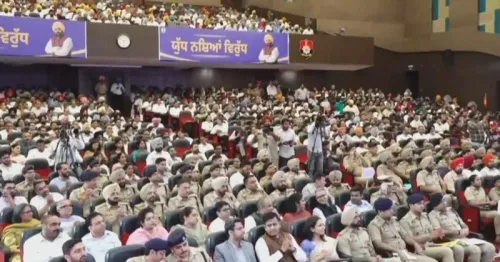
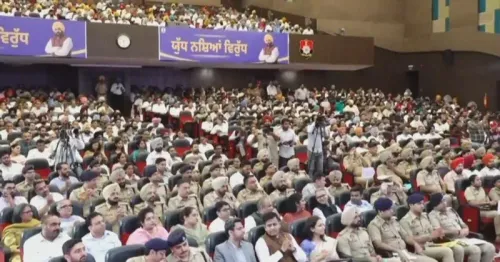
CM Bhagwant Mann attended the 'Yudh Nasheyan Virudh' campaign review at Punjab Police Academy, Phillaur on October 16, 2026 .
117 new vehicles were approved for Deputy Superintendents of Police (DSPs) to strengthen field operations.
Mann pledged full operational freedom to police — no political recommendations or interference.
The CM called for the anti-drug fight to become a lok lahir (people's movement), not just a policing exercise.
Mann invoked Maharaja Ranjit Singh's legacy, urging citizens to collectively rebuild a drug-free Rangla Punjab .
The review is rooted in AAP's 2022 election manifesto commitment to sustained narcotics eradication in Punjab.
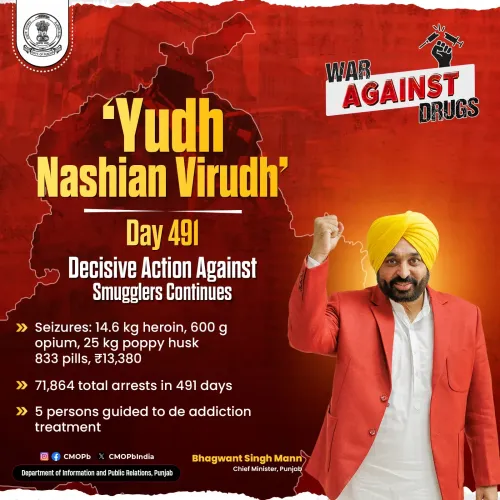
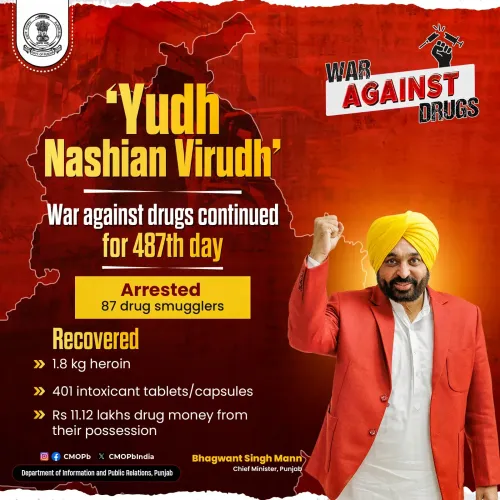
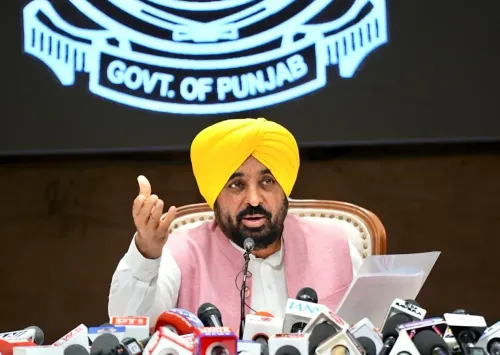
Punjab's war on drugs moved from rhetoric to logistics on Friday, October 16, 2026, as Punjab Chief Minister Bhagwant Mann chaired a high-level review of the 'Yudh Nasheyan Virudh' (War Against Drugs) campaign at the Punjab Police Academy, Phillaur — and walked out having sanctioned 117 new vehicles for Deputy Superintendents of Police across the state.
117 Vehicles and a Clear Mandate: No Recommendations, No Interference
The Phillaur meeting was not a ceremonial photo opportunity. Mann held substantive discussions with senior police and administration officials, and the headline output was the approval of 117 new vehicles for DSPs — a direct injection of operational capacity for the very officers who run ground-level anti-narcotics drives. Crucially, the CM paired the resource announcement with a political commitment: police would be given puri khull — complete freedom to act — with no political recommendations or interference clouding their work.
'This fight against drugs is not the police's alone,' Mann wrote, calling for it to become a lok lahir — a people's movement — that belongs to every citizen of Punjab.
From Election Pledge to Operational Review
The Aam Aadmi Party's 2022 Punjab election manifesto placed drug eradication at the centre of its governance pitch. The state has grappled with narcotics abuse for decades, a crisis that cuts across rural households, urban youth, and the cross-border smuggling corridors that make Punjab a transit and consumption hotspot. By holding a formal campaign review at Phillaur — the historic nerve centre of Punjab police training in Jalandhar district — the administration signalled that anti-drug operations are being treated as a structured, auditable programme rather than a series of reactive raids.
The emphasis on police autonomy is significant: previous administrations in Punjab were routinely accused of shielding drug networks through political patronage. Mann's public pledge of a hands-off approach is both a governance statement and a pointed contrast with that history.
Invoking Maharaja Ranjit Singh's 'Rangla Punjab'
Mann closed his message with an invocation that carries deep resonance in Punjab's political culture: a call to collectively rebuild Rangla Punjab — the vibrant, just Punjab — in the spirit of Maharaja Ranjit Singh, the 19th-century founder of the Sikh Empire celebrated for his equitable rule. 'This sacred land of Gurus and Pirs must never bear the stain of drugs,' he wrote, signing off with the revolutionary salute: Inquilab Zindabad.
The historical framing is standard in Punjab's political vocabulary, but its pairing here with a concrete vehicle sanction and an anti-influence pledge gives the message a dual register — aspirational and administrative at once.
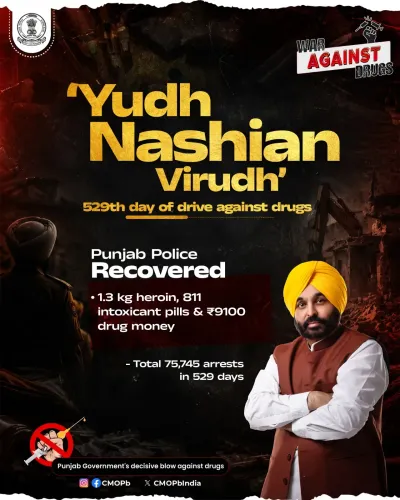
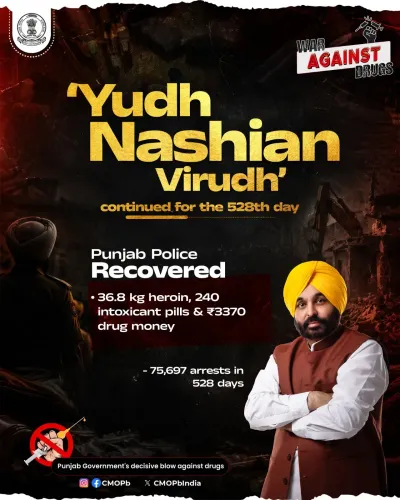
With 117 new vehicles cleared and a public promise of zero political interference, the next test is whether operational autonomy translates into arrest numbers, conviction rates, and — most critically — whether Punjab's youth start seeing fewer narcotics at their doorstep.
Point of View
And it places the credibility burden squarely on police performance data going forward. Invoking Maharaja Ranjit Singh and the Rangla Punjab ideal is a well-worn rhetorical device in Punjab politics, but its deployment alongside a concrete logistics announcement reflects a deliberate dual-channel communication strategy targeting both emotional and rational voter concerns. How the state operationalises the 'people's movement' framing — through community committees, awareness drives, or institutional partnerships — will determine whether the campaign outlasts its review season.
NationPress
16 Oct 2026
Frequently Asked Questions
What is the 'Yudh Nasheyan Virudh' campaign in Punjab?
'Yudh Nasheyan Virudh' translates to 'War Against Drugs' — it is Punjab's state-led anti-narcotics campaign launched under the AAP government, combining police enforcement with community mobilisation to tackle the state's long-standing drug abuse crisis.
Why did CM Bhagwant Mann approve 117 new vehicles for DSPs?
The 117 vehicles were sanctioned to strengthen the operational capacity of Deputy Superintendents of Police who lead ground-level anti-drug drives, giving them the mobility and resources needed for more effective enforcement across Punjab.
Where is the Punjab Police Academy in Phillaur?
The Punjab Police Academy, Phillaur is a historic training institution for Punjab police officers located in Jalandhar district, Punjab. It serves as the state's primary hub for police training and high-level law enforcement reviews.
What did Bhagwant Mann mean by 'no political recommendations' for police?
Mann pledged that police would be given complete freedom to pursue drug cases without any political interference or recommendations — a direct response to long-standing criticism that political patronage networks in Punjab historically shielded drug traffickers from prosecution.
What is 'Rangla Punjab' and why does Bhagwant Mann use the term?
'Rangla Punjab' means a vibrant, prosperous, and just Punjab — a vision associated with the reign of Maharaja Ranjit Singh, the 19th-century Sikh Empire founder. Punjab politicians frequently invoke the term to evoke a golden era of equitable governance as an aspirational benchmark for modern reforms.