CM Bhagwant Mann Rolls Out ₹62 Cr Tourism & Heritage Push
Synopsis
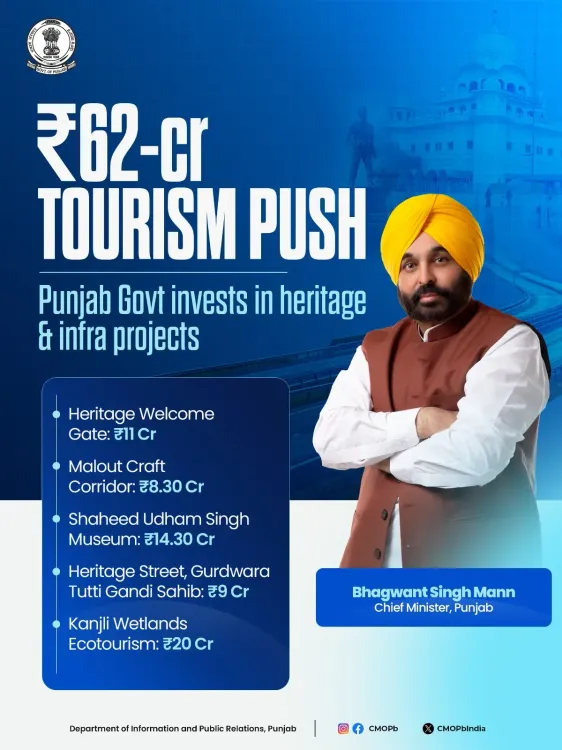
The Punjab government under Chief Minister Bhagwant Mann is rolling out tourism and heritage infrastructure projects worth over ₹62 crore, aiming to conserve cultural landmarks, upgrade visitor facilities, and create employment across the state.
Key Takeaways
The Punjab government is implementing tourism and heritage infrastructure projects worth over ₹62 crore across the state.
Chief Minister Bhagwant Mann is leading the initiative, announced on 20 July 2026 .
The projects aim to conserve historic landmarks and strengthen visitor facilities.
Employment generation for local youth is a stated objective of the initiative.
The outlay is part of Punjab's broader strategy to diversify its economy beyond agriculture.
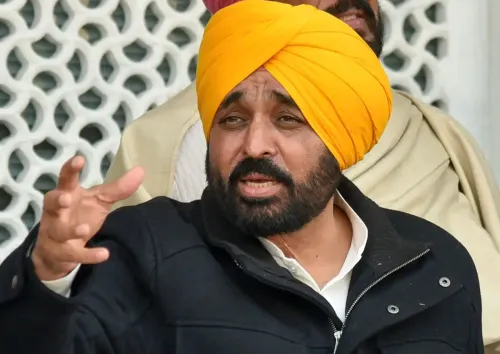
The Chief Minister's Office of Punjab announced on Monday, 20 July 2026 that the state government, under Chief Minister Bhagwant Mann, is rolling out tourism and heritage infrastructure projects worth over ₹62 crore across Punjab, targeting cultural conservation, visitor infrastructure, and employment generation.
Context
The official post from the Chief Minister's Office states that these 'sustained efforts aim to boost tourism, safeguard Punjab's cultural heritage, and open new pathways for economic growth.' The announcement covers a broad sweep of interventions — from strengthening visitor facilities to conserving historic landmarks — signalling a coordinated state-level push rather than a single project.
Punjab's tourism sector has historically operated in the shadow of the state's dominant agricultural economy. The Bhagwant Mann-led government, in office since March 2022, has positioned heritage and tourism development as a pillar of economic diversification, and this ₹62 crore outlay represents one of the more substantial single announcements in that direction.
Policy Backdrop
India's federal structure places tourism infrastructure largely in the hands of state governments, which implement projects alongside central heritage-preservation schemes. Several Indian states accelerated domestic tourism spending after 2020, capitalising on a rebound in domestic travel and the central government's focus on 'Dekho Apna Desh' and related initiatives.
Punjab is particularly well-positioned in this space, given its dense concentration of Sikh religious sites, Partition-era heritage, and rural agri-tourism potential. Channelling capital expenditure into this sector allows the state to simultaneously address unemployment among local youth — one of the Mann government's stated priorities — and build a more resilient revenue base beyond farm income.
Stakeholders and Impact
The primary beneficiaries of the outlay are expected to be tourism operators, heritage conservators, and local youth who stand to gain from the employment opportunities the projects are designed to generate. Improved visitor infrastructure also benefits domestic and international tourists drawn to Punjab's religious and historical sites.
For the broader Punjab economy, sustained public investment in tourism assets can create multiplier effects — supporting hospitality, transport, and retail sectors in districts that host major heritage sites. The announcement is also likely to attract private investment alongside state capital, as improved government-funded infrastructure lowers the entry risk for private tourism operators.
What's Next
The government has not detailed specific project locations or an itemised breakdown of the ₹62 crore allocation in this announcement. Completion milestones, tourist footfall targets, and employment numbers are expected to surface in subsequent tourism department reports and state budget reviews.
Observers will watch whether the state translates this capital commitment into measurable outcomes — particularly on visitor numbers and job creation — ahead of the next electoral cycle. The pace of project execution and independent audits of heritage conservation work will be key indicators of the initiative's real-world impact.
Point of View
Not a ceremonial priority. Positioning heritage conservation alongside job creation is politically astute in a state where youth unemployment remains a pressure point. However, the absence of project-specific details at the time of announcement means the initiative's credibility will rest entirely on execution speed and transparent reporting of outcomes. This fits a broader pattern among AAP-governed states of using high-visibility infrastructure announcements to build a governance narrative ahead of electoral cycles.
NationPress
21 Jul 2026
Frequently Asked Questions
What is the Punjab government's ₹62 crore tourism project about?
The Punjab government under Chief Minister Bhagwant Mann is rolling out tourism and heritage infrastructure projects worth over ₹62 crore to conserve historic landmarks, upgrade visitor facilities, and generate employment across the state.
Which sites or districts will benefit from Punjab's tourism infrastructure spending?
The government has not yet specified individual project locations or an itemised breakdown of the ₹62 crore allocation; details are expected in subsequent tourism department reports.
How will the Punjab tourism projects create jobs?
The initiative is designed to generate employment opportunities for local youth through construction and operation of heritage and visitor infrastructure, with multiplier effects expected in hospitality, transport, and retail sectors.
Is the ₹62 crore Punjab tourism fund from the state or central government?
The announcement attributes the outlay to the Punjab state government under Chief Minister Bhagwant Mann; any central government co-funding has not been specified in the official post.
What is Punjab's strategy for economic diversification beyond agriculture?
Punjab has been developing tourism assets and heritage sites to generate visitor revenue and jobs, reducing dependence on agriculture — a pattern accelerated under the Bhagwant Mann government since March 2022.