CM Bhagwant Mann's Punjab gives 300 free power units to all families
Synopsis
The Chief Minister's Office of Punjab announced on 18 July 2026 that CM Bhagwant Mann's government is delivering 300 free electricity units monthly to every household and 8 uninterrupted daytime hours of power to farmers, reaffirming two flagship AAP welfare commitments.
Key Takeaways
The Punjab government led by CM Bhagwant Mann is providing 300 units of free electricity every month to every household in the state.
Farmers in Punjab are receiving 8 continuous hours of daytime electricity for agricultural use.
Both commitments were central to the Aam Aadmi Party 's winning manifesto in the February 2022 Punjab assembly elections.
The subsidies are implemented through Punjab State Power Corporation Limited (PSPCL) and funded via state budgetary allocations.
Agricultural power subsidies in Punjab have existed since the 1990s ; the Mann government has added a focus on daytime, uninterrupted supply.
The long-term fiscal impact on PSPCL and the state budget remains a key area to watch.
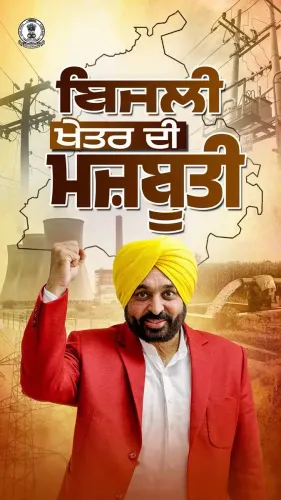
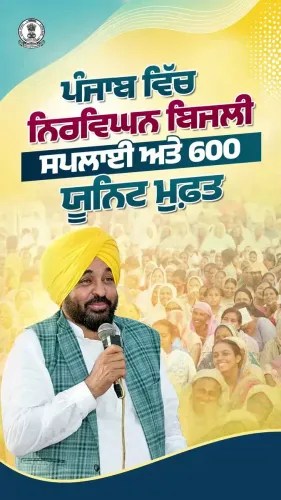
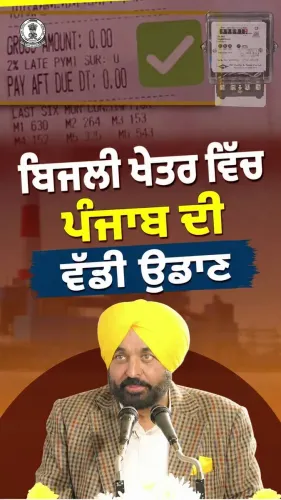
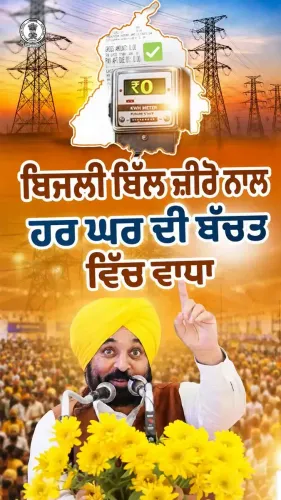
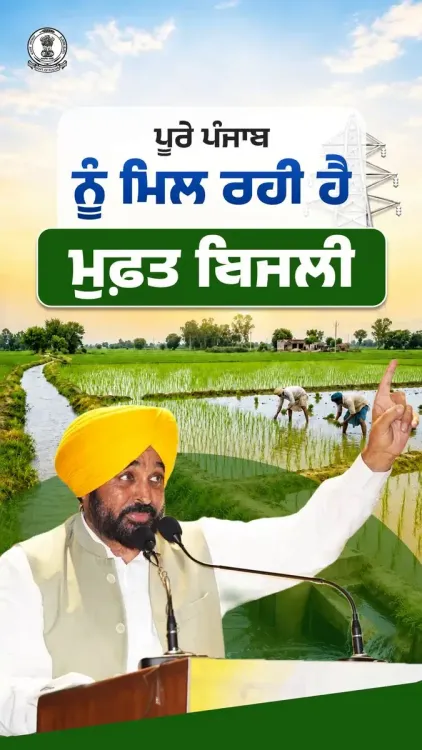
The Chief Minister's Office of Punjab announced on Saturday, 18 July 2026 that the state government led by Chief Minister Bhagwant Mann is providing 300 units of free electricity every month to every household in Punjab, while farmers are receiving a continuous 8 hours of daytime power supply for agricultural use.
Context
The official CMO Punjab post, written in Punjabi, states: 'ਪੰਜਾਬ ਦੇ ਹਰ ਪਰਿਵਾਰ ਨੂੰ 300 ਯੂਨਿਟ ਮੁਫ਼ਤ ਬਿਜਲੀ ਦਿੱਤੀ ਜਾ ਰਹੀ ਹੈ' ('300 units of free electricity are being given to every family in Punjab'). It adds that farmers are simultaneously receiving uninterrupted 8-hour daytime electricity for agriculture, and that the government's initiative is being widely appreciated.
The announcement reaffirms two of the Aam Aadmi Party's most prominent welfare commitments in Punjab, delivered after the party's landslide victory in the February 2022 state assembly elections.
Policy Backdrop
The promise of 300 free domestic electricity units was a central plank of AAP's 2022 Punjab election manifesto. After Bhagwant Mann took office in March 2022, the government began rolling out the subsidy through Punjab State Power Corporation Limited (PSPCL), the state utility responsible for distribution.
Agricultural power subsidies in Punjab have a longer lineage, dating to the 1990s, when successive governments began offering free or heavily subsidised electricity to farmers operating tube-wells for irrigation. The Mann government has continued and highlighted this policy, framing daytime supply as an operational improvement over the irregular, often nocturnal power schedules farmers historically received.
Across India, AAP-governed states — notably Delhi and Punjab — have made free or subsidised electricity a signature welfare instrument. Critics and fiscal analysts have flagged the long-term strain such schemes place on state power utilities, which must balance subsidy costs against revenue requirements.
Stakeholders and Impact
The domestic electricity subsidy directly benefits every residential household in Punjab, a state of roughly 3 crore people. Families consuming up to 300 units per month pay nothing on their electricity bill under the scheme.
For the farming community — a politically significant constituency in this grain-producing state — the guarantee of 8 continuous hours of daytime power is operationally significant. Daytime supply allows farmers to monitor pumps, reduce accidents, and plan irrigation schedules, compared with the erratic or late-night supply that was common under earlier administrations.
The financial burden of both subsidies falls on the state exchequer and is routed through budgetary allocations and cross-subsidies within the power sector, affecting PSPCL's financial health and the broader fiscal position of the Punjab government.
What's Next
Observers and fiscal watchdogs will track PSPCL's annual financial results and any revisions to subsidy outlays in the next state budget to assess the long-term sustainability of both schemes. The government's ability to maintain these commitments without expanding the utility's debt will be a key indicator of the policy's durability ahead of the next assembly election cycle.
With Punjab setting a benchmark on welfare-linked electricity provisioning, other state governments may face renewed pressure to match or respond to similar demands from their own electorates.
Point of View
Reminding voters of two tangible deliverables — domestic free power and daytime farm supply — ahead of what will be an increasingly competitive electoral environment. By bundling both benefits in a single announcement, the Mann government reinforces the AAP brand of 'governance as welfare delivery' that proved decisive in 2022. However, the scheme's durability hinges on PSPCL's finances, and any future tariff revision or subsidy cap could quickly convert a political asset into a liability. The broader pattern of AAP using electricity subsidies as a governing identity marker in both Delhi and Punjab suggests this is a long-term strategic posture, not a one-off announcement.
NationPress
18 Jul 2026
Frequently Asked Questions
How many free electricity units does Punjab give to households?
The Punjab government provides 300 units of free electricity every month to every residential household in the state under a scheme rolled out after CM Bhagwant Mann took office in March 2022.
Do Punjab farmers get free electricity for agriculture?
Yes. Punjab farmers receive 8 continuous hours of daytime electricity for agricultural purposes such as running tube-well pumps, a policy continued and highlighted by the Mann government.
Who announced the 300 units free electricity scheme in Punjab?
The scheme was a manifesto promise of the Aam Aadmi Party and was implemented by Chief Minister Bhagwant Mann 's government after the party won the February 2022 Punjab assembly elections.
Which body distributes free electricity in Punjab?
Punjab State Power Corporation Limited (PSPCL) , the state-owned power distribution utility, is responsible for implementing and delivering the free electricity subsidy to households and farmers.
Does the free electricity scheme in Punjab affect state finances?
Yes. The cost of both the domestic and agricultural electricity subsidies is borne by the Punjab state exchequer through budgetary allocations and cross-subsidies, which has implications for PSPCL's financial health and the state's overall fiscal position.