CM Bhajan Lal: Processing Units Boosting Rajasthan Farmers
Synopsis
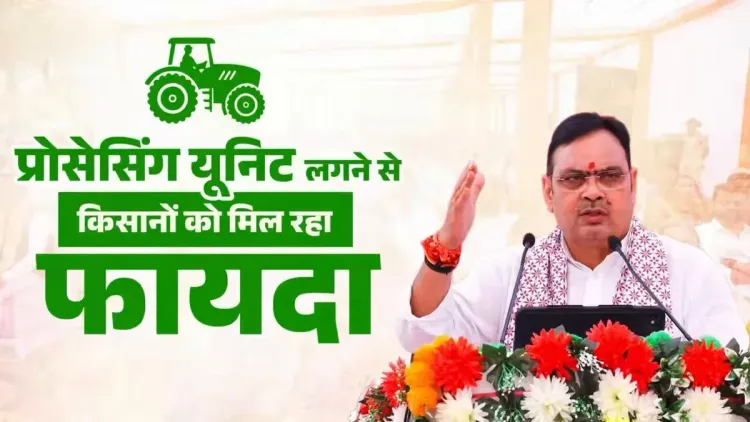
Rajasthan Chief Minister Bhajan Lal Sharma says agro-processing units across the state are helping farmers earn better prices for their produce while opening new marketing channels, simultaneously boosting rural incomes and the broader village economy.
Key Takeaways
CM Bhajan Lal Sharma highlighted the role of processing units in improving farmer income and rural economic health on 25 October 2026 .
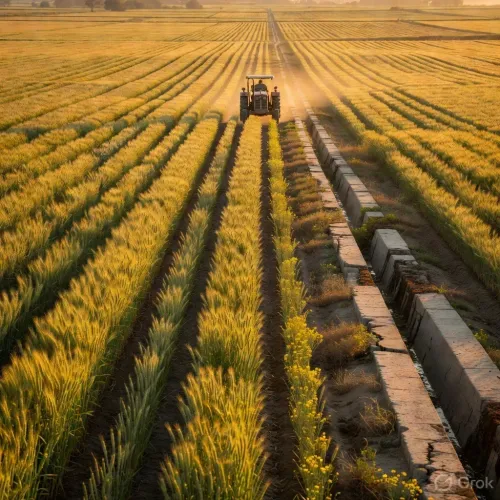
Rajasthan is a major producer of mustard, wheat, and pulses — crops that gain significant value once processed locally.
Processing units help farmers capture value-addition premiums instead of surrendering them to distant intermediaries.
The initiative aligns with the central government's PMFME scheme (launched 2020) , which supports micro and small food-processing enterprises across states.
Beyond farm income, local processing generates ancillary employment in logistics, packaging, and retail, strengthening the rural economic ecosystem.
Sharma has positioned agro-processing as a pillar of Rajasthan's rural policy since taking office in December 2023 .
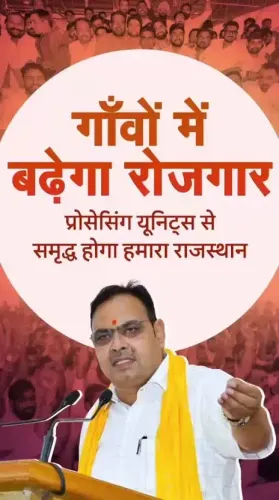
Rajasthan's fields are finding new markets. Rajasthan Chief Minister Bhajan Lal Sharma on Sunday, 25 October 2026 highlighted how the state's push to establish agro-processing units is translating into better prices for farmers and fresh avenues for selling agricultural goods — a signal that the government views value-chain infrastructure as the next frontier for rural income growth.
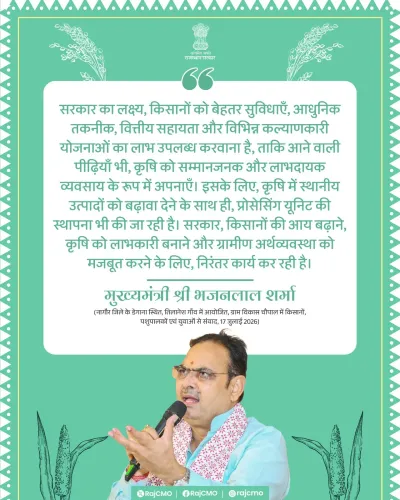
In his post, CM Sharma stated: 'The establishment of processing units in the state is enabling farmers to get better value for their produce and creating new opportunities for the marketing of agricultural products. This is simultaneously strengthening farmers' incomes and the rural economy.'
Why Processing Units Change the Equation for Rajasthan's Farmers
Rajasthan is one of India's major producers of mustard, wheat, and pulses — crops that historically lose significant value between harvest and consumer because raw produce travels long distances without any transformation. When a processing unit sits closer to the farm, the farmer captures a share of that value-addition premium instead of surrendering it to a distant intermediary. That single shift can widen margins without changing a single seed or a single acre.
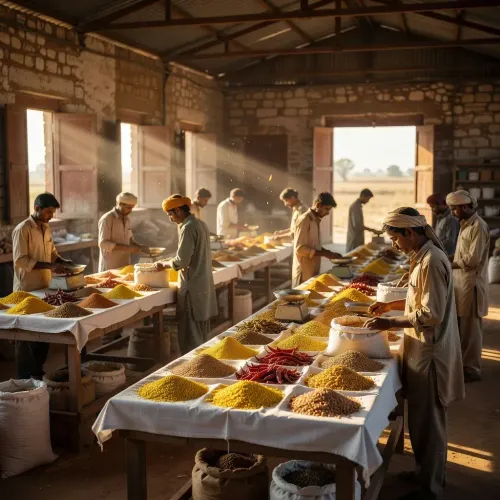
The principle is straightforward: a kilogram of raw mustard fetches a floor-price; a litre of cold-pressed mustard oil commands multiples of that. Processing units are the bridge. And beyond income, they absorb seasonal surplus, reducing the post-harvest losses that have long been a structural drag on rural earnings across India's arid states.
The National Policy Thread Behind the State Push
Rajasthan's drive dovetails with the central government's PM Formalisation of Micro Food Processing Enterprises (PMFME) scheme, launched in 2020, which directs funding and technical assistance to states for exactly this kind of agro-processing infrastructure. Under PMFME, states co-implement clusters of micro and small food-processing units, targeting both individual entrepreneurs and farmer producer organisations.
CM Sharma took office in December 2023, and the state administration has since framed agro-processing as a pillar of rural economic policy — consistent with a broader national emphasis on agricultural value chains that has gathered pace across multiple Indian states in recent years.
What a Stronger Rural Economy Actually Looks Like
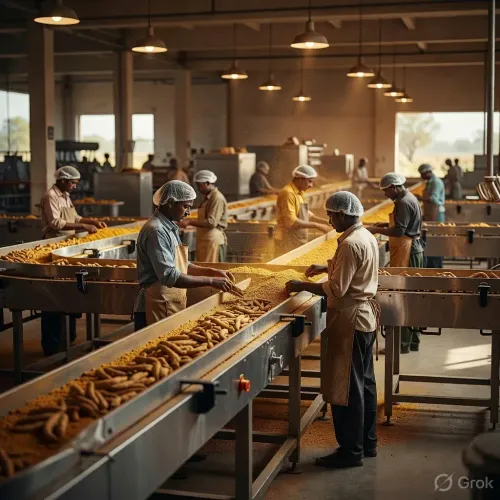
The ripple effect of processing units extends well beyond the farm gate. Local processing creates ancillary employment — in logistics, packaging, quality testing, and retail — that keeps more wage income circulating within villages rather than draining to urban centres. That secondary layer is what CM Sharma's reference to a 'strengthening rural economy' points at: not just a higher price slip for the farmer, but a denser local economic ecosystem.
For Rajasthan specifically, where a large share of the workforce remains agriculture-dependent and rural-urban migration is a persistent challenge, each processing unit that takes root represents both an income anchor and a potential jobs cluster. The question going forward is scale — whether the current momentum translates into verifiable expansion in unit numbers, farmer beneficiary counts, and actual income surveys that can be measured and published.
Rajasthan's farms are no longer just producing. They are, increasingly, processing — and that distinction may matter more to rural incomes over the next decade than any price-support scheme alone.
Point of View
Avoiding costly loan waivers while promising structural income gains. The alignment with the PMFME scheme lets Rajasthan claim both state initiative and central backing — a useful dual-credit narrative ahead of any future rural outreach. The real test, however, will be independently verified data on income changes and unit penetration in districts beyond the state's more commercially developed corridors. Without those numbers, the messaging, however directionally sound, risks remaining aspirational rather than accountable.
NationPress
25 Oct 2026
Frequently Asked Questions
How are processing units helping Rajasthan farmers earn more?
By processing raw produce — such as mustard into oil or pulses into packaged goods — closer to the farm, farmers capture value-addition premiums that would otherwise go to distant intermediaries, improving their net income per crop.
What is the PMFME scheme and how does it relate to Rajasthan?
The PM Formalisation of Micro Food Processing Enterprises (PMFME) scheme, launched by the central government in 2020, provides funding and support for setting up food-processing units in states including Rajasthan, directly backing the kind of agro-processing infrastructure CM Sharma referenced.
Which crops does Rajasthan mainly produce?
Rajasthan is a significant producer of mustard, wheat, and pulses — all crops that benefit substantially from local value-addition through processing before reaching consumers.
When did Bhajan Lal Sharma become Chief Minister of Rajasthan?
Bhajan Lal Sharma took office as Chief Minister of Rajasthan in December 2023, after the BJP won the state assembly elections.
How do agro-processing units strengthen the rural economy beyond farmers?
Processing units create ancillary jobs in logistics, packaging, quality testing, and local retail, keeping more wage income circulating within villages and building a denser local economic ecosystem beyond just farm-gate prices.