Jaishankar at Chinmaya Sammelan: UN Must Lead on Global Crises
Synopsis
On UN Day 2026, EAM Dr. S. Jaishankar addressed the Chinmaya Amrit Mahotsav Global Sammelan, invoking Advaita philosophy to argue against zero-sum geopolitics while pressing for UN reform, counter-terrorism resolve, equitable North-South burden-sharing and responsible AI governance.
Key Takeaways
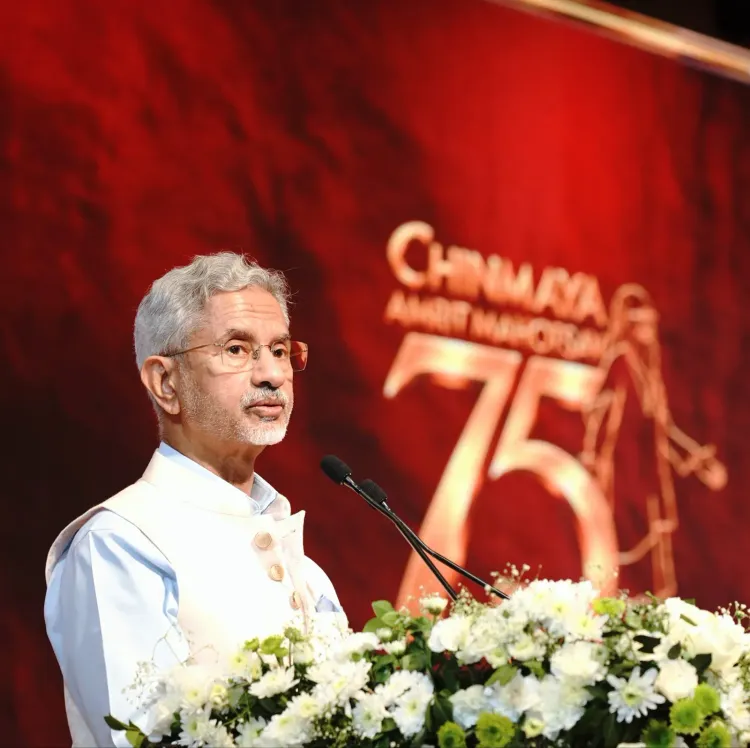
Jaishankar addressed the Chinmaya Amrit Mahotsav Global Sammelan on United Nations Day, October 25, 2026 .
He invoked Advaita ('One Reality') philosophy to argue against zero-sum geopolitical thinking and in favour of collective, shared solutions.
Jaishankar reiterated India's demand for 'stronger resolve' on counter-terrorism, aligned with its 1996 proposal for a Comprehensive Convention on International Terrorism at the UN.
He called out the Global North 's equal responsibility in ensuring global progress and prosperity, amplifying the Global South agenda India has championed since its 2023 G20 presidency .
India's advocacy for a 'responsible, inclusive and human-centric' approach to AI was reaffirmed, consistent with the #AIforAll strategy launched in 2018 .
The minister pressed for UN Security Council reform and renewed UN leadership in addressing mounting global crises.
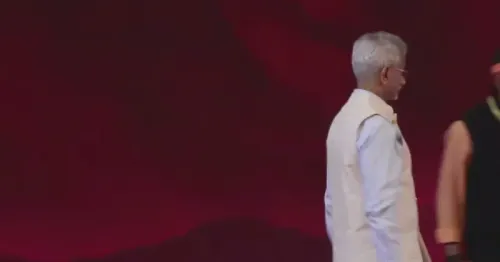
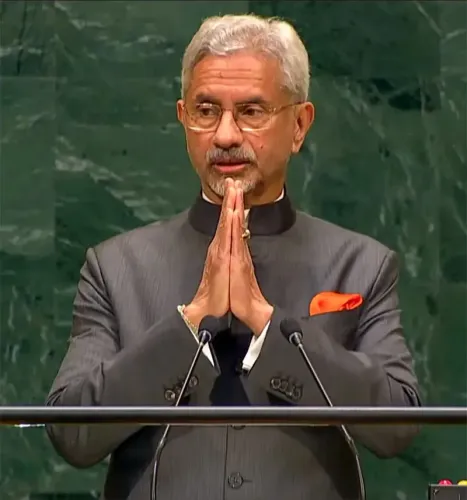
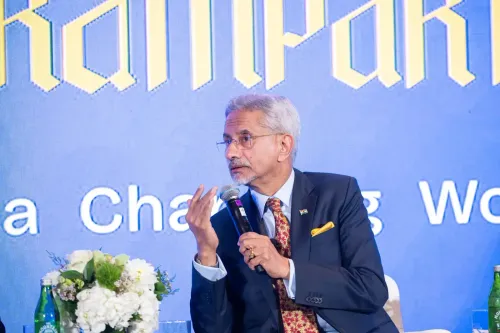
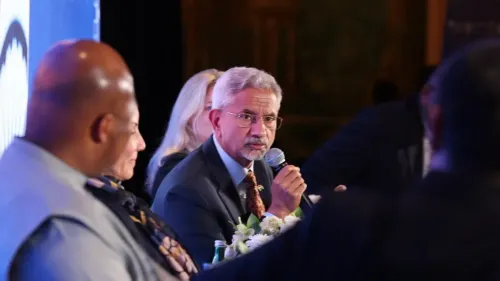
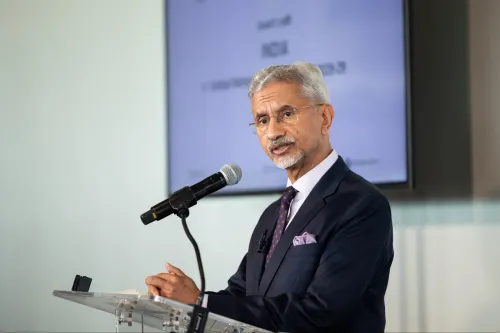
On United Nations Day, October 25, 2026, Union External Affairs Minister Dr. S. Jaishankar took a global stage at the Chinmaya Amrit Mahotsav Global Sammelan to deliver a pointed message: the world's oldest multilateral body must find the will to lead — or watch crises compound.
Advaita as a geopolitical argument
Jaishankar opened on philosophy, but the intent was sharply strategic. Invoking the Advaita Vedanta concept of 'One Reality', he argued that zero-sum thinking — the logic of winners and losers that dominates great-power competition — is fundamentally incompatible with how the world actually works. The framing was deliberate: Chinmaya Mission, the global spiritual organisation founded in 1953 by Swami Chinmayananda, has long propagated Advaita philosophy, making the sammelan a natural platform for India's signature blend of civilisational heritage and foreign-policy argument. India has deployed this architecture before. During its landmark 2023 G20 presidency, New Delhi anchored its entire multilateral pitch around Vasudhaiva Kutumbakam — 'the world is one family' — to press for Global South priorities and reformed global governance. Sunday's address extends that same thread into 2026.Peace is indivisible — and terrorism has no fine print
The minister was unambiguous on two fronts that India has pressed at the United Nations for decades. First, the indivisibility of peace: 'war anywhere threatens peace everywhere,' he said, restating India's consistent advocacy for dialogue and diplomacy over conflict. Second, counter-terrorism — with zero qualifications attached. Jaishankar called for 'stronger resolve in countering terrorism in all its forms and manifestations,' language that tracks directly with India's long-standing push for the Comprehensive Convention on International Terrorism, first proposed at the UN in 1996 and still stalled over definitional disagreements among member states.The Global North's equal share of responsibility
Perhaps the sharpest edge in the address was directed at wealthy nations. Jaishankar insisted on 'the equal responsibility of the Global North' in finding solutions for global progress and prosperity — a formulation that puts development financing and climate burden-sharing squarely back on the table. It is a demand the Global South has amplified through every major multilateral forum of recent years, and India has positioned itself as its most credible advocate.AI governance and India's 'human-centric' pitch
On artificial intelligence, Jaishankar reaffirmed India's advocacy for a 'responsible, inclusive and human-centric approach' — a position that mirrors the thrust of India's National AI Strategy (#AIforAll), released in 2018. As AI governance moves rapidly up the UN's agenda, New Delhi is staking out a distinctive lane: neither the Silicon Valley maximalism of unfettered deployment nor the heavy regulatory hand favoured by some large economies, but a development-first framework that keeps emerging economies at the table.Reformed multilateralism — the demand that will not go away
Jaishankar closed on the structural argument India has made since the early 1990s: the UN Security Council and the broader multilateral architecture must be reformed. 'The urgent need for reformed multilateralism and for the UN to show leadership in face of global crises,' he said. With conflicts multiplying and the Security Council routinely gridlocked, the argument lands differently in 2026 than it did three decades ago — and India intends that to be felt. The address was a reminder that for New Delhi, philosophy and power politics are not separate conversations. They never have been.Point of View
Followed by hard institutional demands on UNSC reform, counter-terrorism and AI governance. The Advaita invocation is not ornamental — it is a deliberate counter-narrative to the transactional, bloc-based logic that has paralysed the Security Council. By pairing it with a pointed call on the Global North's responsibilities, New Delhi is simultaneously playing the role of Global South champion and responsible great-power aspirant — a duality that has defined Indian foreign policy since the 2023 G20 presidency and shows no sign of softening.
NationPress
25 Oct 2026
Frequently Asked Questions
What did Jaishankar say at the Chinmaya Amrit Mahotsav Global Sammelan?
EAM Dr. S. Jaishankar called for reformed multilateralism, stronger counter-terrorism norms, equitable Global North responsibility and a human-centric approach to AI, using the Advaita concept of 'One Reality' to argue against zero-sum geopolitics.
What is India's position on UN Security Council reform?
India has advocated for UNSC reform and a permanent seat since the early 1990s, reiterating the demand at every major multilateral forum including the UN General Assembly and, most recently, in Jaishankar's UN Day 2026 address.
What is the Comprehensive Convention on International Terrorism?
It is a draft UN treaty first proposed by India in 1996 to provide a universal, legally binding framework against terrorism in all its forms. It remains stalled at the UN due to disagreements over the definition of terrorism.
What is India's stance on AI governance at the United Nations?
India advocates for a 'responsible, inclusive and human-centric' approach to AI, rooted in its 2018 National AI Strategy (#AIforAll), emphasising that emerging economies must have an equal voice in shaping global AI norms.
What is Chinmaya Mission and why did Jaishankar speak there?
Chinmaya Mission is a global spiritual organisation founded in 1953 by Swami Chinmayananda to propagate Advaita Vedanta philosophy. It provided a fitting platform for Jaishankar to link India's civilisational heritage with its foreign-policy arguments on collective global responsibility.