Jaishankar Reaffirms India's UN Commitment on 81st UN Day
Synopsis
On the 81st UN Day, EAM Dr. S. Jaishankar reaffirmed India's commitment to the UN Charter while calling for reformed multilateralism that reflects contemporary global realities and champions the Global South's aspirations.
Key Takeaways
Jaishankar marked the 81st UN Day on October 24, 2026 by reaffirming India's commitment to the UN Charter .
He called for 'reformed multilateralism that reflects contemporary global realities,' India's consistent position on restructuring global governance.
India has been part of the G4 group since around 2004 , pushing for a permanent UN Security Council seat alongside Brazil , Germany , and Japan .
During its 2021–2022 non-permanent UNSC term, India advocated for greater representation for developing countries.
Jaishankar pledged India would continue to champion 'the aspirations of the Global South ' in multilateral forums.
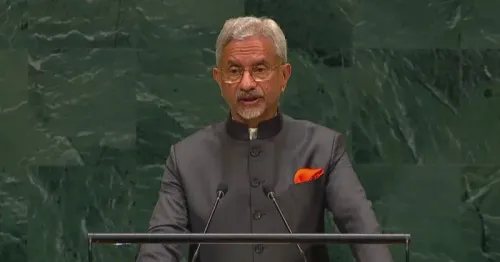
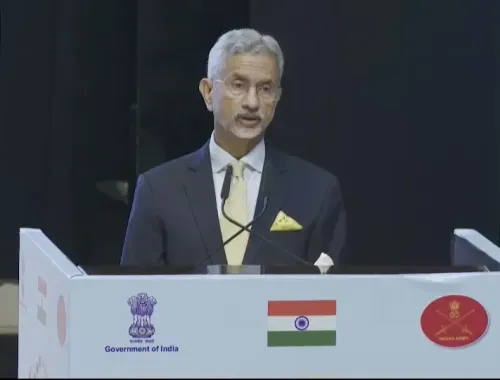
On the 81st United Nations Day, Union External Affairs Minister Dr. S. Jaishankar delivered a pointed reminder that India's relationship with the UN is not ceremonial — it is a platform for an agenda the country has been building for decades.
81 Years On, India Still Has Unfinished Business at the UN
India is a founding member of the United Nations, present at its creation in 1945 and bound by its Charter from day one. But Dr. Jaishankar's message on Saturday, October 24 made clear that fidelity to the Charter does not mean satisfaction with the institution as it stands. 'Reaffirm India's enduring commitment to the UN and the UN Charter,' he wrote, before immediately pairing that pledge with a call for 'reformed multilateralism that reflects contemporary global realities.' The sequence is deliberate — commitment first, reform second, and the two are inseparable in New Delhi's framing.
The G4 Push and the Long Road to UNSC Reform
The phrase 'reformed multilateralism' carries specific diplomatic weight. India joined the G4 group — alongside Brazil, Germany, and Japan — around 2004, forming a coalition of aspirants for permanent UN Security Council seats. The argument has not changed in twenty years: a Council designed in 1945 cannot adequately represent a world of nearly 200 nations, billions of new voices, and entirely reshuffled economic and military weight. During India's 2021–2022 non-permanent UNSC term, New Delhi pressed the same case — greater representation for developing countries, a structure that matches geopolitical reality, not post-war convenience.
India as Voice of the Global South
Dr. Jaishankar's third line may be the most strategically loaded: India will 'champion international peace and security, global cooperation and the aspirations of the Global South.' This is not rhetorical decoration. India has increasingly positioned itself as the indispensable bridge between the world's wealthiest democracies and the developing nations that make up the numerical majority of UN membership but hold a fraction of its structural power. The framing also signals continuity — that whoever leads a government in New Delhi, the posture on the UN remains a matter of national policy, not partisan preference.
Attention now turns to the next UN General Assembly session and any concrete movement on UNSC reform discussions among member states. India has the rhetoric, the coalition partners, and the momentum. The question — as it has been for two decades — is whether the architecture will finally bend.
Point of View
New Delhi pre-empts the charge of revisionism — it is not challenging the rules-based order, it is demanding that the order actually reflect the rules. The 'Global South' framing is particularly calculated, positioning India as the indispensable convenor of the majority world rather than merely another emerging power seeking a seat at a table already crowded with Western incumbents. The real test will come in the corridors of the next General Assembly, where coalition-building is harder and slower than any post on social media.
NationPress
24 Oct 2026
Frequently Asked Questions
What did Jaishankar say on UN Day 2026?
On the 81st UN Day, EAM Dr. S. Jaishankar reaffirmed India's commitment to the UN and its Charter, called for reformed multilateralism reflecting contemporary global realities, and pledged that India would champion the aspirations of the Global South.
What is India's position on UN Security Council reform?
India has long advocated for expanding and reforming the UN Security Council to reflect post-1945 geopolitical realities. As part of the G4 group with Brazil, Germany, and Japan, India has sought a permanent UNSC seat since around 2004.
When did India become a member of the United Nations?
India is a founding member of the United Nations, joining at its establishment in 1945 and signing the original UN Charter.
What is the G4 group at the United Nations?
The G4 is a coalition of four countries — India, Brazil, Germany, and Japan — that have collectively pushed for permanent seats on the UN Security Council, arguing the current structure does not represent contemporary global power.
What does 'reformed multilateralism' mean in Indian foreign policy?
In Indian foreign policy, 'reformed multilateralism' refers to the push to restructure global institutions — particularly the UN Security Council — to better represent developing nations and reflect geopolitical shifts since 1945, rather than preserving the post-World War II power structure.