India signs UN Charter Preamble, calls it symbol of 'hope' for 1.4 billion
Synopsis
India's UN envoy called the Charter 'ummeed' — hope — for 1.4 billion people, even as the UN's own office warned the organisation is 'under attack' politically and financially. The symbolic signing is a reminder that India backed the Charter before it was even independent, and that New Delhi sees rules-based multilateralism as a live, not archival, commitment.
Key Takeaways
Ambassador P Harish symbolically signed the UN Charter Preamble on 17 June 2025 , ahead of UN Charter Day on 26 June .
Harish described the Charter's significance for 1.4 billion Indians in one word: 'ummeed' (hope).
India was among the 50 founding members of the UN; A Ramaswami Mudaliar signed the original Charter on 25 June 1945 — while India was still under British rule.
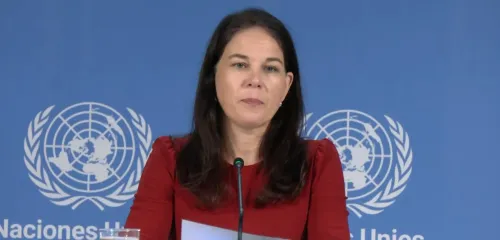
General Assembly President Annalena Baerbock proposed the symbolic signing, calling it a 'renewed expression of collective commitment.' Baerbock's office warned the UN is 'under political and financial pressure, and under attack,' framing Charter Day 2025 as 'a call to action.'
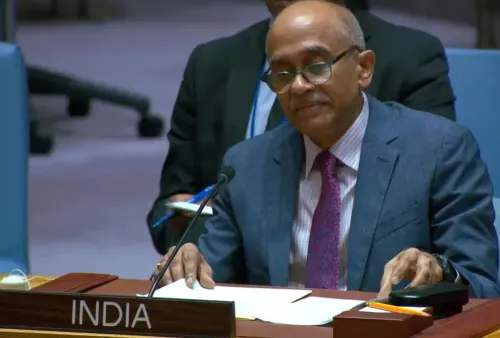
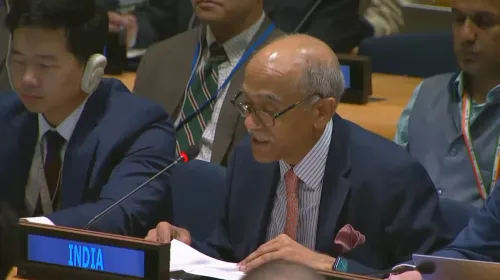
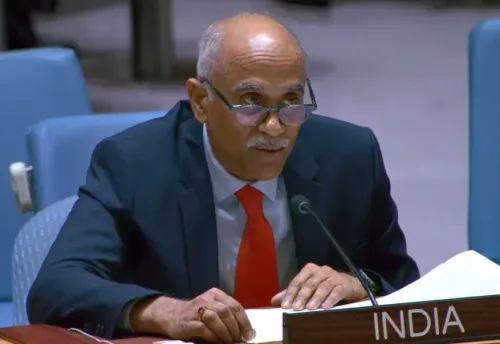
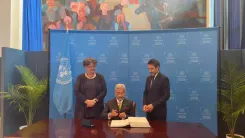
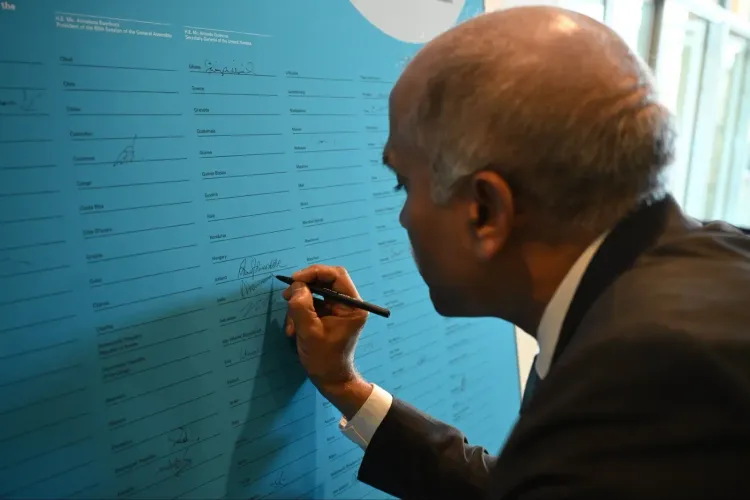
India's Permanent Representative to the United Nations, Ambassador P Harish, on Tuesday, 17 June symbolically signed the Preamble of the UN Charter at UN Headquarters in New York, reaffirming the country's commitment to the foundational document ahead of UN Charter Day on 26 June. The gesture, proposed by General Assembly President Annalena Baerbock, comes as the United Nations faces what officials describe as unprecedented political and financial pressure.
India's Message: 'Ummeed' — Hope
Speaking after the signing, Ambassador Harish distilled India's relationship with the Charter into a single word. 'The UN Charter's significance for 1.4 billion citizens of India is, in one word, ‘ummeed’, meaning hope,' he said. The statement positions India's multilateral engagement not merely as diplomatic protocol but as a reflection of its people's aspirations for a rules-based international order.
India's Historic Role as a Founding Member
India's connection to the UN Charter runs deep. A Ramaswami Mudaliar, who led India's delegation at the San Francisco Conference, signed the original Charter on behalf of India on 25 June 1945 — a remarkable act given that India was still a British colony at the time, with independence still two years away. India was among the 50 founding members of the United Nations, a distinction that underscores its early and enduring commitment to multilateralism and international cooperation.
Why the Commemoration Carries Urgency This Year
The symbolic signing is more than ceremonial in 2025. A note from Baerbock's office stated plainly: 'Eighty-one years after the signing of the Charter, we are standing at the crossroads. The United Nations is not only under political and financial pressure, but under attack.' Baerbock herself described the signing as 'a renewed expression of our collective commitment to the purpose and principles of the Charter.' This year's Charter Day commemoration is, according to her office, 'not only a memento of reflection — it is a call to action.'
Broader Context: Multilateralism Under Strain
India's reaffirmation arrives at a moment when the multilateral system faces structural stress — from funding cuts by major contributors to geopolitical deadlocks in the UN Security Council. New Delhi has consistently positioned itself as a champion of reformed multilateralism, advocating for a permanent seat on the Security Council and greater voice for the Global South. This symbolic signing reinforces that posture, signalling that India views the Charter's principles — sovereign equality, peaceful dispute resolution, and collective security — as non-negotiable anchors of the international order.
What Comes Next
The formal UN Charter Day commemoration is scheduled for 26 June 2025, marking 80 years since the document was opened for signature. India is expected to participate prominently in the multilateral observance, consistent with its founding-member status and its current diplomatic emphasis on strengthening global governance institutions.
Point of View
New Delhi's reaffirmation is also a positioning move: India wants to be seen as a stabiliser of the multilateral order at a moment when larger powers are retreating from it. The irony worth noting is that India signed the original Charter as a colony, yet has consistently been a more reliable multilateral actor than several sovereign states that signed it freely. That history gives India's 'ummeed' framing genuine moral weight — but it also raises the question of whether rhetorical commitment will translate into concrete support for UN reform and financing, where India's record is more mixed.
NationPress
25 Sept 2026
Frequently Asked Questions
Why did India sign the UN Charter Preamble on 17 June 2025?
India's Permanent Representative Ambassador P Harish signed the UN Charter Preamble symbolically to reaffirm the country's commitment to the Charter's principles ahead of UN Charter Day on 26 June . The signing was part of a broader initiative proposed by General Assembly President Annalena Baerbock .
What did India's UN envoy say about the UN Charter?
Ambassador Harish said the Charter's significance for India's 1.4 billion citizens could be summed up in one word: 'ummeed', meaning hope. He made the remark immediately after the symbolic signing on Tuesday.
Was India a founding member of the United Nations?
Yes. India was one of the 50 founding members of the UN. A Ramaswami Mudaliar signed the original Charter on India's behalf on 25 June 1945 in San Francisco, even though India was still a British colony at the time.
Why is UN Charter Day 2025 considered especially significant?
According to a note from Baerbock's office, the UN is currently 'under political and financial pressure, and under attack,' making this year's commemoration 'a call to action' rather than a routine anniversary. The Charter turns 80 years old in 2025.
When is UN Charter Day observed?
UN Charter Day is observed annually on 26 June , marking the date in 1945 when the UN Charter was opened for signature in San Francisco. The formal commemoration in 2025 falls on 26 June .