CM Bhajan Lal echoes Modi's ASEAN vision on digital, defence ties
Synopsis
Rajasthan CM Bhajan Lal Sharma amplified PM Narendra Modi's statement that India-ASEAN ties are expanding from shared culture into digital, defence, and space — driven by the Act East Policy — with a joint commitment to a stable, inclusive Indo-Pacific.
Key Takeaways
Rajasthan CM Bhajan Lal Sharma shared PM Modi 's statement on India-ASEAN partnership on 17 November 2026 .
Modi declared India and ASEAN are establishing 'new dimensions' in digital, defence, and space cooperation.
The Act East Policy , announced in 2014 , is credited with giving the relationship greater strategic depth beyond trade and culture.
Modi's statement explicitly chose 'cooperation, peace, and stability' over competition in the Indo-Pacific region.
Annual India-ASEAN summits serve as the primary platform for converting these commitments into concrete outcomes.
ASEAN spans ten member states and commands sea lanes carrying roughly a third of global maritime trade.
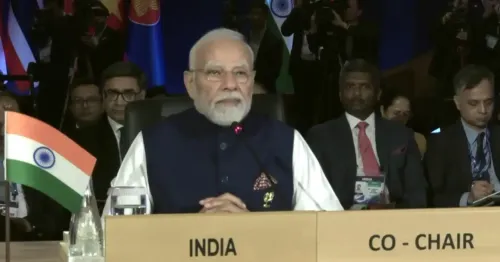
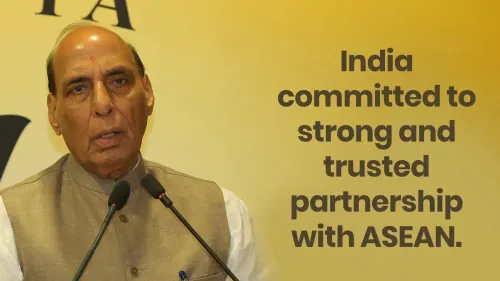
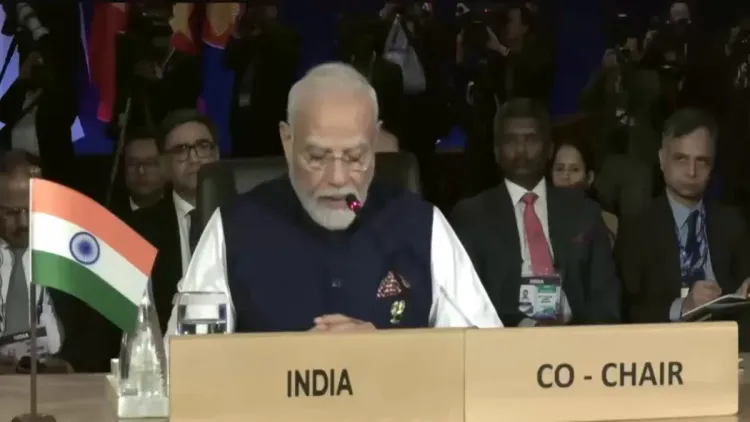
From shared temple trails to satellite orbits — Rajasthan Chief Minister Bhajan Lal Sharma amplified Prime Minister Narendra Modi's sweeping vision for India-ASEAN partnership on Tuesday, 17 November 2026, quoting Modi's call to push the relationship well beyond cultural roots and into digital infrastructure, defence, and space.
Sharma shared Modi's statement on X, quoting the Prime Minister: 'India aur ASEAN ki saajhedari saajha sanskriti evam virasat se aage badhkar digital, raksha aur antariksh jaise aadhunik kshetron mein naye aayam sthapit kar rahi hai' — 'India and ASEAN's partnership is moving beyond shared culture and heritage to establish new dimensions in modern sectors such as digital, defence, and space.'
Act East Policy: from 'Look' to 'Leap'
The philosophical anchor of that ambition is the Act East Policy, which Prime Minister Modi announced in 2014, deliberately upgrading India's older 'Look East Policy' into something with sharper strategic teeth. Where the earlier framework was largely trade-and-tourism, Act East has layered on defence tech transfers, digital connectivity corridors, and — increasingly — cooperation in space applications, areas once considered out of reach for a neighbourhood partnership.
The Association of Southeast Asian Nations spans ten member states from Myanmar to Indonesia, commanding sea lanes through which a third of global maritime trade flows. That geography alone gives the India-ASEAN relationship consequences far beyond bilateral sentiment.
Cooperation over competition in the Indo-Pacific
Modi's statement, as shared by Sharma, sets out an explicit choice: 'Our resolve is that India and ASEAN move forward together on the path of cooperation, peace, and stability rather than competition, and play a significant role in building a secure, inclusive, and prosperous Indo-Pacific region.' The framing is deliberate — in a region where major-power rivalry has intensified, India is positioning itself, alongside ASEAN, as a force for rules-based stability rather than zero-sum contest.
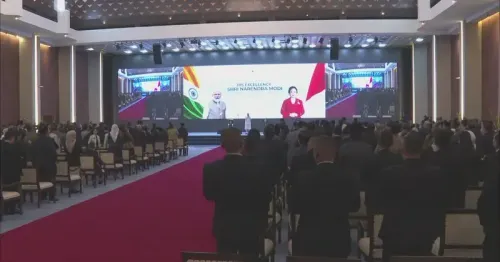
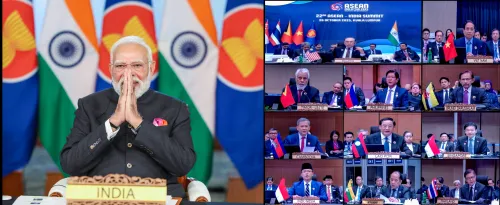
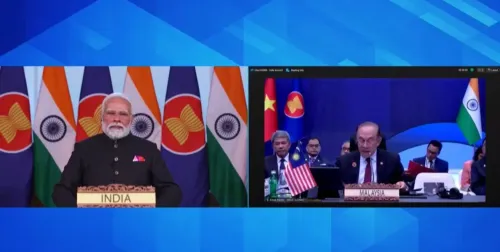
Annual India-ASEAN summits have served as the primary mechanism for translating these priorities into concrete agreements — on defence exercises, digital trade frameworks, and satellite data-sharing initiatives.
Why a Rajasthan CM is amplifying Southeast Asia policy
Sharma's re-broadcast of Modi's foreign-policy statement underscores a broader BJP discipline: state leaders routinely amplify the Centre's strategic messaging to widen its reach beyond the national media cycle. For a state like Rajasthan — landlocked, with its own industrial and defence corridor ambitions — framing the Centre's Indo-Pacific outreach as a shared national project carries domestic political logic as much as diplomatic solidarity.
As India's next India-ASEAN Summit approaches, the test will be whether the new dimensions in digital, defence, and space that Modi describes translate from summit communiqués into signed agreements and deployed infrastructure.
Point of View
Bhajan Lal Sharma is participating in a well-established BJP practice of projecting foreign-policy consensus from state capitals to the national stage. The substance of the message — framing Act East as a multi-domain strategic lever, not just a trade channel — reflects India's deliberate effort to present itself as the ASEAN neighbourhood's preferred non-hegemonic partner in the Indo-Pacific contest. The explicit 'cooperation over competition' framing is a pointed signal toward rival-power posturing in the region. Whether the defence and space cooperation lines harden into binding agreements at the next India-ASEAN Summit will be the real measure of this rhetoric.
NationPress
17 Nov 2026
Frequently Asked Questions
What is India's Act East Policy?
India's Act East Policy is a foreign policy framework announced by PM Narendra Modi in 2014, upgrading the older 'Look East Policy' to give greater strategic and economic depth to India's engagement with ASEAN and broader Indo-Pacific partners.
What did PM Modi say about India-ASEAN relations?
PM Modi stated that India-ASEAN partnership is moving beyond shared culture and heritage into modern sectors like digital technology, defence, and space, with a shared commitment to cooperation, peace, and stability in the Indo-Pacific.
Why is the Indo-Pacific important to India and ASEAN?
The Indo-Pacific region spans critical sea lanes through which a large share of global maritime trade flows; India and ASEAN seek to promote a rules-based, inclusive order there rather than allowing major-power rivalry to dominate.
What sectors are India and ASEAN expanding cooperation into?
Beyond traditional trade and cultural ties, India and ASEAN are deepening cooperation in digital infrastructure, defence technology, and space applications under the Act East Policy framework.
Why did Rajasthan CM Bhajan Lal Sharma post about ASEAN policy?
CM Bhajan Lal Sharma shared PM Modi's statement on India-ASEAN relations to amplify the Centre's strategic foreign-policy messaging, a common practice among BJP state leaders to broaden national outreach.